
Summer Infant 3Dmini
Price verified Sep 24, 2026 · lowest in 90 days $69.88
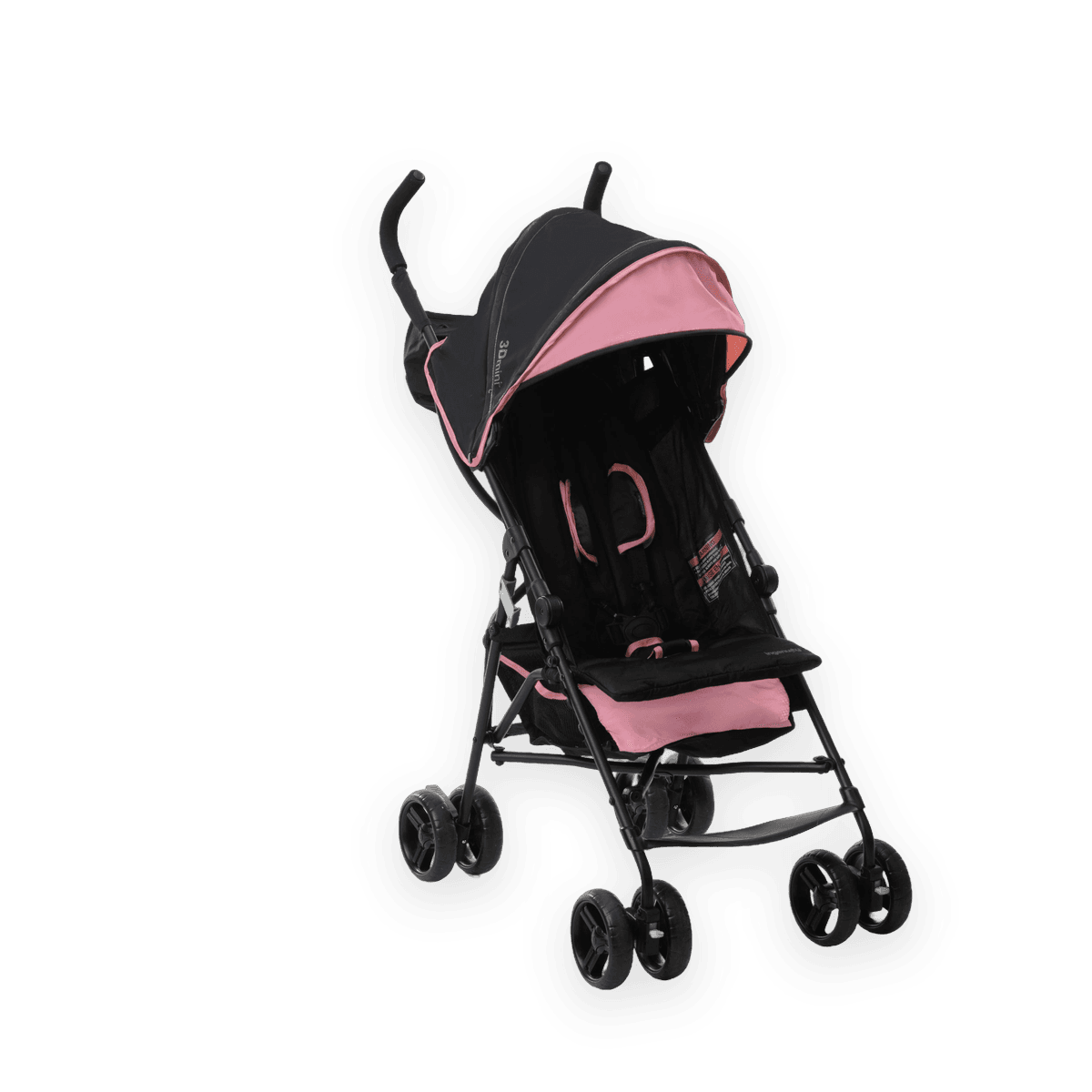
Product image via Walmart
Where to buy
Prices checked Sep 24, 2026- AmazonBest pickCheck price at Amazon
- TargetCheck price at Target
- WalmartCheck price at Walmart
We may earn a commission from links on this page, at no extra cost to you. How this works.
15 min read · Reviewed by Huggle Hive Editorial Team, Parent-led product research team · Updated August 18, 2026
The Summer Infant 3Dmini is a travel and errand stroller: 11 pounds, an umbrella frame, a five-point harness, and a 45-pound child limit. Buy it as the light stroller that lives in your trunk or goes to the airport, not as the one stroller meant to carry you from the hospital to preschool. It rates 8.2 out of 10, and the trade-off is easy to state: you gain a frame you can carry up a flight of stairs one-armed, and you give up the flexibility a full-size stroller brings.
Our scorecard
How the Hive Score works- Portability
- 4.1
- Safety basics
- 3.4
- Comfort & ride
- 3.8
- Versatility
- 2.6
- Value
- 2.7
Scores blend each product's verified specs with its overall owner rating, weighted the same way for every stroller. Learn more about our evaluation framework.
The short version
- Weighs 11 pounds, which is the whole reason to own a stroller like this.
- Five-point harness and multi-position recline are both on the spec sheet.
- Holds children up to 45 pounds, a generous ceiling for a stroller this light.
- The specs list a cup holder or tray, so storage is included rather than an add-on.
- Newborn use and JPMA certification are not documented for this model.
One naming note before the details. The manufacturer copy for this stroller carries the Ingenuity name, so you will see it sold as the Ingenuity 3Dmini as well as under Summer Infant. Same stroller, same spec sheet.
Pros
- Eleven pounds, light enough to carry when your other arm is full.
- Five-point harness, the restraint style you want once your child learns to stand up mid-ride.
- Multi-position recline, so a nap on the go does not have to end the outing.
- Holds children up to 45 pounds, which outlasts most toddlers' interest in riding.
- The specs list a cup holder or tray, and Ingenuity adds two cup holders, a storage pouch and a basket.
- Ingenuity describes a compact fold and lockable rear wheels, useful on a sloped sidewalk.
Cons
- Versatility scores 2.6: no travel system, bassinet, reversible seat or second seat is listed.
- Anti-shock front wheels are a manufacturer claim and no suspension is listed, so plan on smooth pavement.
- JPMA certification is not documented for this model, which holds Safety basics to 3.6.
- The recline is multi-position, but a flat newborn position is not documented, so this is not a from-birth stroller on paper.
- Value lands at 2.8, near the bottom of the card. You are buying weight savings, not capability.
Who the 3Dmini is for, and who should skip it
Picture the 20-minute errand. You need milk, your toddler needs out of the house, and your full-size stroller is folded in the trunk like a piece of flat-pack furniture. That is the moment an 11-pound frame pays for itself. If you already own a bigger stroller and keep leaving it home, the 3Dmini is the second stroller that fixes the problem, and it does it without giving up the two features that matter most for a riding-age child: the five-point harness and the multi-position recline.
City parents come out well here too. Stairs, buses and crowded sidewalks punish a heavy frame, and a stroller you can fold and lift while your child holds your other hand is worth real money. Ingenuity lists lockable rear wheels, which is the kind of small thing you appreciate on a sloped sidewalk while you dig for keys.
Skip it if you want one stroller for everything. Newborn use is not documented for this model, no travel-system compatibility is listed for clicking in an infant car seat, and nothing in the specs points to jogging or trails. Parents planning gravel paths, beach boardwalks or a running route should shop the all-terrain category instead. Same goes for anyone who needs a bassinet, a reversible seat, or room for a second child.
What the spec sheet does not say
We fill gaps with nothing, so here is the full list of things a careful shopper might want that the published specs for this model do not cover:
- Whether the recline goes flat, and whether the stroller is approved from birth
- Folded dimensions, and whether the fold is one-handed or free-standing
- Canopy size and any UPF rating
- Suspension, wheel size and tire type
- Travel system, bassinet or reversible-seat compatibility
- JPMA certification (Ingenuity says the stroller is third party safety tested and approved, without naming the standard)
None of that means the 3Dmini lacks these things. It means nobody has published them, so we will not claim them either way. If one of these decides your purchase, ask the manufacturer before you buy.
How does it perform day to day?
Portability: 11 pounds is the headline, and it earns it
Weight is the spec that decides whether a light stroller actually gets used. Eleven pounds is the difference between carrying the stroller up subway steps with your child on your hip and abandoning the trip. It is also why Portability scores 4.3, the highest number on the card. It is not a 5 because fold behavior counts too, and this model's fold specifics are not published. Ingenuity describes an easy-to-fold compact frame, and that is worth passing along as the brand's claim, not as a measured figure. For trunk Tetris and gate-checking, the practical read is that the weight is verified and the bulk is not.
Comfort and ride: recline first, wheels second
The multi-position recline decides how long an outing can run. A toddler who falls asleep bolt upright wakes up ten minutes later; one you can drop back a notch or two might give you an hour of quiet at the botanical garden. Pair that with the padded full-size seat and cushioned handles Ingenuity lists, and Comfort and ride at 4.0 makes sense. Ride quality itself rests on the anti-shock front wheels the brand advertises, with no suspension spec behind it, so set your expectations at smooth sidewalks rather than cobblestones or crushed gravel. The canopy with a pop-out sun visor is listed, though its coverage is not, so treat shade as a bonus rather than a plan on a bright afternoon and dress your baby accordingly.
Safety basics: a five-point harness and one open question
The harness is the first thing to look at, and the 3Dmini has the right one. A five-point harness holds at both shoulders, both hips and between the legs, which is what stops a determined toddler from standing or sliding down. Ingenuity also lists lockable rear wheels and says the stroller is third party safety tested and approved, without naming the standard it was tested to. JPMA certification is not documented for this model, and that is what keeps Safety basics at 3.6 rather than higher. The JPMA certification program verifies a product against the relevant ASTM standard through third-party testing, so a documented certification is a shortcut to confidence. Its absence here is an unknown, not a mark against the stroller.
Fill in the manufacturer's registration card the week you get the stroller. It is the only way you get told directly if a recall is issued, and you can check open stroller recalls at the CPSC any time.
Everyday practicality: the small stuff you notice by day three
Storage is where cheap light strollers usually cut. The specs list a cup holder or tray, and Ingenuity's own copy goes further: two cup holders, a storage pouch, an easy-access basket and cushioned handles. That combination covers the everyday load of a coffee, a water bottle, a phone and a diaper bag without clip-on accessories. Basket capacity is not published, so a full grocery run is not something to count on. The lockable rear wheels are the other practical detail, and they matter more than parents expect the first time they park on a driveway.
Versatility: the part you trade away
Versatility scores 2.6, the lowest number on the card, and that is the honest price of an 11-pound stroller. No travel-system compatibility is listed, so an infant car seat does not click onto this frame. No bassinet, no reversible seat, no second seat. The multi-position recline is the one flexibility feature that is verified, and it is a genuine one. If your plan is to buy a light stroller instead of a full-size one, this is the section to reread.
Will it fit your child, and for how long?
The 45-pound limit is the number that decides longevity.
A 45-pound ceiling is generous for a stroller this light, and in practice most children stop wanting to ride well before they reach it. Growing legs and a toddler who insists on walking usually retire a stroller long before the weight limit does. At the other end, newborn use is not documented, so the safest read is that this is a stroller for a child who already has solid head and trunk control. If your baby cannot sit up unassisted yet, AAP stroller safety guidance recommends a stroller that reclines fully or one that accepts an infant car seat, and neither of those is documented for this model.
| Spec | Summer Infant 3Dmini |
|---|---|
| Type | Umbrella |
| Stroller weight | 11 lb |
| Max child weight | 45 lb |
| Recline | Multi-position |
| Harness | 5-point |
| Cup holder / tray | Yes |
On harness fit, the rule is the same for every stroller: the shoulder straps should sit at or just below your child's shoulders, and the webbing should be snug enough that you cannot pinch a fold of it at the collarbone. Puffy winter coats go over the buckled harness, not under it.
What does it cost to own?
Prices on lightweight strollers move around, so treat the live number in the buy section below as the one that counts.
The more useful math is what you spend after the purchase, and here it is close to nothing. The specs list a cup holder or tray, and Ingenuity adds the pouch, the basket and a second cup holder, so you are not shopping for clip-on organizers a month later. A bare frame usually means buying those pieces separately. That is not the shape of this purchase.
The 3Dmini is a specialist. Buy it for the 11 pounds and let a bigger stroller do everything else.
Value came in at 2.8, near the bottom of the card, and the fair way to read that is this: the 3Dmini is not the cheapest way to move a child from the car to the gate, and the feature list it offers in return is deliberately short. That is a reasonable deal if weight is the problem you are solving, and a poor one if you are hoping this stroller replaces a full-size frame.
What you are paying for:
- Eleven pounds, verified on the spec sheet
- A five-point harness and a multi-position recline, the two features light strollers most often skip
- Storage that is included rather than added later
- A 45-pound ceiling that outlasts most toddlers' interest in riding
How does it compare to other strollers?
The comparison that changes your decision here is not model against model. It is class against class, because the 3Dmini is competing with the idea of a different kind of stroller.
Against a full-size stroller. Full-size frames typically bring larger wheels, deeper baskets, bigger canopies and travel-system compatibility, and they weigh substantially more. Pick one of those instead if this will be your only stroller, if you walk long distances most days, or if you want an infant car seat to click into the frame. The 3Dmini's answer is that you can carry it, and a full-size stroller you leave at home does no good.
Against a travel system. A travel system pairs a stroller with an infant car seat that clicks in, which is the setup most parents want for the first months. No such compatibility is listed for the 3Dmini. If you are buying before the birth and want one purchase to cover the newborn stage, buy the travel system and add a light stroller like this one later, when your child is sitting up and you are tired of hauling the big frame.
Against a jogger or all-terrain stroller. Those use larger wheels and real suspension for gravel, grass and running. The anti-shock front wheels Ingenuity advertises are aimed at sidewalk bumps, and no suspension is listed. Trails and beach boardwalks are the wrong assignment for this stroller.
Against a bare-bones umbrella stroller. The cheapest umbrella strollers often use a simpler harness and a fixed seat back. A five-point harness and a multi-position recline are exactly the two upgrades worth paying for in this class, since one keeps a climbing toddler seated and the other buys you naps. Ingenuity's own copy calls this the #1 umbrella stroller and points to thousands of 5-star reviews. That is the brand's claim, and we pass it along as one.
If you are still deciding between classes, our stroller reviews and the best travel strollers guide sort the options by what you actually need.
How we scored it
The Hive Score for the 3Dmini is 8.2 out of 10. Beneath it sit five sub-scores, each rated separately on its own 0 to 5 scale, and each answering a different question about the stroller. They are worth reading one at a time.
Portability, 4.3. The highest score on the card, driven by the 11-pound weight. It is not higher because fold details, including whether the fold is one-handed or free-standing, are not published for this model.
Comfort and ride, 4.0. The multi-position recline and the padded seat carry this one. Ride smoothing rests on a manufacturer claim about the front wheels rather than a listed suspension system, which is what keeps it below the portability number.
Safety basics, 3.6. The five-point harness helps. JPMA certification is not documented for this model, and safety scoring starts from a deliberately conservative anchor, so a stroller has to show its credentials to climb here.
Value, 2.8. A short feature list at a real price. Weight savings are the product, and you are paying for them.
Versatility, 2.6. The lowest number, and the most predictable one. No travel system, bassinet, reversible seat or second seat is listed, and the recline is the only flexibility feature that is verified.
Where to buy
Availability on light strollers changes often, and so does the price. Current options are below.
Can I use the Summer Infant 3Dmini with a newborn?
Not based on the documented specs. The seat has a multi-position recline, but a flat recline and from-birth approval are not documented for this model, and no travel-system compatibility is listed for attaching an infant car seat. For a baby who cannot sit up unassisted, the AAP recommends a stroller that reclines fully or accepts an infant car seat. Check with the manufacturer before using it earlier.
How much does the 3Dmini weigh?
Eleven pounds. That is the spec the whole design is built around, and it is the reason Portability is the strongest number on its scorecard at 4.3 out of 5.
What is the weight limit?
Forty-five pounds. That is a generous ceiling for a stroller this light, and most children lose interest in riding before they reach it.
Is it good for air travel?
Ingenuity markets it as a travel stroller and describes a compact fold, and at 11 pounds it is easy to carry through a terminal. Folded dimensions are not published, so confirm your airline's gate-check and cabin rules rather than assuming it fits in an overhead bin.
Does the seat recline for naps?
Yes. The recline is multi-position, which means you can drop the seat back for a nap on the go. How far back it goes is not published, so treat a fully flat position as unconfirmed.
Does it have a cup holder?
Yes. The specs list a cup holder or tray, and Ingenuity's product copy describes two cup holders along with a storage pouch, an easy-access basket and cushioned handles.
Is the 3Dmini JPMA certified?
JPMA certification is not documented for this model. Ingenuity says the stroller is third party safety tested and approved, without naming the standard it was tested to. Read that as an unknown rather than a failure, and ask the manufacturer if certification matters to you.
The bottom line
An 11-pound frame is easy to bring along, and that is the case for the 3Dmini in one sentence. You get a five-point harness, a multi-position recline, a 45-pound ceiling and storage that is included, in a stroller built for travel days and quick errands. You give up travel-system compatibility, a bassinet option and the ride hardware a bigger frame brings. Rated 8.2 out of 10, it is a strong second stroller and a weak only stroller. If something bigger is already parked in your hallway, this fills the gap well.
Reviewed by the Huggle Hive Editorial Team. Our review methodology explains how these scores are put together.
Summer Infant 3Dmini
See prices