
Safety 1st 6-in-1 Travel System with Safety Slide Base
Price verified Sep 11, 2026
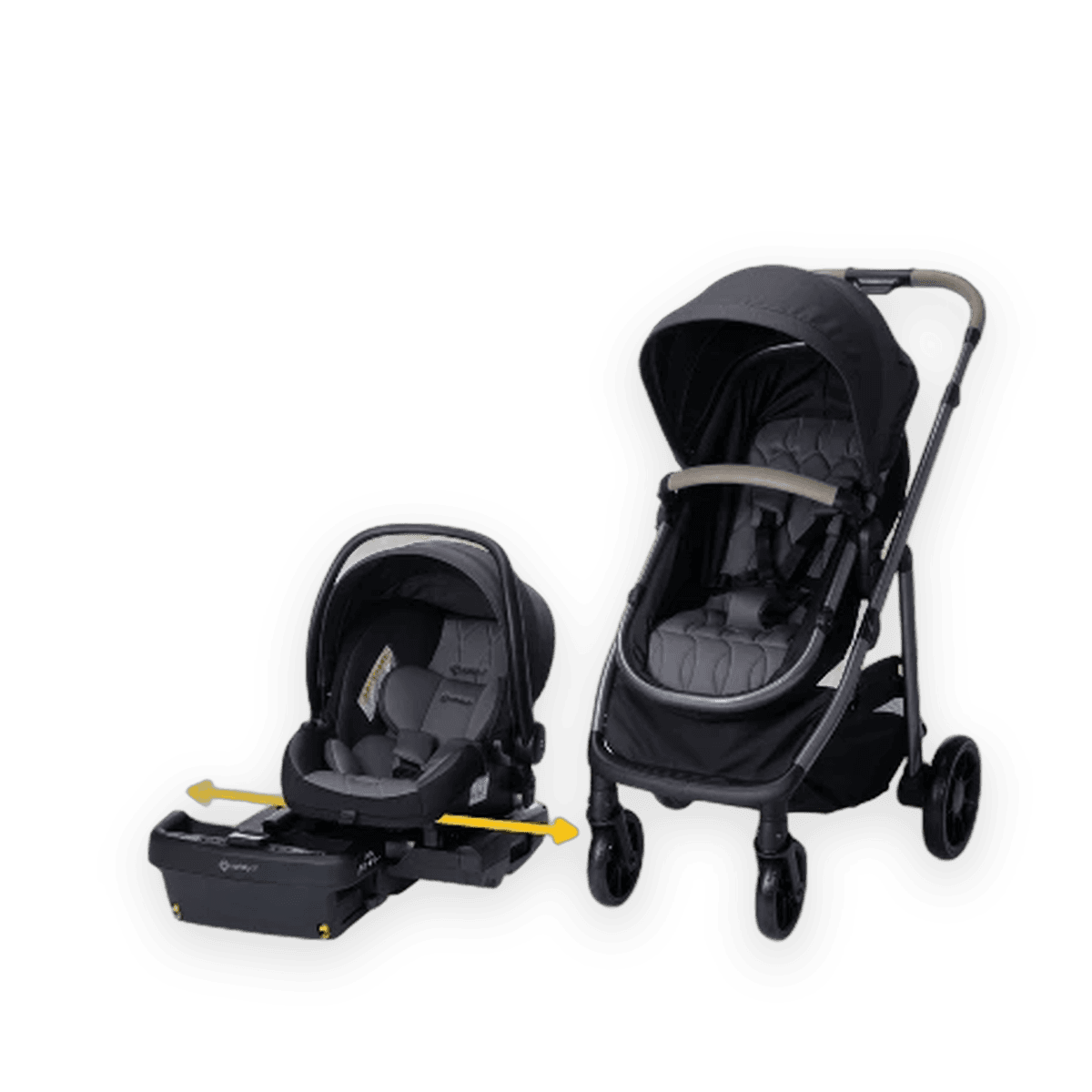
Product image via Target
Where to buy
Prices checked Sep 11, 2026- TargetCheck price at Target
We may earn a commission from links on this page, at no extra cost to you. How this works.
15 min read · Reviewed by Huggle Hive Editorial Team, Parent-led product research team · Updated August 2, 2026
If you want one purchase to cover the ride home from the hospital and the next year and a half of sidewalk loops, the Safety 1st onBoard Slide 6-in-1 Travel System with SafetySlide Base is built for exactly that. You get a JPMA certified frame with suspension, an adjustable handlebar, and a five-point harness, paired with the onBoard Slide Infant Car Seat that clicks straight on. The catch: plastic wheels and a big folded footprint mean it is happiest on pavement and in a full-size trunk.
Our scorecard
How the Hive Score works- Portability
- 4.2
- Safety basics
- 4.1
- Comfort & ride
- 4.5
- Versatility
- 3.3
- Value
- 3.7
Scores blend each product's verified specs with its overall owner rating, weighted the same way for every stroller. Learn more about our evaluation framework.
The short version
- The onBoard Slide Infant Car Seat and SafetySlide Base come with it, and that seat is the confirmed compatible one, so there are no adapters to hunt down.
- JPMA certified, with a five-point harness on the stroller seat and a linked brake that locks both rear wheels in one press.
- Suspension plus an adjustable handlebar at 23.58 pounds is why comfort and ride is the top sub-score at 4.5 out of 5.
- Safety 1st lists the age stage as 0 to 18 months, while the stroller seat is rated for a child up to 50 pounds.
- Two limits to plan around: plastic wheels, and a folded footprint of 23.62 by 36.29 inches.
Pros
- Arrives as a matched set with the onBoard Slide Infant Car Seat and SafetySlide Base, so the car seat and frame are guaranteed to work together
- JPMA certified frame with a five-point harness on the stroller seat
- Linked brake locks both rear wheels with one press, which is easier to find with your foot on a dark driveway
- Suspension and an adjustable handlebar together, a pairing that usually turns up on pricier frames
- Reversible seat: your newborn can face you now and face the world later
- 23.58 pounds is reasonable for a travel system frame
- Stroller seat rated to a 50 pound child, well past the listed 18 month age stage
Cons
- Plastic wheels are made for pavement, not gravel, sand, or packed trails
- Folded footprint of 23.62 by 36.29 inches wants a real trunk, not a hatchback with a diaper bag already in it
- A one-hand fold and a self-standing fold are not listed in the verified specs, so do not count on either
- Bassinet compatibility and a canopy UPF rating are not listed, which is most of why versatility sits at 3.3 out of 5
- Only the onBoard Slide Infant Car Seat is listed as compatible, so plan your car seat around this system
- One year warranty
Who should buy it, and who should skip it
This is a first-baby, one-stroller household product. If your days look like a driveway, a parking lot, a grocery store, and a paved park path, the hardware here matches the route. The infant seat and base ship with the frame, so you are not cross-referencing adapter charts at 38 weeks pregnant, and the suspension does something real on the seam-and-curb terrain most of us actually push over.
Parents who drive a lot should look hardest at the SafetySlide base. Safety 1st says the base design makes it easier to get your baby in and out of the car, even from the middle seat: you slide your baby toward you, lift, and go. We cannot verify how much reach that saves, but the pain point is genuine. The center rear position is the longest lift in any vehicle, and it is where backs get tweaked.
Skip it if your walks involve gravel, sand, woodchip trails, or snow. Plastic wheels do not float over loose surfaces, and no amount of suspension fixes that. Skip it too if trunk space is tight, or if you had your heart set on a bassinet mode or a modular system that accepts several brands of infant seat, because none of that appears in the verified specs. Runners should keep moving as well: nothing here is listed as jogger-rated, and a five-point harness plus suspension is not the same thing.
What the specs actually say
| Spec | Verified figure |
|---|---|
| Type | Travel system (stroller, infant car seat, base) |
| Stroller weight | 23.58 lb |
| Max child weight | 50 lb |
| Age stage | 0 to 18 months |
| Folded (H x W x D) | 43.11 x 23.62 x 36.29 in |
| Open (H x W x D) | 43.11 x 11.81 x 36.29 in |
| Harness | Five-point |
| Brake | Linked |
| Wheels | Plastic |
| Suspension | Yes |
| Handlebar | Adjustable |
| Seat | Reversible |
| Certification | JPMA certified |
| Materials | Polyester |
| Compatible car seat | onBoard Slide Infant Car Seat |
| Warranty | 1 year |
One note on the name. Safety 1st counts six strolling options, and the marketing copy does not break them down in the data we have, so we will not pretend to enumerate them. What the verified attributes do confirm is a reversible seat and travel system compatibility with the onBoard Slide Infant Car Seat, which are the two configuration changes you will use most.
Performance
Does the car seat part actually make loading easier?
The SafetySlide base is the headline. Safety 1st describes the innovation as a base that lets you slide your baby toward you before lifting, which is aimed squarely at the middle seat problem. Treat that as the brand's claim rather than a measured result, because no load or reach figures exist in the specs. What we can say from the data is that the system removes the compatibility risk: the onBoard Slide Infant Car Seat is the listed match, it comes in the box, and it attaches to the frame without a separate adapter. If you are installing the base yourself, spend ten minutes with NHTSA's car seat guidance first, since installation error, not hardware, is where most car seat safety is won or lost.
How safe is the frame itself?
The frame is JPMA certified, which means an independent lab tested it against the ASTM standard for its product category rather than the brand self-declaring compliance. That certification, plus the five-point harness, is what anchors the 4.1 safety basics score. The linked brake matters more than it sounds: one press locks both rear wheels, so you are not hunting for a second lever on a sloped driveway while holding a coffee.
One habit worth building early. The American Academy of Pediatrics is clear that infant car seats are for travel, not for routine sleep once you are out of the car, so move your baby to a flat, firm surface after the drive rather than leaving them clicked into the frame for a long nap. The AAP's car seat guidance for families is the plain-language version worth bookmarking.
Ride quality: what suspension and an adjustable handlebar buy you
This is the strongest part of the product, and the 4.5 comfort and ride sub-score reflects it. Suspension smooths the small, repetitive jolts that wake a sleeping newborn: expansion joints, curb cuts, the lip at the end of every sidewalk ramp. The adjustable handlebar solves a different problem. If two adults of different heights share the stroller, a fixed bar forces one of them into a hunch or into kicking the rear axle on every stride.
The plastic wheels pull the other direction. On pavement, tile, and packed dirt they roll fine and never need air. On gravel, sand, wet grass, or snow they skid and dig, and steering gets heavy fast.
Suspension and an adjustable handlebar are doing the real work here. The wheels are the part that decides where you can take it.
Fold, weight, and your trunk
At 23.58 pounds, this is a two-hand lift into a trunk, not a one-arm carry up three flights. That weight is respectable for a travel system frame, and it is a big part of the 4.2 portability score. Folded, it occupies 23.62 by 36.29 inches of floor with a listed height of 43.11 inches, which is a lot of cargo area in a sedan or a compact crossover. Measure your trunk before you commit, especially if a second stroller, a pack and play, or a dog crate already lives back there.
Worth being straight about what is missing from the data: neither a one-hand fold nor a self-standing fold appears in the verified specs. Absent does not mean the product cannot do it, only that we will not credit it.
Materials and cleanup
The verified material is polyester, the standard seat fabric across this whole category, and it is standard because it takes spit-up and yogurt without staining permanently. Care instructions ship with the stroller, so check the manual before you put anything in a washing machine. No fabric certifications beyond JPMA are listed, so nothing more should be assumed about the textiles.
How long will your child fit in it?
Safety 1st lists the age stage as 0 to 18 months. The stroller seat's max child weight is 50 pounds, which is well past what an average 18 month old weighs, so read the age stage as the brand's framing of the full system rather than a hard stop for the stroller.
The reversible seat is what makes the early stretch work. Newborn months are easier when your baby faces you and you can see their face without stopping. Somewhere between six and twelve months, most babies get more interested in the world than in your chin, and you flip the seat forward. That single feature covers the two distinct stages that otherwise send parents shopping twice.
The infant car seat has its own limits and its own expiration date printed on the shell, and those figures are not in our verified data. Check the label on the seat, not the stroller specs, before you hand the system down or buy it secondhand.
What it costs to own
We do not have a confirmed current price for this configuration, so check the retailer links below rather than trusting any number you see quoted elsewhere. What we can talk through is the shape of the spend.
A travel system bundles three purchases that otherwise happen separately: the infant car seat, its base, and the stroller. Buying them as a set removes the compatibility tax, both the adapter you would have bought and the return you would have made after ordering the wrong one. The 50 pound seat rating extends that math, because a frame your child outgrows at 18 months forces a second stroller purchase in the toddler year and this one does not.
The warranty is one year. That is the common length in this part of the market, and it covers the period when a manufacturing fault would surface, though it will not help with the wheel wear that comes from pushing plastic wheels over surfaces they were not made for. Value scores 3.7 out of 5, and with no confirmed price tier in our data, that number holds near the middle rather than being pushed up or down by the sticker.
How it compares to other travel systems
We do not have a matched comparison set for this model, so instead of naming numbers we cannot verify, here is how it lines up against the three shapes this category takes. You can browse the alternatives in our stroller reviews and the best travel systems guide.
Against modular systems. The step-up tier accepts a bassinet, sometimes a second seat, and often several brands of infant car seat. That flexibility is precisely what this system does not claim: compatibility is listed only with the onBoard Slide Infant Car Seat, and no bassinet mode appears in the specs. If you want a stroller that reconfigures for a second child later, pay up for a modular frame. If one seat and one car seat is the whole plan, you are paying for options you will not open.
Against compact and umbrella strollers. A compact fold is the thing this frame gives up. Folded, it takes 23.62 by 36.29 inches, and lightweight travel strollers fold to a fraction of that and often stand on their own. The counterweight is that most of them do not take a newborn on day one, and few offer suspension or an adjustable handlebar. Plenty of families end up with both: this as the main stroller, a cheap compact for flights and city trips.
Against all-terrain and jogging travel systems. Air-filled or rubber tires, a locking front wheel, and a larger wheelbase are what make gravel and trails workable. This frame has the suspension but not the tires, so it stays on pavement. If your default walk starts at a trailhead, spend the extra on the tires and accept the extra weight and bulk.
How we scored it
The 8.3 Hive Score is the mean of five sub-scores, each derived from the verified attributes rather than written by hand. You can read the full method on our review methodology page.
Comfort and ride, 4.5. The best number on the card, and the attributes back it: suspension and an adjustable handlebar, together, on a frame in this weight class.
Portability, 4.2. 23.58 pounds keeps this out of the heavyweight bracket. It does not go higher because a one-hand fold and a self-standing fold are not among the confirmed specs, and the folded footprint is large.
Safety basics, 4.1. JPMA certification and the five-point harness both lift this. A GREENGUARD Gold listing would have lifted it further; it is not in the data, so it earns nothing here in either direction.
Versatility, 3.3. The lowest score, and the honest one. A reversible seat and travel system compatibility both count in its favor, but with no bassinet compatibility listed, a single confirmed car seat match, and one seat position, the configuration count stays modest.
Value, 3.7. With no confirmed price tier, this sits mid-range and gets a small nudge from the overall rating. If the price you find is toward the budget end of travel systems, the hardware on this card argues it is a good deal.
Is the Safety 1st onBoard Slide travel system safe for a newborn?
It is built for use from birth: the system includes the onBoard Slide Infant Car Seat with the SafetySlide Base, the frame is JPMA certified, and the stroller seat uses a five-point harness. Safety 1st lists the age stage as 0 to 18 months. Follow the AAP's guidance and move your baby out of the car seat to a flat, firm sleep surface once the drive is over.
Which car seat works with this stroller?
The onBoard Slide Infant Car Seat is the compatible seat listed in the specs, and it ships with the system along with the SafetySlide Base. No adapter is needed for that pairing. Compatibility with other brands is not listed, so do not plan on it.
How long can my child use it?
Safety 1st lists the age stage as 0 to 18 months, and the stroller seat's maximum child weight is 50 pounds, which typically lasts well beyond 18 months. The infant car seat has its own separate limits and an expiration date printed on the shell, so check that label directly.
Will it fit in my trunk?
Folded, it measures 43.11 inches high by 23.62 inches wide by 36.29 inches deep, so it needs a full-size trunk or a crossover cargo area. The frame weighs 23.58 pounds, which is a two-hand lift. Measure your cargo space before ordering if you drive a compact car.
Can the seat face me instead of facing forward?
Yes. The seat is reversible, so your newborn can ride facing you and flip to face forward once they are more interested in the scenery than in you. That is the feature that stretches the stroller across two very different stages.
Is it good for gravel paths, trails, or jogging?
We would steer you elsewhere. The wheels are plastic, which is fine on sidewalks, parking lots, and smooth park paths but heavy going on gravel, sand, or grass. The suspension helps with bumps, not with loose surfaces, and nothing in the specs rates this frame for running.
What warranty does it come with?
One year. Register the product when it arrives so a manufacturing fault in that first year is straightforward to claim.
Where to buy it
Stock and configuration can vary by retailer, so confirm the listing includes both the onBoard Slide Infant Car Seat and the SafetySlide Base before checkout. Product details and support are also on the Safety 1st site.
Bottom line
Buy this if your life runs on pavement and you want one box that solves the car seat, the base, and the stroller at once. The suspension, adjustable handlebar, and reversible seat are more than the category usually gives you at 23.58 pounds, and JPMA certification plus a five-point harness covers the safety basics you should never compromise on. Pass if you need gravel-worthy wheels, a small fold, or a modular frame that grows into a second child, because those are the three things the verified specs do not promise.
Safety 1st 6-in-1 Travel System with Safety Slide Base
See prices