
Mompush Wiz 2-in-1
Price verified Sep 22, 2026 · lowest in 90 days $159.99
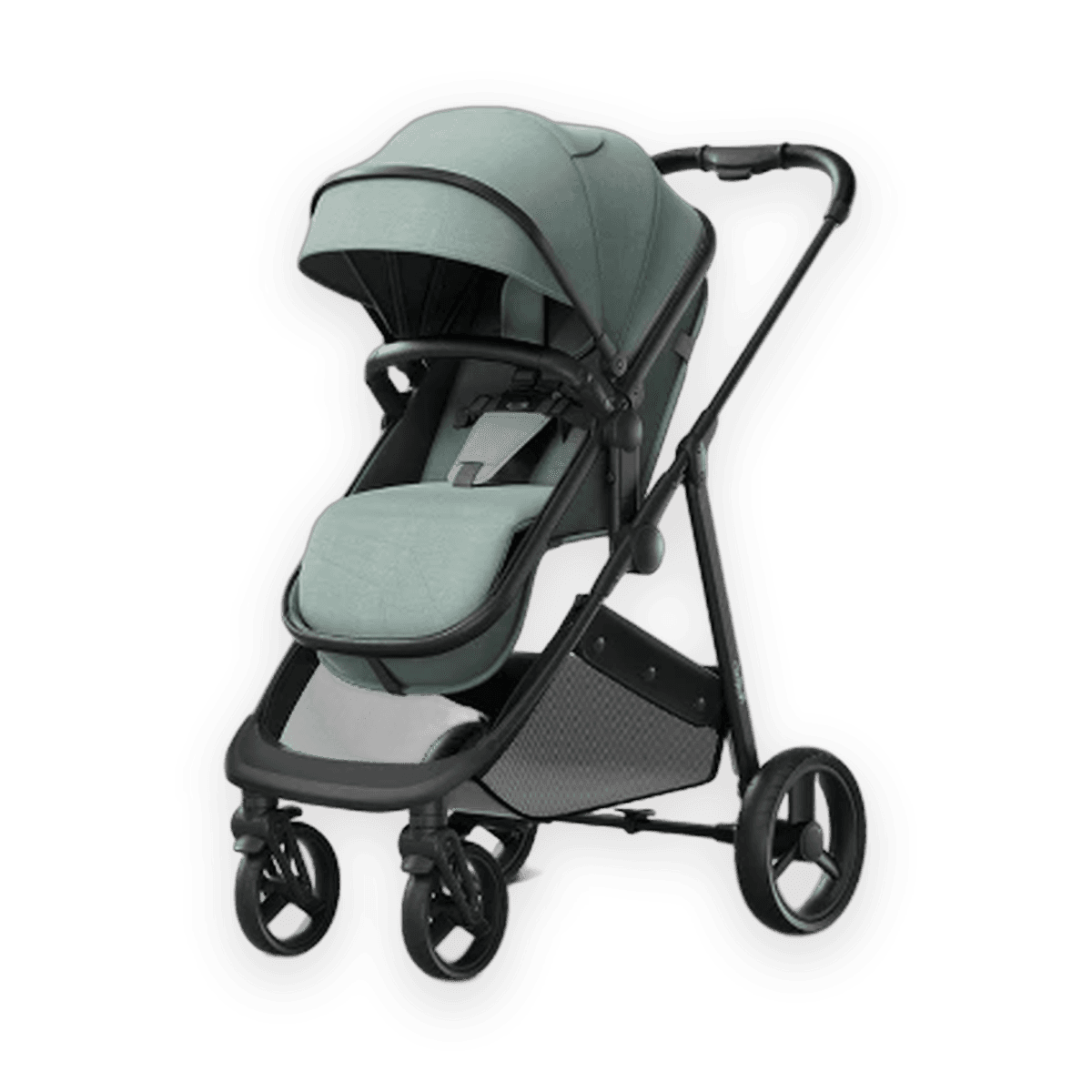
Product image via Target
Where to buy
Prices checked Sep 22, 2026- TargetCheck price at Target
- WalmartCheck price at Walmart
We may earn a commission from links on this page, at no extra cost to you. How this works.
16 min read · Reviewed by Huggle Hive Editorial Team, Parent-led product research team · Updated August 17, 2026
The short answer
The Wiz 2-in-1 is Mompush's mid-weight single stroller for parents who want a seat that faces both ways and a handlebar that adjusts to their height. The verified numbers carry the argument: 23.1 pounds on an aluminum frame, a 50 pound child weight limit, a 24 inch open width, a 0 to 36 month age range, and a two year warranty. Its overall rating is 8.4 out of 10.
Our scorecard
How the Hive Score works- Portability
- 4.6
- Safety basics
- 4.2
- Comfort & ride
- 4.7
- Versatility
- 2.8
- Value
- 3.2
Scores blend each product's verified specs with its overall owner rating, weighted the same way for every stroller. Learn more about our evaluation framework.
Key takeaways
- 23.1 pounds on an aluminum frame puts it in mid-weight territory, lighter than a full-size travel system, heavier than a cabin-bag stroller.
- The reversible seat lets your baby face you as a newborn and face out as a curious toddler, with no second seat unit to buy.
- An adjustable handlebar matters more than parents expect: it is what keeps a 5-foot-2 and a 6-foot-2 caregiver from fighting the same push position.
- Folded, it is 43.4 inches long and only 14.2 inches tall, so it lies flat in a trunk rather than standing in a closet.
- The 50 pound child limit outlasts the stated 0 to 36 month age range, so weight is unlikely to be what ends its service life.
Pros
- Reversible seat, so one seat covers parent-facing and world-facing without an add-on
- Height-adjustable handlebar for caregivers of different heights
- 23.1 lb aluminum frame sits under the weight where our portability scoring starts penalizing strollers
- 24 inch open width clears standard doorways and shop aisles
- 50 lb max child weight, generous next to the 0 to 36 month age stage
- Two year warranty on a product full of hinges, wheels and locks
- Folds to 14.2 inches tall, a low profile that slides under most cargo covers
Cons
- 43.4 inch folded length is long, so trunk depth decides whether this works for you
- Folded width (24.4 inches) is barely narrower than open width, so it collapses downward, not inward
- Foot brake means bending to engage and release, which is a real annoyance in sandals or a winter coat
- Car seat compatibility, bassinet support and recline depth are not confirmed in the verified specs, which is why versatility scores 2.8
- JPMA certification and harness point count are not confirmed in our data, so safety basics scores on the conservative side
Who should buy the Mompush Wiz 2-in-1?
Buy it if you are a one-baby household doing city and suburban daily life: stroller out of the trunk at the park, down the sidewalk, into a cafe, back in the trunk. The combination that defines this stroller (reversible seat plus adjustable handlebar plus a sub-25 pound aluminum frame) is exactly the kit that makes those trips pleasant. You get eye contact with a small baby, then a forward view for a toddler who wants to see the dog, and both caregivers can push without hunching or kicking the rear axle.
It also suits households where two adults of noticeably different heights share the pushing. That sounds minor until you have lived it. A fixed handlebar set for one person leaves the other rolling their wrists or striking their heels on the frame with every step, and the adjustable bar here removes that argument permanently.
Skip it if your car trunk is shallow. The folded package is 43.4 inches long. That is the single number most likely to make this stroller wrong for you, and it has nothing to do with quality. Measure before you commit.
Skip it too if you are shopping for a travel system where the infant car seat clicks onto the frame from day one, or if you specifically need a bassinet. Those capabilities are not confirmed in the verified specs for this model, and we will not tell you they are there. If a click-in car seat is your must-have, confirm it directly with Mompush before buying rather than assuming the "2-in-1" name covers it. Parents flying often, or living in a walk-up apartment with three flights of stairs, will also feel 23.1 pounds every single day and should be looking at genuinely lightweight frames instead.
How does the Wiz 2-in-1 perform day to day?
Is 23.1 pounds actually portable?
Yes, with a caveat about how you lift it. Our portability scoring treats 15 pounds and under as light and 25 pounds and over as heavy, and at 23.1 pounds the Wiz lands just under that upper line. In practice that is a two-handed lift into a trunk for most people, comfortable enough a few times a day and tiring if you are doing it eight times while holding a baby on one hip. The aluminum frame is doing the work here: it is what keeps a stroller with a full-size seat and a reversible mechanism from creeping past the 25 pound mark.
One-hand fold and self-standing fold are not listed among the verified attributes, so we are not going to promise you a curbside collapse with a baby in your arms. Plan on two hands and a free moment.
Will it fit in your trunk and through your front door?
Open, it is 42.9 inches tall, 24 inches wide and 29.5 inches deep. The 24 inch width is the friendly number: it clears standard interior doorways and grocery aisles without the sideways shuffle that wide double strollers demand.
Folded, it measures 14.2 inches high, 24.4 inches wide and 43.4 inches deep. Read those three numbers together and the fold reveals itself. Folded width (24.4 inches) is essentially the same as open width (24 inches), so the frame collapses down onto itself rather than narrowing. What you get is a long, low slab: excellent if your trunk floor is deep and you want the cargo cover to close over it, awkward if you drive a compact hatchback where the loading depth runs out around 36 inches.
Take a tape measure to your trunk floor, front to back, with the parcel shelf in place. If you have less than 44 inches of usable depth, plan to load the Wiz diagonally or across the width of the boot, and check that it still leaves room for a diaper bag and groceries.
How comfortable is the ride?
Comfort and ride is the highest sub-score on the card at 4.7 out of 5, and the adjustable handlebar is the confirmed reason. Push height is the most underrated comfort feature on any stroller, because it governs your posture over the thousands of steps you actually take. Set too low, you round your shoulders and clip the rear wheels with your toes. Set correctly, your forearms stay level and long walks stop ending in a sore lower back.
The reversible seat contributes as well, in a way that shows up in your baby's mood rather than yours. Small babies settle better facing a familiar face, and older babies get restless when they cannot see where they are going. One seat that does both means you are not managing a compromise for a year.
Suspension, canopy UPF rating and all-terrain wheels are not among the verified attributes for this model. Ride quality over broken pavement, gravel paths or grass is therefore an open question we cannot answer from the data, and we would treat this as a paved-surface stroller until Mompush confirms otherwise.
How safe is it, and what is not confirmed?
Safety basics scores 4.2 out of 5, and the honest explanation is that it is scored on what is verified, not on any suspicion of a problem. The confirmed safety-relevant hardware is a foot-operated brake. That is the standard mechanism across the category and it works, though it asks you to bend down to set and release it, which gets old in flip-flops or with an armful of shopping.
What we do not have confirmed: JPMA certification, the number of harness points, and any GREENGUARD Gold designation. None of those absences means the stroller fails them. It means they are not in the verified spec set, so we do not credit them. If certification matters to you, the JPMA certification program publishes which models carry the seal, and that is the checkable source to use rather than our word.
One piece of category guidance worth repeating regardless of model: a stroller is not a safe sleep surface. The American Academy of Pediatrics guidance on carriers, seats and strollers is clear that a sleeping baby should be moved to a firm, flat surface, and that harnesses should be used every ride, including the two minute ones. The CPSC guidance on carriages and strollers covers the federal standard the category is built to.
What does the "2-in-1" actually get you?
The confirmed half of that name is the reversible seat. That is a genuine feature and it is the reason versatility does not score lower than it does. What the verified specs do not confirm is car seat compatibility, a bassinet attachment, a second seat position or the recline mechanism, all of which are the usual ingredients of a higher versatility score. So we credit the seat, and we leave the rest as a question for Mompush's own spec sheet.
Materials: aluminum and polyester
The frame is aluminum and the fabric is polyester. Aluminum is why the weight lands where it does, and it does not rust, which matters for a stroller that lives in a trunk through a wet winter. Polyester is the workhorse stroller textile: it takes a spot clean and dries quickly. Specific fabric treatments, water resistance ratings and chemical certifications are not listed in the verified attributes, so we make no claims about them either way.
Will it fit your baby, and for how long?
Mompush lists this stroller for 0 to 36 months with a 50 pound maximum child weight. Those two numbers do not expire together, and that gap is good news.
| Stage | Roughly | What the Wiz gives you |
|---|---|---|
| Newborn | 0 to 6 months | Seat reversed to face you; confirm recline depth with Mompush before day one |
| Sitting baby | 6 to 15 months | Either direction, whichever settles them; handlebar set for the primary pusher |
| Toddler | 15 to 36 months | Forward-facing, well inside the 50 lb ceiling |
| Beyond | 36 months+ | Weight limit still has room; the stated age stage is the practical stop |
Most children reach 36 months long before they reach 50 pounds, which means the frame is not the thing that will retire this stroller. Willingness to sit in it is. Plan for roughly three years of service and treat any use past the stated age range as a conversation with the manufacturer, not an assumption.
For the newborn window specifically, do the homework. A parent-facing seat is not the same as a flat-recline seat, and recline type is not confirmed in the verified specs here. If this is your only stroller from birth, get that answer in writing before the baby arrives.
What it costs to own
We do not have a verified price or price tier for this model, so we are not going to invent one or pretend to reason about a number we do not have. What the specs do tell you about cost of ownership is worth more than a headline price anyway.
Two years of warranty coverage is the standout line. A stroller is a machine with folding hinges, brake linkages, swivel locks and a reversible seat mount, and those are the parts that fail in year two, not year one. Coverage that extends past the first birthday is real value on this specific product category.
The single-seat design also caps your spend in a way travel systems do not. There is no second seat unit, no bassinet, and no adapter set implied by the verified specs, so the frame you buy is the frame you own. That is a smaller total outlay than a modular system, and a smaller ceiling on what you can add later. Both halves of that are true at once.
- What you are paying for: a reversible seat, an adjustable handlebar, an aluminum frame under 25 pounds, and two years of coverage.
- What you are not paying for: bassinet and car seat modularity that is not confirmed on this model.
- What could cost you later: nothing in the specs suggests consumable parts, so budget for a replacement rain cover and the occasional deep clean of polyester fabric.
Check the current price on the retailer buttons below before you decide, since stroller pricing moves with the season.
How it compares to the strollers you are cross-shopping
Most parents shopping the Wiz are weighing it against three shapes of stroller rather than three specific models. Here is where its verified numbers put it.
| Mompush Wiz 2-in-1 | Cabin-size lightweight | Full-size travel system | |
|---|---|---|---|
| Frame weight | 23.1 lb | Typically under 15 lb | Typically 25 lb and up |
| Seat direction | Reversible | Usually forward only | Often reversible |
| Handlebar | Adjustable | Often fixed | Often adjustable |
| Modularity | Reversible seat confirmed; car seat and bassinet not confirmed | Minimal | Car seat and bassinet common |
Against a cabin-size lightweight stroller. You give up roughly eight or more pounds of lift and a fold that fits an overhead bin. You gain a reversible seat and an adjustable handlebar, neither of which is standard down there. Pick the lightweight if you fly, take transit stairs daily, or live above a walk-up. Pick the Wiz if the stroller mostly lives in a car.
Against a full-size travel system. The Wiz is lighter than the 25 pound line where our scoring starts penalizing bulk, and it does not carry the price or footprint of a modular system. The trade is confirmed capability: travel systems document car seat click-in and bassinet support, and this model's verified specs do not. Pick the travel system if newborn modularity is non-negotiable. Pick the Wiz if you already own an infant car seat you plan to carry separately.
Against another mid-weight reversible-seat stroller. Here the decision comes down to the fold. At 43.4 inches long and 14.2 inches tall, the Wiz asks for trunk depth and rewards you with a low profile. A rival that folds shorter but taller may suit a hatchback better, and neither is objectively right. Compare the folded numbers against your own car, not against each other. Our stroller buying guide walks through the rest of the shortlist.
How we scored it
The overall Hive Score is 8.4 out of 10, built from five sub-scores.
Comfort & ride: 4.7. The highest mark on the card, anchored by the confirmed adjustable handlebar and supported by the reversible seat. It is not a 5 because suspension, canopy UPF and all-terrain capability are not in the verified attributes.
Portability: 4.6. The 23.1 pound aluminum frame sits under the 25 pound threshold where our scoring penalizes weight, which is most of this number. It stops short of the top because a one-hand fold and a self-standing fold are not confirmed.
Safety basics: 4.2. This category starts conservatively by design. The foot brake is confirmed; JPMA certification, harness point count and GREENGUARD Gold are not in the verified data. That is missing confirmation, not a demerit against the stroller's actual construction.
Versatility: 2.8. The weakest score, and the most honest one. Versatility builds up from a low base and rewards travel system compatibility, bassinet support, newborn readiness, a second seat and a documented recline type. The reversible seat is the one confirmed item on that list, so the score reflects exactly one credit earned.
Value: 3.2. With no verified price tier for this model, value sits at the middle of the range and is nudged by the overall rating. If the current retail price comes in low for a reversible-seat aluminum stroller, this number understates the deal you are getting.
The Wiz scores like what it is: a comfortable, easy-to-push everyday stroller whose spec sheet is quiet on modularity. Every soft number here traces to a fact we do not have, not a flaw we found.
More on how these are calculated is on our review methodology page.
Is the Mompush Wiz 2-in-1 suitable for a newborn?
Mompush lists the stroller for 0 to 36 months and the seat reverses so a newborn can face you. Recline depth and any newborn insert are not confirmed in the verified specs, so confirm the flat-recline question with Mompush before using it from birth. A stroller is never a safe sleep surface, so move a sleeping newborn to a firm flat surface.
How much does the Mompush Wiz 2-in-1 weigh?
23.1 pounds, on an aluminum frame. That is a two-handed lift into a car trunk for most people, and it sits just under the 25 pound mark where our portability scoring starts penalizing weight.
Will it fit in my trunk?
Folded it measures 43.4 inches deep, 24.4 inches wide and 14.2 inches tall. The length is the number to check. Measure your trunk floor front to back with the parcel shelf in place; under about 44 inches of usable depth means loading it diagonally or sideways.
Does it work with an infant car seat?
Car seat compatibility is not confirmed in the verified specs for this model. We will not guess either way. Ask Mompush directly which car seats, if any, are supported before you buy on that basis.
How long will my child fit in it?
The stated age range is 0 to 36 months and the maximum child weight is 50 pounds. Most children hit three years old well before 50 pounds, so the age range is the practical limit rather than the weight.
What kind of brake does it have?
A foot-operated brake, the standard mechanism in this category. Expect to bend down to set and release it, which is worth noting if you often push in sandals or with full hands.
What does the warranty cover?
Mompush lists a two year warranty. Coverage that runs past the first year is meaningful on a stroller, because folding hinges, brakes and swivel locks tend to show wear in year two.
Where to buy the Mompush Wiz 2-in-1
Stroller prices move with seasonal sales, so check the current listing before deciding. If you are still comparing frames, our stroller reviews cover the alternatives at both the lighter and heavier ends of this weight class, and the Mompush brand page collects the rest of the range.
The bottom line
The Mompush Wiz 2-in-1 earns its 8.4 out of 10 on the things you touch every day: a seat that faces both ways, a handlebar that fits whoever is pushing, and 23.1 pounds of aluminum that does not punish you at the trunk. For a one-baby household doing paved, car-based daily life, that is a well-chosen set of features.
The trade-off is a 43.4 inch folded length that demands trunk depth, and a spec sheet that stays silent on car seat compatibility, bassinet support and recline depth. If you need documented newborn modularity, look at a full travel system. If you need a comfortable everyday pusher with a reversible seat and two years of coverage behind it, this is a sound pick.
Mompush Wiz 2-in-1
See prices