
Joie Tansy
Price verified Sep 24, 2026
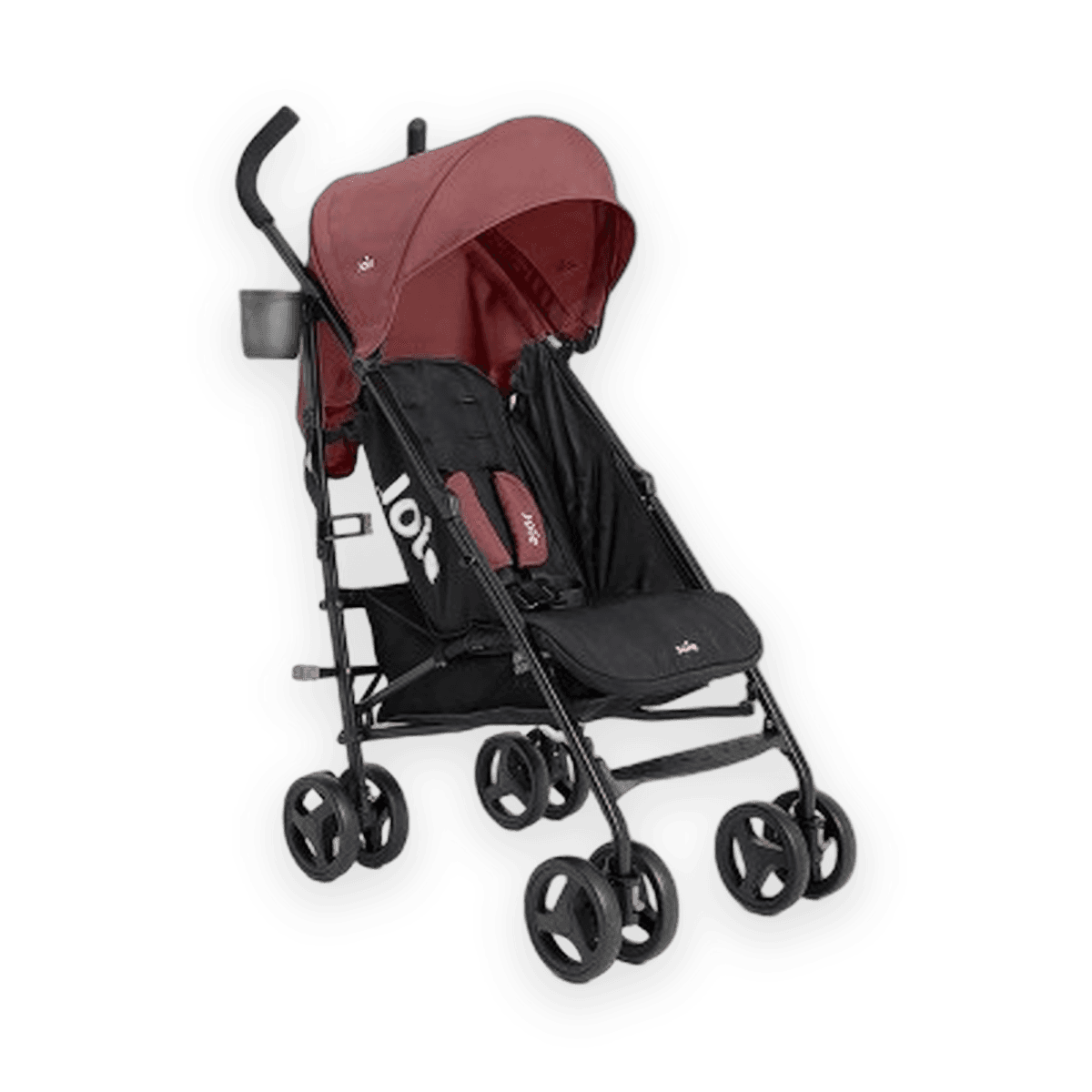
Product image via Target
Where to buy
Prices checked Sep 24, 2026- AmazonBest pickCheck price at Amazon
- TargetCheck price at Target
We may earn a commission from links on this page, at no extra cost to you. How this works.
14 min read · Reviewed by Huggle Hive Editorial Team, Parent-led product research team · Updated August 2, 2026
The Joie Tansy is a walk-it-every-day stroller for parents who are past the newborn stage and want something they can carry. At 14.75 pounds with a fold that collapses to 9.5 inches deep, it is designed to go up a flight of stairs and into a trunk without a wrestling match. What it is not is a system: Joie rates it from 6 to 48 months and up to 40 pounds, and the spec sheet says nothing about carrying an infant car seat.
Our scorecard
How the Hive Score works- Portability
- 4.9
- Safety basics
- 4.2
- Comfort & ride
- 4.6
- Versatility
- 2.4
- Value
- 3.9
Scores blend each product's verified specs with its overall owner rating, weighted the same way for every stroller. Learn more about our evaluation framework.
The short version
- Weighs 14.75 pounds and folds to 15 x 9.5 x 43.5 inches, thin enough to stand on edge along a trunk wall or in a hall closet
- Rated for 6 to 48 months and up to 40 pounds, whichever arrives first, so it cannot be your newborn stroller
- Metal frame with plastic wheels: a pavement, school-run, and shopping-centre stroller
- Seven specs Joie does not publish for this model (see the table below), which is what holds the Versatility and Safety basics sub-scores down
- One-year warranty
What we like and what we would flag
Pros
- 14.75 pounds, light enough for most parents to carry up a flight of stairs with the other arm full
- Folds to 9.5 inches deep, so it stores on edge instead of eating a whole trunk
- 19 inches wide open, which clears a standard 32-inch interior doorway with 6.5 inches to spare on each side
- Rated to 48 months and 40 pounds, giving you years out of one purchase
- Metal frame rather than an all-plastic chassis
Cons
- Age stage starts at 6 months, so it does not cover the newborn window
- Plastic wheels, better matched to pavement than gravel, grass, or broken sidewalk
- Seven specs Joie does not publish for the Tansy (all listed in the table below), including recline and harness details
- Folded height of 43.5 inches, just over three and a half feet, so it stands tall rather than tucking flat under a bed
- A one-year warranty covers a fraction of the ownership window the 40-pound limit implies you will get
Who is the Joie Tansy for?
Start with your stairs. If you live in a walk-up, park on the street, take buses, or fold a stroller into a trunk that already holds a pram-sized everything-else, 14.75 pounds and a 9.5-inch fold solve a problem you feel every single day. That is the Tansy's whole argument, and it is a good one.
It also suits the family buying a second, simpler stroller. Plenty of parents keep a full travel system for the newborn months and want something they can grab for daycare drop-off, a shop run, or a trip. The 6 to 48 month age stage lines up neatly with that role, because by the time you want a lighter frame, your baby is usually sitting well and the newborn-specific hardware has stopped earning its space.
Skip it if you are shopping for your first baby and expect one stroller to do everything. The Tansy does not start until 6 months, and nothing in Joie's specs confirms bassinet use or infant car seat compatibility, so it cannot be the frame you bring home from the hospital. Skip it too if your daily route involves trails, sand, or rutted pavement. Plastic wheels and a metal frame are a fine combination for sidewalks and shop floors, and a poor one for terrain.
How does the Joie Tansy perform?
Will it fit through your door and into your trunk?
This is where the Tansy earns its 4.5 Portability score. Open, it measures 42.5 inches high, 19 inches wide, and 33 inches deep. That 19-inch width is the number to care about, because it decides whether daily life is annoying. A standard interior doorway opening runs around 30 to 32 inches, so a 19-inch frame leaves roughly 6.5 inches on each side of a 32-inch opening. You are not aiming, you are just walking through. Cafe tables, shop aisles, and lift doors follow the same logic.
Folded, it becomes 15 inches wide, 9.5 inches deep, and 43.5 inches tall. Read those in order of usefulness. The 9.5-inch depth is what lets it stand on edge against the side wall of a boot or a closet instead of lying across the floor and blocking everything else. The 43.5-inch height is the catch: that is just over three and a half feet, so it stores upright, not flat under a bed or on a low shelf.
Then there is the 14.75 pounds. Under 15 pounds is the threshold where a stroller stops being a two-handed, put-the-baby-down job and starts being something you can lift with one arm while your child rides the other hip. Joie does not publish whether the Tansy folds one-handed or stands on its own once folded, which is the difference between a smooth kerbside fold and an awkward one, so treat the carrying weight as confirmed and the folding choreography as an open question.
Is it comfortable to ride in and to push?
Comfort and ride lands at 4.2, and the geometry supports that. A 33-inch open depth is a real seat footprint rather than a stripped umbrella-stroller perch, which matters once you have a napping three-year-old whose legs need somewhere to go. The 42.5-inch overall height also suggests a frame built for an adult to walk behind without stooping, though Joie does not publish a handlebar height or say whether it adjusts.
The wheels are the honest limit. Plastic wheels transmit more of the pavement than rubber or foam-filled ones, and Joie does not list suspension for this model. On smooth ground you will not think about it. On cobbles, gravel car parks, or a cracked path, you and your child both will.
The Tansy's case rests almost entirely on two numbers: 14.75 pounds and 9.5 inches. If those solve your daily problem, the rest of the spec sheet matters less than you expect.
How safe is it, based on what is confirmed?
Every stroller sold in the United States has to comply with the federal stroller and pushchair standard the CPSC enforces, which covers restraints, stability, brakes, and hinge protection. That is the floor for the category, and it applies here as it does anywhere else.
Our Safety basics score of 3.8 reflects what we can confirm above that floor, and for the Tansy that is a short list. Joie's published data for this model gives us the frame material, the wheels, the dimensions, and the child limits. It does not give us the harness configuration or a certification such as JPMA, which are the two signals that lift this sub-score. We score what is confirmed, so an unpublished spec cannot count in the product's favour.
The rest is on you at purchase: check the harness on the actual unit, confirm the brake style, and follow the AAP's stroller guidance on always using the restraint and never hanging bags from the handlebar, which is the single most common way a light stroller tips.
How versatile is it?
Versatility is the Tansy's weakest sub-score at 2.4, and that is a fair reading rather than a harsh one. A versatility score climbs when a stroller confirms things like travel system compatibility, a reversible seat, newborn readiness, a bassinet option, or a published recline range. None of those appear in Joie's specs for the Tansy. What you can count on is a single seat, rated 6 to 48 months, up to 40 pounds.
Bought as a light second stroller or an only stroller for a toddler, that limitation costs you very little. Bought as your one stroller from birth, it costs you the first six months entirely.
What Joie does not publish for the Tansy
Rather than repeating this through the review, here is the full set in one place. Nothing below is a claim that the Tansy lacks the feature. It means the spec is not in our verified data, so we neither credit it nor rule it out, and it is worth confirming before you buy.
| Spec | Why parents ask | Status |
|---|---|---|
| Recline type and range | Whether a tired toddler can nap in it | Not published |
| Harness points (3 vs 5) | Restraint quality for an active climber | Not published |
| Safety certifications (e.g. JPMA) | Third-party verification above the federal floor | Not published |
| Canopy UPF rating | Sun coverage on afternoon walks | Not published |
| Suspension | Ride quality over rough pavement | Not published |
| Fold mechanics (one-hand fold, self-standing) | Whether you can fold it holding a child | Not published |
| Travel system / infant car seat compatibility | Whether it can carry a newborn seat | Not published |
These seven gaps are the same ones named in the takeaways and the cons list above, and they are the reason the Versatility and Safety basics sub-scores sit where they do. They are genuine unknowns, and unknowns you may have to resolve in a shop or with a retailer.
Who fits in it: 6 to 48 months, up to 40 pounds
Joie gives two limits, and they work as a pair. Whichever your child reaches first is the one that ends the stroller's service life.
| Stage | Age range | What to plan for |
|---|---|---|
| Sitting baby | 6 to 12 months | The earliest the Tansy is rated. Your baby needs to be at the stage Joie's 6-month starting point assumes, not just close to it. |
| Toddler | 12 to 24 months | The sweet spot. Light frame, 19-inch width, easy in and out of shops and lifts. |
| Preschooler | 24 to 48 months | Still rated, up to the 40-pound cap. The 33-inch open depth is what keeps this stage workable. |
The practical read: this is a three-and-a-half-year stroller for most families, starting after the newborn period and finishing somewhere around preschool. If you want the earlier months covered, you need a second frame or a carrier, and our lightweight stroller guide is the better starting point for pairing the two.
What you are paying for
We do not publish a confirmed price tier for this configuration, and stroller pricing moves by retailer and season, so check the current price through the links below rather than trusting any number written into an article. What the money buys is easier to state:
- Weight, at 14.75 pounds, the single spec that changes how often you actually take the stroller with you
- A 9.5-inch folded depth, which is storage space you get back every day
- A 19-inch open width that clears standard doorways with room on both sides
- A metal frame rather than an all-plastic one
- A 40-pound, 48-month rating, so the purchase amortises over years rather than months
What the money does not buy, on the published specs, is convertibility. There is no confirmed car seat compatibility, no confirmed recline range, no confirmed suspension. If any of those are on your must-have list, you are shopping in a different part of the category.
How does it compare with other lightweight strollers?
Lightweight strollers split into two rough camps. One camp chases the smallest possible fold and gives up seat size and ride quality to get there. The other stays closer to a full-size frame, keeps the seat and the wheels serious, and accepts more weight and bulk. The Tansy sits between them: a real 33-inch seat depth and a metal frame, but plastic wheels and a fold that is thin rather than tiny.
That middle position is the honest way to compare it. Against the smallest travel folds, the Tansy will not disappear into an overhead bin, but it gives your child more room and gives you an adult-height frame. Against heavier all-terrain strollers, it gives up the wheels and the suspension, and hands you back roughly the weight of a full nappy bag on every stair climb.
We are not going to put numbers next to unnamed rivals. The comparison that decides this purchase is the one you can make yourself: measure the gap in your boot, weigh what you currently carry, and see how far 14.75 pounds and 9.5 inches move those numbers. Browse the rest of our stroller reviews if you want to line specific models up.
How we scored it
The headline 8.3 Hive Score is a weighted figure, not the straight average of the five bars on the scorecard, so it will not equal their mean. Read the bars for the detail and the 8.3 for the summary. Our full scoring methodology explains how each category is built.
Portability, 4.5. The highest sub-score, and the one the Tansy earns most clearly. Anything at or under 15 pounds gets credit here, and 14.75 clears it. The 9.5-inch folded depth adds to that; the 43.5-inch folded height keeps it from going higher.
Comfort and ride, 4.2. Supported by the open dimensions, particularly the 33-inch depth and the 42.5-inch frame height. It does not go higher because suspension and a canopy UPF rating, the two specs that lift this dimension, are not published for this model.
Safety basics, 3.8. This dimension starts below the headline by design, because safety credit has to be earned by confirmed specifics. With no published harness configuration and no listed certification, there is nothing here to add to the baseline. That is a scoring outcome about available data, not a judgment that the stroller is unsafe.
Versatility, 2.4. The lowest score, and the most straightforward. This dimension builds up from a low base as a stroller confirms travel system compatibility, a reversible seat, newborn readiness, a bassinet option, or a recline type. The Tansy confirms none of them, so it stays at the base.
Value, 3.7. Value is anchored to price tier, and with no confirmed tier in our data, it settles mid-scale. Once you see a live price, judge it against the weight and the fold, because those are the specs doing the work.
Common questions about the Joie Tansy
Can the Joie Tansy be used for a newborn?
No. Joie rates the Tansy for 6 to 48 months, so it does not cover the newborn stage. Nothing in the published specs confirms bassinet use or infant car seat compatibility either, so plan on a separate solution for the first six months.
How much does the Joie Tansy weigh?
14.75 pounds. That is under the 15-pound mark most parents use as the line between a stroller you can lift one-armed and one you cannot, which is why it scores 4.5 for portability.
How long will my child fit in it?
Up to 48 months or 40 pounds, whichever comes first. For most families that means roughly three and a half years of use starting from the sitting-up stage.
Will it fit in my boot and through my front door?
It folds to 15 inches wide, 9.5 inches deep, and 43.5 inches tall, so it stands on edge along the side of most boots. Open, it is 19 inches wide, which leaves about 6.5 inches on each side of a standard 32-inch doorway opening.
Is the Joie Tansy good for rough ground or travel paths?
It is better on pavement. The Tansy has plastic wheels and Joie does not list suspension for this model, so gravel, grass, and broken pavement are not what this frame is built around.
Does it recline for naps, and does it have a five-point harness?
Joie does not publish a recline range or a harness configuration for the Tansy. Both are on our unpublished-specs table above, so check the actual unit or ask the retailer before you buy if napping and restraint style matter to you.
What warranty does it come with?
One year. Register it as soon as you buy it, since that is a short window relative to the 40-pound, 48-month usable life the specs suggest.
Where to buy the Joie Tansy
Pricing and stock on lightweight strollers move around, so check current availability below. Joie's own product specifications are the place to confirm anything on our unpublished list before you commit.
Bottom line
The Joie Tansy is a clear, narrow recommendation: buy it if the weight and the fold are what you need solved. 14.75 pounds, 9.5 inches deep folded, 19 inches wide open, and a rating that runs from 6 months to 40 pounds add up to a stroller that will actually come with you rather than live in the boot. The trade-off is everything Joie leaves unpublished, from recline to harness to car seat compatibility, plus plastic wheels that keep this on pavement. If you want one stroller to do everything from birth, keep looking. If you want a light frame for the years after the newborn stage, this one is easy to live with.
Joie Tansy
See prices