
Joie Kava & Rue
Price verified Sep 24, 2026
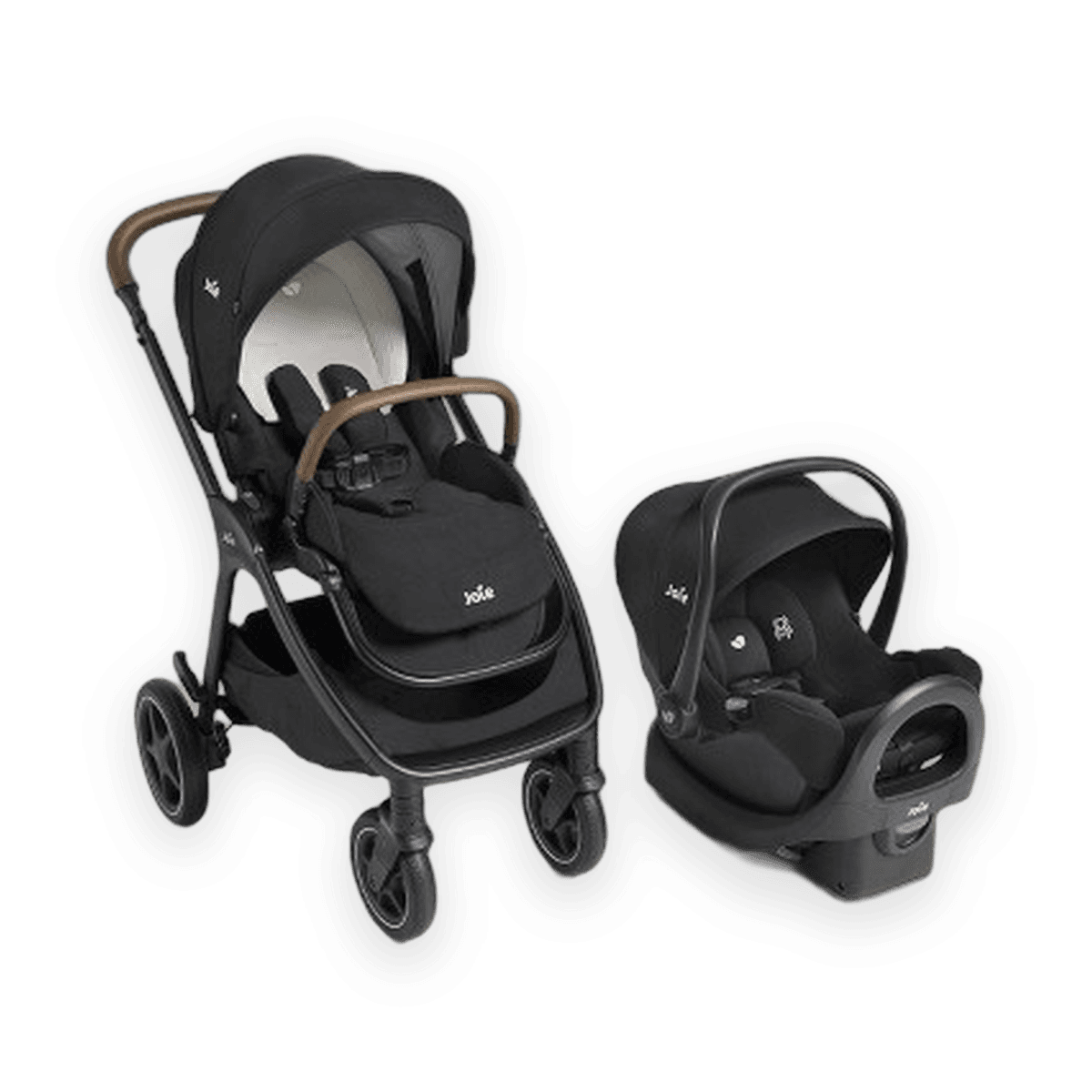
Product image via Target
Where to buy
Prices checked Sep 24, 2026- TargetCheck price at Target
We may earn a commission from links on this page, at no extra cost to you. How this works.
16 min read · Reviewed by Huggle Hive Editorial Team, Parent-led product research team · Updated August 3, 2026
The Joie Kava & Rue travel system fits a family with a car, a driveway or an elevator, and a preference for buying one frame that carries a baby from the newborn car seat into the preschool years. It is JPMA certified, meets ASTM standards, and clicks together with an infant car seat from day one. The catch is heft: at 42.6 pounds, this is a stroller you plan your day around rather than one you sling over a shoulder on the way to the car.
Our scorecard
How the Hive Score works- Portability
- 3.9
- Safety basics
- 4.1
- Comfort & ride
- 4.3
- Versatility
- 2.9
- Value
- 3.7
Scores blend each product's verified specs with its overall owner rating, weighted the same way for every stroller. Learn more about our evaluation framework.
The short version
- JPMA certified and built to meet ASTM standards, the two marks worth checking on any stroller frame.
- Covers a 0 to 5 year age stage with a 50 pound child weight limit, a long service life for a single stroller.
- Heavy for a travel system, and that is the single biggest reason to hesitate.
- Folds to 26.5 by 23.9 by 17.2 inches, so the folded depth is the number to hold up against your trunk.
- Adjustable handlebar and infant car seat compatibility both come standard.
- Frame materials include aluminum and metal alongside plastic and polyester.
Pros
- JPMA certified and meets ASTM standards, so it clears the industry's baseline safety testing
- Rated to 50 pounds across a 0 to 5 year age stage, which is a lot of use out of one purchase
- Adjustable handlebar, which matters when the adults pushing differ in height by more than a few inches
- Travel system compatible, so an infant car seat rides on the frame from the first week home
- Aluminum and metal appear in the materials list, not plastic alone
- Folded depth of 17.2 inches is slimmer than the 36 inch open footprint would suggest
Cons
- Heavy for a travel system, and you feel it at every curb, stair, and trunk lift
- Plastic wheels, which typically pass along more of a rough sidewalk than rubber or foam filled tires
- One year warranty, shorter than the coverage some brands put behind a frame
- A 36 inch open depth is a lot of stroller in a coffee shop or a checkout line
- The published specs stay quiet on several everyday details (basket, canopy, brakes), so those are unknowns at the point of purchase
Who should buy the Kava & Rue, and who should skip it
Buy it if your baby's day starts and ends in a car. A travel system earns its keep when the infant seat lifts out of the base and clicks onto the frame without waking anyone, and this one is built for exactly that pattern: TRAVEL_SYSTEM type, car seat compatibility confirmed, and a frame rated well past the point most kids stop riding. Suburban parents with a hatchback or an SUV and a flat path from car to front door are the natural fit.
Skip it if you carry your stroller more than you push it. A third floor walk up, a subway platform with stairs, or street parking half a block from the door all turn a 40 plus pound frame into a daily workout. That is not a defect, it is a design choice, and it is the wrong choice for city families.
The in between case is the family with one car and mixed errands. If most outings are stroller-out-of-the-trunk and back in again, the weight is a nuisance rather than a dealbreaker, and the long age range plus the certification record make it a sensible single purchase. Compare it against the lighter options in our stroller reviews before you commit, because the weight difference between classes is larger than most first time parents expect.
How does it perform?
Is it safe for a newborn?
Two marks matter here, and this stroller carries both. It is JPMA certified, which means an independent lab verified it against the ASTM F833 stroller standard rather than the brand simply asserting compliance. The JPMA certification program is the closest thing the category has to a third party seal, and the U.S. Consumer Product Safety Commission's federal stroller rule leans on that same ASTM standard, so the two verified attributes reinforce each other instead of duplicating.
What that testing covers is the boring, load bearing stuff: restraint system strength, brake performance, stability on a slope, leg opening protection, and latching so the frame cannot collapse under a child. It does not tell you the seat is comfortable or the canopy is generous. Read the certification as a floor, not a ranking.
For newborn use specifically, the safety question shifts to the car seat rather than the frame. An infant seat on a stroller chassis sits at a recline angle designed for travel, not sleep, and the American Academy of Pediatrics is direct about moving a sleeping baby to a flat, firm surface once you are home. A harness point count is not listed in the specs we have, so check the manual for the exact configuration on your unit before the first ride.
How heavy is 42.6 pounds in practice?
Heavy enough to change how you plan. At 42.6 pounds, a lift into a trunk is a two hands, square your feet, bend your knees maneuver every single time, and it is the kind of load that gets harder in the sixth postpartum week, not easier. Anyone recovering from a cesarean should treat that number as a hard filter and ask their provider about lifting limits first.
The folded dimensions soften the picture a little. At 26.5 inches tall, 23.9 wide, and 17.2 deep, the folded package works out to roughly 6.3 cubic feet, which is a normal footprint for a full size travel system rather than an outlier. The detail worth noticing is that the width is 23.9 inches both open and folded, so the fold collapses the length and height but not the girth. Your storage constraint is therefore fixed: if a closet or a trunk opening is narrower than 24 inches, folding does not rescue you.
The number to measure against your car is the 17.2 inch depth, since that is what has to clear a trunk lip and let the hatch close over it. Sedan owners should check before buying rather than after.
Comfort and ride
The adjustable handlebar is the standout comfort feature, and it is not a small one. A fixed bar set for a 5 foot 4 parent forces a 6 foot 2 parent to walk with bent wrists and clipped heels, which is how people end up with a sore lower back after a zoo day. Two adults of different heights sharing one stroller is the exact case an adjustable bar solves.
The wheels pull in the other direction. Plastic wheels are durable and maintenance free, and they never go flat, but they typically transmit more of a cracked sidewalk or a gravel path up through the frame than rubber or foam filled tires do. On smooth surfaces, mall floors, school hallways, paved park loops, the difference is small. On a rutted sidewalk with a sleeping baby aboard, it is the difference between a nap that survives and one that does not. A suspension system is not listed in the specs we have, so treat this as a stroller built for pavement.
Seat fabric is polyester, the standard choice for a reason: it wipes down, resists staining, and dries faster than cotton after a juice incident. Canopy reach and any UPF rating are not listed.
How versatile is it?
One thing is confirmed and confirmed clearly: this is a travel system, and the infant car seat compatibility is verified rather than implied. That covers the first months, when carrying a sleeping baby in the seat rather than transferring them is the whole point.
Beyond that, the spec sheet we have is quiet. A reversible seat, bassinet compatibility, a second seat position, and the recline mechanism are not listed. Read that as unconfirmed rather than absent, which is an important distinction for a shopper: it means these are questions to put to the retailer or the manual, not features you should assume are missing. Our versatility score reflects only what is verified, and silence costs a stroller points on that dimension because we will not score a feature we cannot confirm.
The everyday specs the sheet does not cover
A few details decide whether a stroller is pleasant on day 200, and Joie's published attributes do not reach them. Rather than skip past the gaps, here is what to ask before you buy:
| Everyday detail | What the specs say | What to do about it |
|---|---|---|
| Storage basket size | Not listed | Ask whether a standard diaper bag fits, and whether the basket is reachable with the seat reclined |
| Canopy coverage and UPF | Not listed | Check for a peekaboo window and how far the canopy extends over a reclined seat |
| Brake type | Not listed | Confirm whether it is a single linked brake or two separate pedals; linked is easier in sandals |
| Fold latch and self standing | Not listed | Ask whether the fold locks shut and whether it stands on its own once folded |
| Harness points | Not listed | Verify in the manual, and check that the shoulder strap heights adjust as your child grows |
| Suspension | Not listed | Assume pavement duty and test push it over a threshold in store if you can |
None of these are strikes against the stroller. They are simply unknowns, and a good retailer or the product manual will answer all six in five minutes.
How long will your child actually fit?
The listed age stage is 0 to 5 years with a 50 pound maximum child weight, which is a generous span for a single stroller. In practice, weight is rarely the limit that arrives first. Legroom, canopy clearance over a taller head, and a four year old's flat refusal to sit down usually retire a stroller before the scale does.
Open, the frame is 43.4 inches tall, 23.9 wide, and 36 deep. That 36 inch depth is the number that matters indoors: it is a long footprint in a cafe aisle, a pharmacy line, or a crowded elevator, and it is the trade you accept for a seat roomy enough to work for a preschooler. The listed open height reflects one handlebar position; the adjustable bar means the practical push height varies. Seat dimensions and interior legroom are not listed, so if you are buying with a tall toddler already in the house, sit them in it before you commit.
A stroller that fits a five year old is a stroller that takes up five year old amounts of space. The Kava & Rue does not pretend otherwise.
The warranty runs one year. That is shorter than the coverage some brands offer, though it is worth knowing what a frame warranty realistically does: it covers manufacturing defects, and defects tend to surface in the first weeks of use rather than in year three. It will not cover a wheel worn down by two years of gravel.
What does it cost to own?
Strollers are unusual in the baby aisle because the running cost is close to zero. There are no refills, no consumables, no monthly spend. The math that matters is price divided by months of use, and the 0 to 5 year age stage is what makes that division favorable.
Here is the arithmetic for whatever you end up paying:
| If you pay | Cost per month over 3 years | Cost per month over 5 years |
|---|---|---|
| $150 | $4.17 | $2.50 |
| $250 | $6.94 | $4.17 |
| $350 | $9.72 | $5.83 |
Two things fall out of that table. First, a travel system that genuinely lasts to age five costs meaningfully less per month than a cheaper stroller you replace at eighteen months, so a higher sticker is not automatically the worse deal. Second, the gap between price points narrows fast once you spread it across sixty months, which means the daily annoyance of lifting a heavy frame deserves more weight in your decision than a $50 price difference does.
Budget separately for the things a stroller purchase tends to drag along: a rain cover, a cup holder or parent console, and a second car seat base if you have two cars. None of those accessories are listed in the specs here, so confirm what is in the box before you assume the cup holder is included.
How it compares to other travel systems
We compare strollers on published specs, and the honest comparison here is against classes rather than a single rival, because weight is what sorts this category.
Compact and lightweight travel strollers sit at the opposite end. They fold smaller, lift with one arm, and suit apartment life, transit, and frequent flying. They give up seat size, storage capacity, and usually the age range: many stop well short of a five year rating. If your daily friction is carrying, that class wins regardless of how good this frame's certifications are.
Mid weight modular systems are the closest competitors, and they compete on the features the Kava & Rue's specs leave unconfirmed: reversible seats, bassinet options, deeper reclines. They usually cost more, and they usually weigh less than a full size system while doing more. If a parent facing seat for the first year is on your list, price out that class before deciding.
The third option is not a travel system at all: a bare car seat frame for the infant months, then a standalone stroller when your child can sit up. It is cheaper to start and lighter to carry, and it costs more in total because you buy twice. Families who dislike lifting heavy things often land here. Our travel system buying guide walks through both routes with current picks.
How we scored it
Our sub-scores are calculated from the verified attributes, not written by hand, so they line up with the spec sheet rather than with a mood. This stroller's headline Hive Score is 8.3 out of 10, and the five dimensions behind the card break down like this.
Comfort & ride, 4.3. The adjustable handlebar carries this one. It is the feature most likely to affect how the stroller feels on a long push, and it is confirmed. Plastic wheels and an unlisted suspension setup keep it from climbing higher.
Safety basics, 4.1. JPMA certification plus ASTM compliance is the strongest pair of signals available in this category, and both are verified here. The score sits where it does rather than at the top because the harness point count is not listed and no additional certifications appear in the data.
Portability, 3.9. Weight is the drag. The folded package is reasonable and the 17.2 inch depth is genuinely manageable, which is why this lands close to 4 rather than in the low 3s, but a frame this heavy will not out-carry a compact stroller.
Value, 3.7. Price for this configuration varies too much across sellers and bundles for us to score it confidently, so this reflects what is fixed: a long age range, real safety certification, and a one year warranty. Run the per month math above against whatever price you are actually quoted.
Versatility, 2.9. This is the lowest number on the card and the most easily misread. Travel system compatibility is confirmed and it earns credit. The reversible seat, bassinet compatibility, second seat, and recline type are all unlisted, and unlisted features cannot be scored. That is a gap in the published information, and it is exactly why we flagged those questions for you to ask rather than turning them into accusations.
More on our approach lives on the review methodology page.
Can I use the Kava & Rue from birth?
Yes, with the infant car seat attached. Car seat compatibility is confirmed and the age stage starts at 0, so a newborn rides in the car seat on the frame until they can sit unsupported. Once you are home, move a sleeping baby to a flat sleep surface.
How much does it weigh?
42.6 pounds as listed. For comparison in your own life, that is roughly a large bag of dog food, lifted with both hands, every time it goes in or out of the car.
Will it fit in a sedan trunk?
Often yes, but measure first. The binding constraints are a 23.9 inch width that does not shrink when folded and a folded depth that has to clear the lip. Compact trunks with a narrow opening are where this one gets tight.
Is it certified safe?
It is JPMA certified and meets ASTM standards. That means an independent lab checked it against the stroller safety standard covering brakes, stability, restraints, and latching, rather than the brand self declaring compliance.
How long will my child fit in it?
The rating runs to 5 years and 50 pounds. Most families run out of patience or legroom before they run out of weight allowance, so plan on the seat lasting into the preschool years if your child still enjoys riding.
Does the seat face me or face out?
Not specified in the published attributes. If a parent facing seat matters to you for the first year, confirm it with the retailer before ordering, since we will not guess at a feature that is not documented.
What is covered by the warranty?
One year, which in practice means manufacturing defects. Register the product when it arrives so a claim is straightforward, and give the frame a thorough once over in the first few weeks while coverage is fresh.
Where to buy the Joie Kava & Rue
Prices on travel systems move a lot around seasonal sales and registry completion discounts, so check current listings before you commit.
Check the current price on the Joie Kava & RueBottom line
The Joie Kava & Rue is a well certified, long lasting travel system for families whose stroller lives in a car. JPMA certification, ASTM compliance, a 50 pound rating across a 0 to 5 year age stage, and an adjustable handlebar are real, verified strengths, and the per month cost of a stroller that lasts five years is hard to beat. The trade is weight and footprint: this is a frame you lift with both hands and park with intention. If your life has stairs in it, we would steer you toward something lighter. If it has a trunk, this one is worth a look.
Joie Kava & Rue
See prices