
Joie Kava
Price verified Sep 15, 2026
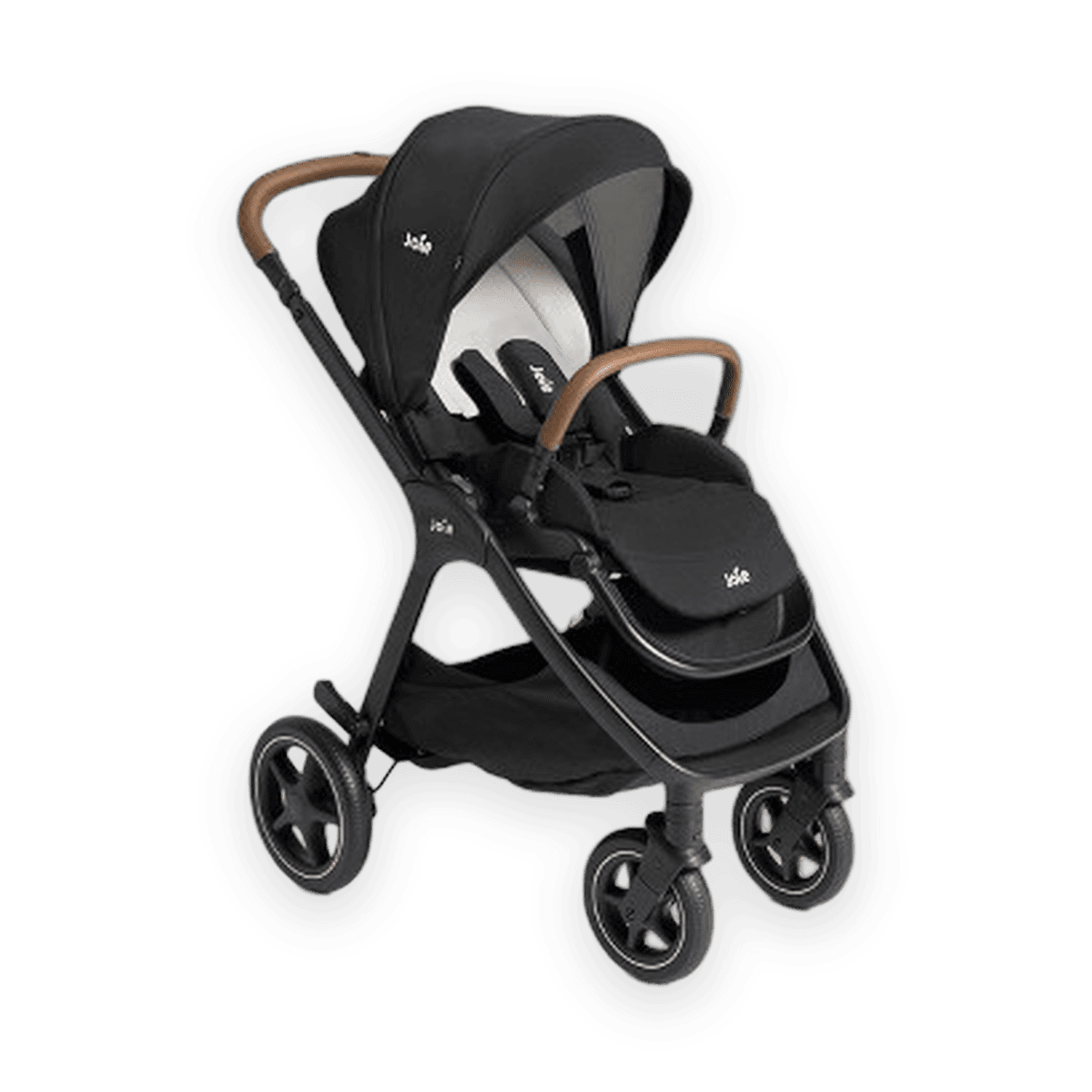
Product image via Target
Where to buy
Prices checked Sep 15, 2026- TargetCheck price at Target
We may earn a commission from links on this page, at no extra cost to you. How this works.
18 min read · Reviewed by Huggle Hive Editorial Team, Parent-led product research team · Updated August 2, 2026
The Joie Kava is a full-size stroller built to carry one child from birth through the preschool years on a single frame. It is JPMA certified, meets ASTM standards, holds a child up to 50 pounds, and accepts an infant car seat as part of a travel system, which is the setup most first-time parents actually need in month one. What you give up is weight and gadgetry: 26.5 pounds on plastic wheels, with no reversible seat, bassinet mode, or suspension confirmed on the spec sheet.
Our scorecard
How the Hive Score works- Portability
- 3.9
- Safety basics
- 4.1
- Comfort & ride
- 4.3
- Versatility
- 2.9
- Value
- 3.7
Scores blend each product's verified specs with its overall owner rating, weighted the same way for every stroller. Learn more about our evaluation framework.
Joie Kava at a glance
- Certified twice over: JPMA certified and built to meet ASTM standards, the two credentials worth checking on any stroller frame.
- Covers 0 to 5 years and up to 50 pounds, so most families will not need a second stroller before their child outgrows riding entirely.
- Travel-system compatible, so an infant car seat clicks onto the frame for the newborn stage.
- 26.5 pounds is the honest catch. That is above the line where our portability score starts subtracting, and you will feel it on stairs and trunk lifts.
- Plastic wheels and no confirmed suspension point this at sidewalks, malls, and airports rather than gravel paths.
Pros
- JPMA certified and built to meet ASTM standards, verified on the spec sheet rather than implied by marketing
- Travel-system compatible, so a sleeping newborn can move from car to sidewalk without being unbuckled
- Adjustable handlebar, which matters more than parents expect when two adults of different heights share one stroller
- 50 pound maximum child weight and a 0 to 5 year age stage, a genuinely long runway
- Folds from 43 inches tall to 27 inches, and from 37 inches deep to 19.5 inches
- 23.75 inches wide, narrow enough for most standard interior doorways and store aisles
- Plastic, metal, and polyester construction keeps maintenance low: no tires to inflate, no fabric that needs babying
Cons
- At 26.5 pounds it sits above the 25 pound threshold where our portability scoring starts docking points
- Plastic wheels roll best on smooth ground, and no suspension system is confirmed in the specs
- No reversible seat, bassinet compatibility, or one-hand fold is confirmed, which is exactly why versatility is the lowest sub-score
- Warranty coverage runs 1 year, so register it early and keep proof of purchase
- Folded width stays at 23.75 inches, the same as open, so the fold saves height and depth but not shoulder room
Who should buy the Joie Kava, and who should skip it
Buy it if you are outfitting a first baby and want one purchase to carry you through the whole stroller era. The 0 to 5 year age stage and 50 pound limit mean you are not shopping again at 18 months, and travel-system compatibility covers the newborn window when your baby cannot yet sit up. For a suburban family whose stroller lives in a trunk and comes out at the grocery store, the park path, daycare pickup, and the occasional airport, this frame is aimed squarely at you.
Skip it if your daily route involves stairs. A 26.5 pound frame is manageable when you are lifting it into a car once or twice a day. It is a different story carried up to a third-floor walkup with a diaper bag on the other shoulder, or hoisted onto a subway platform. Parents in that situation should be shopping the sub-20-pound category, and we would steer you there without hesitation.
Also think twice if you have your heart set on a stroller that grows sideways rather than upward. A reversible seat that flips your baby to face you, a bassinet attachment, or a second seat for a future sibling are all things the Kava's verified specs do not confirm. If those are on your must-have list, confirm them directly with the manufacturer before you commit, because our data does not support the claim either way.
The Kava's pitch is longevity, not lightness. You are buying five years of use from one certified frame, and paying for it in pounds.
How the Joie Kava performs
How portable is it, really?
Start with the number that decides this section: 26.5 pounds. Our portability scoring treats 25 pounds as the point where a stroller stops being easy to move and starts being something you plan around, and the Kava sits just past it. That is normal for a full-size frame with a metal chassis and a 50 pound capacity, but it is worth being clear-eyed about. Lifting 26.5 pounds into a trunk is fine. Lifting it repeatedly, one-handed, while holding a baby, is not.
The fold helps more than the weight suggests. Open, the Kava is 43 inches tall and 37 inches deep. Folded, that drops to 27 inches tall and 19.5 inches deep, roughly halving the front-to-back footprint. Width does not change: it is 23.75 inches either way, so the fold collapses the stroller lengthwise rather than narrowing it.
| Dimension | Open | Folded |
|---|---|---|
| Height | 43 in | 27 in |
| Width | 23.75 in | 23.75 in |
| Depth | 37 in | 19.5 in |
One practical read on those numbers: at 23.75 inches wide, the Kava clears most standard interior doorways and retail aisles without the sideways shuffle that wider double-width frames force on you. And a folded package of roughly 27 by 23.75 by 19.5 inches is a mid-size sedan trunk load, not a hatchback afterthought. Measure your trunk opening before you buy.
Is the Joie Kava safe? What JPMA and ASTM actually mean
This is the strongest part of the Kava's record, and it is why safety basics lands at 4.1. The stroller is JPMA certified and listed as meeting ASTM standards. Those are not interchangeable marketing words, so here is the plain-English version.
ASTM International publishes F833, the voluntary safety standard for carriages and strollers. It covers the failure modes that actually hurt babies: brake performance, restraint strength, stability so the frame does not tip when a toddler leans, latching so the stroller cannot collapse under load, and small parts that could choke. JPMA certification goes a step further, because it means an independent lab tested samples against that standard and the manufacturer submits to ongoing verification rather than self-attesting once.
Plenty of strollers carry one of these markers. Having both on the verified spec sheet is the credential worth paying attention to, and it is the single clearest signal in the Kava's data. What the specs do not confirm is the harness point count or a GREENGUARD Gold certification, so we are not going to characterize either way. If a five-point harness is a firm requirement for you, confirm it on the manufacturer's listing or in the manual before purchase.
Two habits worth building regardless of which stroller you choose: register the product with the manufacturer when it arrives so recall notices reach you, and check the CPSC recall database before buying anything secondhand. The American Academy of Pediatrics also has straightforward guidance on stroller and car seat use for newborns, including the rule that infant car seats are for travel, not for long stretches of sleep.
Comfort and ride
Comfort and ride is the Kava's top sub-score at 4.3, and the adjustable handlebar is doing real work there. It sounds like a minor convenience until you live with a fixed-height bar. A handlebar set for a 5-foot-4 parent puts a 6-foot-2 parent in a stoop, kicking the rear axle with every step. If two adults share pushing duty, an adjustable bar is the feature that keeps both of them willing to take the stroller out.
The wheels are the honest counterweight. They are plastic, which brings genuine upsides: nothing to inflate, nothing to puncture, no maintenance, and less weight than rubber. Plastic rolls well on the surfaces the Kava is clearly designed for, meaning smooth sidewalk, mall tile, hospital corridor, and airport terminal. On gravel, packed dirt, grass, or badly broken pavement, hard wheels transmit more of the bump than air-filled or foam-filled tires do. Nothing in the verified specs confirms a suspension system, so we would not point you at the Kava as a trail or beach stroller. For paved daily life, it is well matched.
Materials, cleaning, and build
The frame is plastic, metal, and polyester. That combination is the standard recipe for a full-size stroller in this class: metal where the load goes, plastic for the housings and wheels, polyester for the seat and canopy fabric.
Polyester is a practical choice for anyone who has cleaned a yogurt disaster off a stroller seat. It resists staining better than natural fibers and dries quickly. The specs do not confirm whether the seat pad is removable or machine washable, so check the manual before you throw anything in a washer. Spot cleaning with mild soap and air drying is the safe default for any stroller fabric, and it is what we would do here.
Versatility: what is confirmed and what is not
Versatility is the Kava's weak spot at 2.9, and it is worth explaining precisely why, because the number looks harsher than the stroller deserves. That sub-score builds up from a low base and rewards specific confirmed features: travel-system compatibility, a reversible seat, bassinet compatibility, newborn readiness, multiple seats, and recline type. The Kava confirms exactly one of them.
That one is meaningful, though. Travel-system compatibility means an infant car seat mounts to the frame, which is how the newborn stage works in practice: your baby falls asleep in the car, you lift the car seat out, click it onto the stroller, and finish the errand without a wake-up. Before you buy, confirm which infant car seats the manufacturer lists as compatible and whether an adapter is needed, since that varies by model and is not something we can verify from this data.
The rest is simply unconfirmed rather than absent. A missing flag in our data is not evidence that a feature does not exist. It means we have not verified it and will not claim it.
Fit and sizing: how long will your child use it?
The Kava's age stage is 0 to 5 years with a 50 pound maximum child weight. That is a long runway, and it is the practical argument for buying a heavier frame in the first place.
| Stage | How the Kava fits |
|---|---|
| Newborn to about 6 months | Use the travel-system setup with a compatible infant car seat until your baby has steady head and neck control |
| 6 to 18 months | Main seat territory, the stretch when the adjustable handlebar earns its keep on long walks |
| 18 months to 3 years | Peak stroller years: daycare runs, groceries, and the nap that only happens in motion |
| 3 to 5 years | The 50 pound limit and 0 to 5 year stage mean it should carry a tired preschooler through travel days and theme parks |
One caution on the newborn end. The verified data lists a 0 to 5 year age stage, but it does not confirm a recline type or a lie-flat position. Newborns need to ride flat or near-flat for airway safety until they can hold their head up, which is why the travel-system route is the one we would take for the first few months. Confirm the seat's recline range with the manufacturer if you plan to use the main seat before six months.
On the far end, 50 pounds is a real ceiling that most children reach around age six or seven, well past the point they will tolerate riding. In other words, your child will outgrow wanting the stroller before they outgrow the stroller.
What will the Joie Kava cost you?
Stroller pricing moves constantly with sales and retailer promotions, so check the live number at the links below rather than trusting any figure written into a review. What we can tell you is how to think about the spend.
Divide the purchase price across the usable life. A stroller rated for 0 to 5 years that actually gets used for four of those years costs a fraction per year of a lightweight frame you replace at 18 months when your toddler outgrows it. That is the Kava's value case, and it is a legitimate one. The counterargument is that plenty of families end up owning two strollers anyway, a full-size one for errands and a compact one for travel, in which case the longevity math matters less than the weight.
What you are paying for:
- A JPMA certified frame that meets ASTM standards, independently verified rather than self-declared
- A 50 pound capacity and 0 to 5 year age range, so you are not shopping again at 18 months
- Travel-system compatibility for the newborn stage
- An adjustable handlebar that makes the stroller comfortable for two adults, not one
- Low-maintenance construction: no tires to pump, no chains, nothing seasonal
Budget for two things beyond the sticker. First, an adapter if your infant car seat needs one to mount. Second, nothing else, honestly, because plastic wheels and a polyester seat have no consumables. The warranty runs 1 year, so register the stroller as soon as it arrives and keep your receipt somewhere you will find it in month eleven.
How does the Joie Kava compare with other strollers?
We are not going to name peers we do not have verified data on, so here is something more useful: the exact numbers to hold up against any stroller you are cross-shopping. Open a competing product page and fill in this column.
| Spec | Joie Kava | What to check on a rival |
|---|---|---|
| Stroller weight | 26.5 lb | Under 20 lb changes daily life if you carry it; over 25 lb is a trunk stroller |
| Max child weight | 50 lb | Anything under 40 lb shortens your runway by a year or more |
| Folded size | 27 x 23.75 x 19.5 in | Compare folded depth and width against your trunk opening, not the cargo area |
| Certification | JPMA certified, meets ASTM | Look for JPMA specifically; "meets standards" alone is self-declared |
| Handlebar | Adjustable | Fixed bars are fine for one pusher, rough for two of different heights |
| Wheels | Plastic | Foam-filled or air tires are the upgrade if your routes are unpaved |
| Travel system | Compatible | Confirm which car seats and whether an adapter costs extra |
| Warranty | 1 year | Longer frame coverage is a meaningful differentiator |
If a rival comes in several pounds lighter with the same certifications and a similar weight ceiling, that is the one to take. If a rival is lighter but caps out at 40 pounds or lacks JPMA certification, the Kava's case gets stronger. Browse our stroller reviews and buying guides to see how those numbers stack up across the category.
How we scored the Joie Kava
The sub-scores on the card are calculated from the verified attributes, not written by hand. Here is what drove each one.
Comfort and ride, 4.3. The highest mark on the card. The adjustable handlebar is the confirmed feature carrying it, and it is a real ergonomic advantage for households where two adults share the pushing. Suspension and canopy UPF are not confirmed, which keeps this from climbing higher.
Safety basics, 4.1. JPMA certification plus ASTM compliance is the strongest evidence in the Kava's data set, and both appear in the verified attributes. This category starts from a deliberately conservative base, so 4.1 reflects genuine third-party credentials rather than a generous curve.
Portability, 3.9. Held back by one number. At 26.5 pounds the Kava crosses the 25 pound threshold where our scoring starts subtracting, and neither a one-hand fold nor a self-standing fold is confirmed to offset it. The compact folded depth of 19.5 inches keeps it respectable.
Value, 3.7. With no price tier recorded in our data, this dimension starts from the middle and gets nudged by the overall rating. A 3.7 says the Kava's feature set is priced sensibly for what it delivers, without the discount-tier bump a budget frame would earn.
Versatility, 2.9. The lowest score, and the most explainable. This dimension builds from a low base and only rises when specific features are confirmed. Travel-system compatibility is the one the Kava has. A reversible seat, bassinet compatibility, a second seat, and a documented recline type are all unverified, so none of them contribute. Read this as a thin data record, not a broken stroller.
Those five average out to an overall Hive Score of 8.3 out of 10, which places the Kava as a solid, certified, long-runway stroller with a clear specialization rather than a do-everything frame. You can read more about how we score every product.
Joie Kava questions parents ask
Is the Joie Kava safe for a newborn?
Its age stage is listed as 0 to 5 years, and it is travel-system compatible, which is the setup we would use for the first months: a compatible infant car seat clicks onto the frame so your baby rides flat and supported. The verified specs do not confirm a lie-flat recline in the main seat, so confirm the recline range with the manufacturer before using the stroller seat itself with a baby who cannot hold their head up.
How much does the Joie Kava weigh?
26.5 pounds. That is a full-size stroller weight and above the 25 pound line where our portability scoring starts subtracting. It is fine for lifting into a trunk once or twice a day, and heavy for stairs or a daily transit commute.
What is the Joie Kava's weight limit?
It holds a child up to 50 pounds, paired with a 0 to 5 year age stage. Most children will lose interest in riding before they reach that ceiling, which is what makes it a genuinely long-life frame.
Will the Joie Kava fit in my trunk?
Folded, it measures 27 inches tall by 23.75 inches wide by 19.5 inches deep. Width stays the same folded or open, so 23.75 inches is the number that has to clear your trunk opening. Measure the narrowest point of the opening, not the cargo space behind it.
Is the Joie Kava JPMA certified?
Yes. The verified attributes list JPMA certification along with meeting ASTM standards. JPMA certification means an independent laboratory tested samples against the ASTM stroller standard, which is a stronger signal than a manufacturer stating compliance on its own.
Can I use the Joie Kava on gravel or grass?
It has plastic wheels, and no suspension system is confirmed in the specs. Plastic wheels are maintenance free and roll well on sidewalks, tile, and terminal floors, but they transmit more of the bump on gravel, grass, and broken pavement than air-filled or foam-filled tires do. For regular off-pavement use, we would look at an all-terrain frame instead.
Does the Joie Kava work as a double stroller or with a bassinet?
Neither a second seat nor bassinet compatibility is confirmed in the verified specs, which is the main reason its versatility sub-score sits at 2.9. If you need either, check directly with the manufacturer rather than assuming from the listing.
What warranty does the Joie Kava come with?
One year. Register the stroller as soon as you get it so recall notices reach you, and keep proof of purchase where you can find it before the coverage window closes.
Where to buy the Joie Kava
Prices and stock move week to week, so check current availability directly.
The bottom line
The Joie Kava is a certified, long-runway full-size stroller for a family whose stroller lives in a trunk. JPMA certification plus ASTM compliance is the credential that matters most on a frame, the 50 pound limit and 0 to 5 year age stage mean you should not be shopping again in a year, and the adjustable handlebar quietly makes it a stroller two different-height adults can share. Its 8.3 rating reflects exactly that: strong fundamentals, one clear specialization.
The trade-off is weight and reach. At 26.5 pounds on plastic wheels, this is a smooth-surface stroller you lift rather than carry, and the extras that push a frame into do-everything territory, a reversible seat, bassinet mode, suspension, are not confirmed in its specs. If your routes are paved and your car has a trunk, that trade lands well. If you climb stairs daily or walk trails on weekends, look lighter or look rougher, and let someone else buy the Kava.
Joie Kava
See prices