
Joie Ginger Pramette
Price verified Sep 24, 2026
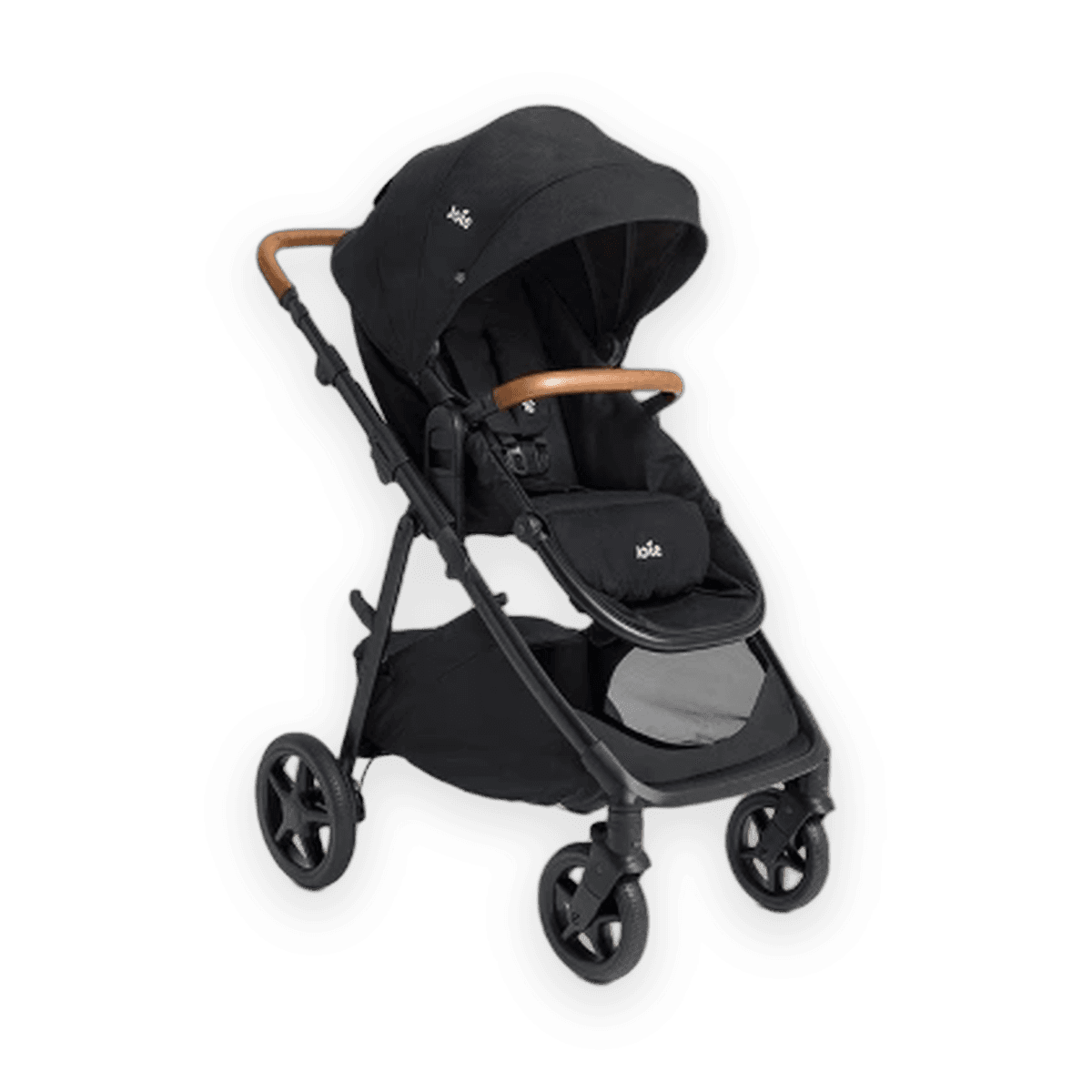
Product image via Target
Where to buy
Prices checked Sep 24, 2026- TargetCheck price at Target
We may earn a commission from links on this page, at no extra cost to you. How this works.
14 min read · Reviewed by Huggle Hive Editorial Team, Parent-led product research team · Updated August 5, 2026
The Joie Ginger Pramette is a one-stroller answer for parents who do not want to buy twice. Joie rates it from birth to 5 years, with a 50 pound child weight limit, and the frame itself weighs 22 pounds. That five-year span is the reason to buy it. The 22 pounds is the reason some parents should not.
Our scorecard
How the Hive Score works- Portability
- 4.1
- Safety basics
- 3.7
- Comfort & ride
- 4.1
- Versatility
- 2.4
- Value
- 3.7
Scores blend each product's verified specs with its overall owner rating, weighted the same way for every stroller. Learn more about our evaluation framework.
The numbers that matter
Joie Ginger Pramette at a glance
- Rated from birth through 5 years, so the newborn stage is covered without a separate pram
- 50 pound child weight limit, at the top of the usual range for a single stroller
- 22 pounds on its own, roughly what an average 18-month-old weighs
- One-year warranty from Joie
- Best for one-and-done buyers with car or ground-floor access, not for stair-and-transit commutes
Most stroller decisions come down to three questions: how long will my child fit in it, how often will I have to lift it, and does it work from day one. This stroller has a clear answer to all three, and they point in the same direction. It is a keep-it-for-years frame, not a grab-it-for-the-flight frame.
Pros and cons
Pros
- Rated from birth, so you do not need to buy a separate carrycot or pram for the first months
- 50 pound child limit gives real headroom for a tall or heavy preschooler
- A single frame spanning 0 to 5 years means one purchase instead of a pram now and a stroller later
- 22 pounds is a once-per-outing lift if you load it into a car boot rather than carry it
Cons
- 22 pounds is heavy for stairs, train platforms, or several car transfers a day
- The 5-year age rating will usually run out before a child reaches 50 pounds, so the top of the weight range often goes unused
- A one-year warranty is short relative to the five years of use the age rating implies
- Fold size, recline detail and infant car seat compatibility are not published, so those need confirming before you commit
Who should buy it, and who should skip it
Buy it if you are shopping before the baby arrives and you want to make one decision. The birth rating is what makes that possible. A stroller that only starts at six months forces you into a carrycot, a pram body or a car seat adapter for the first half-year, and that is a second purchase with a second storage problem. Starting at 0 collapses that into one frame. If you park in a driveway or a garage and the stroller lives in the boot, the 22 pounds is a non-issue: you lift it twice a day, from a standing position, with the car door as a brace.
Skip it if your building has stairs and no lift, or if your day involves buses and turnstiles. Weight is the number that quietly decides whether a stroller gets used. A frame you resent carrying gets left at home, and then you have paid for five years of use you never take. If you are hauling it up to a third-floor walk-up with a baby on one hip, a lighter fold-and-carry stroller will serve you better, even if you have to buy a separate solution for the newborn months.
If your baby is already walking, do the maths differently. A toddler at 18 months is already past the birth rating you would be paying for, and you would be buying this for the remaining three-ish years. That can still be a fair deal given the 50 pound ceiling, but at that point you are comparing it against lighter toddler strollers on weight alone, and 22 pounds is not the argument you want to be making. Families expecting a second child soon are in a different position again: check whether Joie offers a compatible second seat or ride-on board for this frame before assuming it grows with your family.
Four details are not in the published specifications for this model. Confirm them in the manual or with the retailer before you buy, especially if any one of them is a deal-breaker for you:
- Folded dimensions, fold style, and whether it stands on its own
- Whether it accepts an infant car seat, and which adapters are needed
- Recline positions and whether the seat can face you
- Canopy coverage or UPF rating, and harness configuration
How does it perform?
Is 22 pounds too heavy?
Twenty-two pounds is roughly the weight of an average 18-month-old. Picture lifting your toddler into the car, and that is the movement you are signing up for every time the stroller goes in or out of the boot.
Once a day, that is fine. Ten times a day, or up a flight of stairs, it is the thing you will complain about in six months. The honest way to judge this number is to trace your actual week: school run, supermarket, one bus, a trip to see family. Count the lifts. If the answer is one or two, weight barely registers. If it is six, look lighter.
What 22 pounds buys is not something Joie quantifies here, so treat the figure as a constraint rather than a feature. Compare it against the specific strollers on your shortlist, and be honest about whether the difference is five pounds or twelve. Five pounds you will stop noticing. Twelve you will not.
Will it work from day one with a newborn?
Joie rates this stroller from 0 years, so it is intended for use from birth. That is the headline for expectant parents, because it removes the awkward gap between coming home from the hospital and the point where a baby can hold their head up in an upright seat.
What birth-readiness requires, in any stroller, is a seat that lies flat or close to it, with support that keeps a newborn's airway open and their chin off their chest. Joie does not publish the recline angles for this model, so read the manual section on newborn use before the first outing and follow the position it specifies.
One piece of guidance that applies no matter which stroller you buy: a stroller seat is not a sleep surface. The American Academy of Pediatrics is direct that babies who fall asleep in an inclined seat should be moved to a firm, flat surface on their back as soon as it is practical, and its safe sleep guidance is worth ten minutes of your time before the baby arrives. Naps on the move are normal. Overnight sleep in the stroller is not.
Comfort and ride
A seat that still has to hold a five-year-old is a bigger seat than a compact travel model carries. That is the useful inference from the age rating and the 50 pound ceiling together: this frame is sized for a preschooler, not scaled down for a cabin bag. Older toddlers get shoulder room and legroom that a lightweight stroller runs out of somewhere around age three.
Push comfort depends on handlebar height, wheel size and any suspension, and Joie does not publish those figures for this model. If you and your partner differ in height by more than a few inches, that gap matters more than most spec-sheet numbers, so it belongs on your list of things to check.
Buy this for the five-year span. If you are realistically going to end up owning a second lightweight stroller anyway, the whole argument for it weakens.
Safety basics
Strollers sold in the US must meet the federal safety standard the Consumer Product Safety Commission enforces, which covers things like brake performance, restraint strength and hinge design. The CPSC's stroller and carriage safety guidance is the plain-English version, and it is worth reading once. Some manufacturers also carry voluntary JPMA certification, which involves third-party testing against the industry standard; check the box or the product page to see whether this model carries the seal.
Joie covers this stroller with a one-year warranty. Most manufacturing defects surface early, in the first weeks of daily folding and unfolding, so a year is enough to catch the common failures. Do two things on day one: fill in the registration card so you are contacted directly if a recall is issued, and keep the receipt somewhere you will find it. Recalls on durable baby gear are more common than new parents expect, and the CPSC publishes them all.
Habits matter more than specifications here. Do not hang a heavy changing bag off the handlebar, since that is the single most common way a stroller tips backwards. Use the harness every time, including on a two-minute walk. Set the brake before you take your hands off, even on ground that looks flat.
How long will your child actually fit?
| Stage | Roughly | What the limits mean here |
|---|---|---|
| Newborn | 0 to 6 months | Covered by the birth rating; follow Joie's newborn position instructions |
| Baby | 6 to 18 months | Well inside both limits; an average 18-month-old is nowhere near 50 pounds |
| Toddler | 18 months to 3 years | The stage most strollers get used hardest; weight is not the constraint |
| Preschool | 3 to 5 years | The 5-year age rating is what ends it for most families, not the weight |
The two limits do not run out together. An average five-year-old weighs closer to 40 pounds than 50, which means the age rating usually arrives first. Read the 50 pound ceiling as headroom for a tall or heavy child rather than as extra years of use, and plan on roughly five years from a newborn purchase.
That still puts it in the top tier for longevity. Plenty of strollers stop at 40 or 45 pounds, and a child who is big for their age can outgrow those a year early. If your family runs tall, the extra ceiling is the difference between retiring the stroller on your terms and retiring it on the stroller's.
What does it cost to own?
Joie does not publish a price in the specifications here, and prices move constantly, so check the current figure at the retailers below before you run any numbers. What you can do now is decide how to think about it.
Divide whatever you pay by five years, or by roughly 260 weeks. A stroller used from birth to school age is one of the cheapest per-use items in the nursery, which is exactly why a slightly higher price on a five-year frame usually beats a lower price on something you replace at 18 months. The competing path is a pram or carrycot setup now plus a lightweight stroller later, and that is two purchases, two storage problems and two sets of learning which lever does what.
What you are paying for:
- A birth rating, which is what lets one frame replace a pram plus a later stroller
- A 50 pound ceiling, which protects you against a child who outgrows the seat early
- Five years of use from a single purchase, if your routine tolerates 22 pounds
- A one-year manufacturer warranty on defects, not on wear
Two costs people forget. First, the second stroller: if you buy a lightweight travel model anyway for flights and city days, you have bought two strollers, and the per-year maths on this one gets worse. Second, resale and reuse. A frame rated to 50 pounds and five years holds value for a second child, so if you are planning siblings, the effective cost per child halves. Consumables like rain covers and footmuffs are usually extra, so factor those in if you live somewhere wet.
How to compare it against the rest of your shortlist
Four published numbers give you a clean yardstick: 0 to 5 years, 50 pounds, 22 pounds of stroller, one-year warranty. Put those side by side with every other stroller you are considering and most of the field sorts itself out fast.
Against a lightweight travel stroller, this one wins on span and loses on weight, and there is no clever framing that changes either fact. Against a full-size travel system, the question is whether you want the car seat click-in, which is not documented for this model, and whether that system also starts from birth without an extra purchase. Against a cheaper compact stroller with a 40 pound limit, you are paying for the extra year or two at the top end.
Five questions worth answering before you decide:
- How many times a week will you lift 22 pounds, honestly counted?
- Does it fold small enough for your boot, your hallway or your lift? Check the folded size with the retailer.
- Does it work with the infant car seat you already own or plan to buy?
- Is the handlebar comfortable for the tallest adult who will push it?
- Are you going to buy a second lightweight stroller anyway? If yes, buy for that reality.
Our stroller buying guide walks through how those trade-offs play out across the category, and you can see how we assess every product on our review methodology page.
Frequently asked questions
Can the Joie Ginger Pramette be used from birth?
Yes. Joie rates it from 0 years, so it is intended for newborn use. Follow the newborn position described in the manual, and move your baby to a firm flat surface for real sleep rather than leaving them in the seat.
How much does the Joie Ginger Pramette weigh?
22 pounds. That is roughly the weight of an average 18-month-old, which makes it a reasonable once-a-day lift into a car boot and a poor choice for carrying up stairs several times a day.
What is the weight limit?
50 pounds, which sits at the upper end of the range for a single stroller. In practice the 5-year age rating usually runs out before a child reaches 50 pounds, so treat the weight limit as headroom rather than extra years.
How long will my child use it?
Up to five years from birth, based on the age rating. For most families the age rating is what ends its life rather than the weight limit, since an average five-year-old weighs closer to 40 pounds than 50.
Does it work with an infant car seat?
Car seat compatibility and adapter requirements are not published for this model. If a click-in travel system is the reason you are considering it, confirm compatibility with Joie or the retailer before buying.
What warranty does Joie offer?
One year. Register the stroller when it arrives so you are notified directly about any recall, and keep your receipt for the warranty period.
Is it a good choice if I use public transport?
Probably not. At 22 pounds it is heavier than a fold-and-carry travel stroller, and stairs, gates and crowded carriages are where that weight costs you. Parents who mostly drive or walk from a ground-floor home will get far more out of it.
Where to buy
Prices on strollers move a lot, and the same model can differ by a wide margin between retailers in the same week. Before you buy, confirm the folded dimensions against your boot and check current stock, since colourways come and go. You can also check specifications and manuals directly with Joie.
Bottom line
The Joie Ginger Pramette is a five-year stroller: rated from birth, good to 50 pounds, and built around the idea that you buy once. For a family with a car and a ground-floor front door, that is a strong, simple case, and the birth rating saves you the separate pram purchase that catches most first-time parents by surprise.
The cost is 22 pounds of stroller and a one-year warranty against five years of intended use. If you live with stairs, commute by bus or train, or already know a lightweight travel stroller is in your future, the span stops paying for itself and something lighter will serve you better. Everyone else gets one decision, made once, that lasts until school. Browse the rest of our stroller reviews if you want to see how it sits against the field.
Joie Ginger Pramette
See prices