
Ingenuity 3D QuickClose CS+
Price verified Sep 21, 2026 · lowest in 90 days $108.00
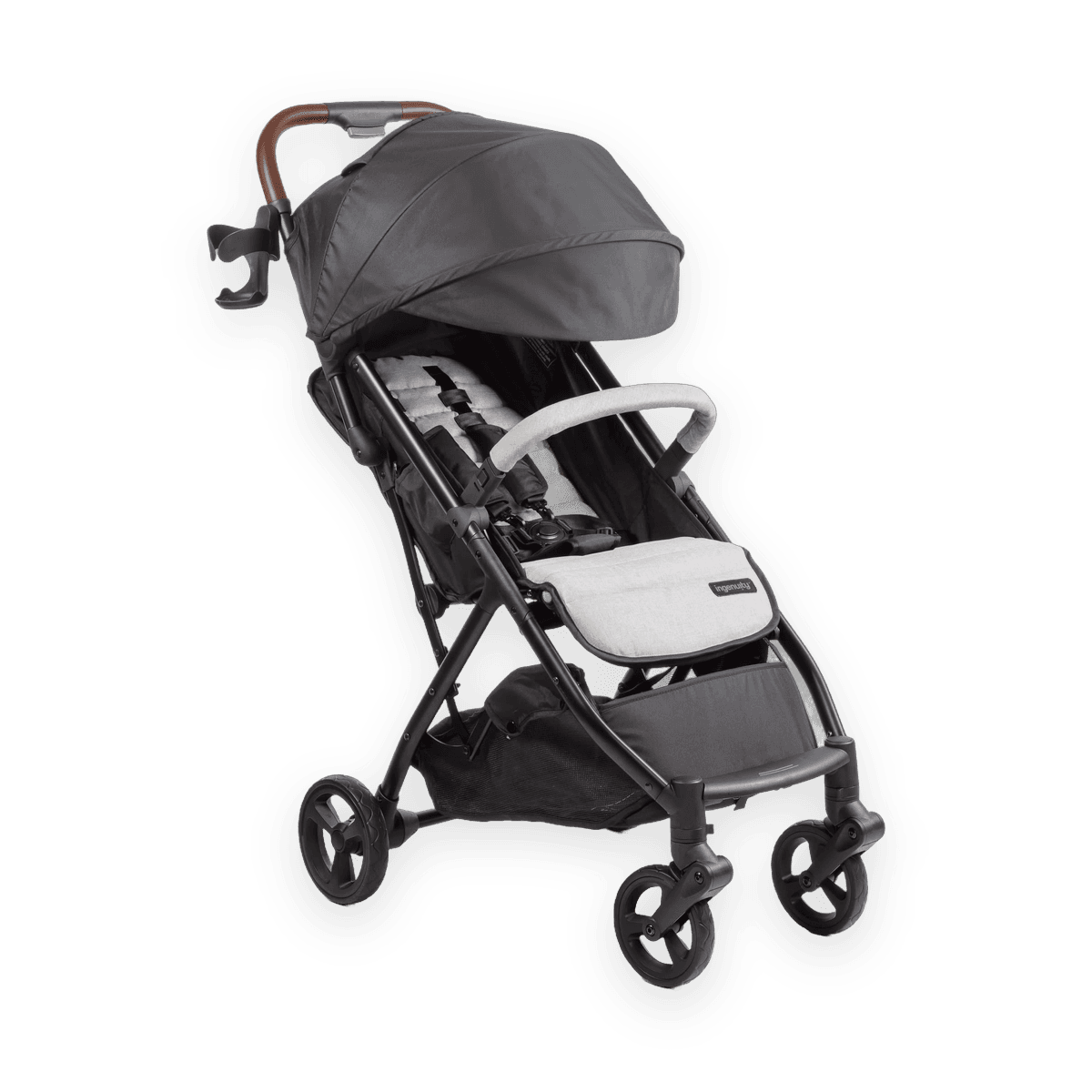
Product image via Walmart
Where to buy
Prices checked Sep 21, 2026- TargetCheck price at Target
- WalmartCheck price at Walmart
We may earn a commission from links on this page, at no extra cost to you. How this works.
14 min read · Reviewed by Huggle Hive Editorial Team, Parent-led product research team · Updated August 25, 2026
The Ingenuity 3D QuickClose CS is a compact-fold stroller aimed at the sitting-up stage, and the spec sheet makes its pitch in two numbers: 15.84 pounds and a folded depth of 14.8 inches. Buy it if you want a light, small-folding stroller for the 6-to-24-month stretch. Skip it if you want one stroller that carries a newborn, snaps onto an infant car seat, and handles gravel trails, because none of that is confirmed in the verified specs.
The short version
- Weighs 15.84 pounds, which is roughly 15 lb 13 oz, light enough to lift one-armed into a trunk while holding a baby
- Folds to 26.5 in H x 20.5 in W x 14.8 in D, about 4.65 cubic feet of trunk space
- Five-point harness, and the verified specs state it meets ASTM standards
- Manufacturer age stage is 6 to 24 months, with a 50-pound child weight limit
- Travel-system compatibility, seat recline type, suspension, and canopy UPF are not confirmed in the verified specs
Pros
- 15.84 lb frame, lighter than most full-size everyday strollers
- Folded depth of just 14.8 inches slides into shallow trunks and closets
- Five-point harness, the configuration safety groups recommend for strollers
- Verified to meet ASTM standards
- 50 lb weight ceiling gives you runway past the 24-month age stage
- 20.5-inch open width clears standard interior doorways with room to spare
Cons
- Manufacturer age stage starts at 6 months, so newborn use is not confirmed
- Travel-system compatibility with an infant car seat is not confirmed
- No confirmed suspension, canopy UPF rating, or all-terrain wheels
- Recline type is not listed, so nap-friendliness is unclear from the specs
- No self-standing fold or one-hand fold is confirmed, despite the QuickClose name
Who the 3D QuickClose CS is for
Your baby sits up on their own, you are done wrestling a bucket seat in and out of the car, and the giant travel-system stroller has become the reason you stay home. That is the parent this stroller is built for. Ingenuity lists the age stage as 6 to 24 months, which lines up with a child who has head and trunk control and wants to see the world rather than nap flat through it.
It also fits a specific kind of storage problem. A folded depth of 14.8 inches is the number to focus on, because depth is what fails you in a hatchback with groceries already loaded, or in a hall closet behind a stack of shoes. Apartment parents, grandparents who need a stroller on hand, and anyone who flies more than twice a year will get real use out of that fold.
Who should skip it. If you are shopping before your baby arrives and want one stroller from day one, this is not that stroller: the confirmed age stage starts at 6 months, and there is no confirmed bassinet, newborn-ready recline, or infant car seat compatibility. If your walks involve grass, gravel, or broken sidewalks, look at strollers that publish suspension and all-terrain wheel specs, because this one does not. And if you want a single stroller to serve a toddler and a future second baby, the specs here confirm a single seat only.
A 15.84-pound frame that collapses to 14.8 inches deep is the whole argument for this stroller. Everything past that is a question the spec sheet does not answer.
Performance: what the verified specs actually tell you
How light is 15.84 pounds in real life?
Light enough that your child will likely outweigh the stroller before they outgrow it. At 15.84 pounds (about 15 lb 13 oz), it is under the weight of a typical one-year-old, which changes the daily math of curbs, stairs, and trunk lifts. The lift that matters is the awkward one: baby on one hip, stroller in the other hand, up three steps. Under 16 pounds keeps that manageable for most parents.
The frame is metal, plastic, and polyester, the standard recipe for this class. Metal carries the load, plastic handles joints and trim, and polyester covers the seat and canopy. What the specs do not tell us is aluminum versus steel, and that distinction drives both weight and long-term rust resistance, so we will not guess at it.
Does it fold as small as the name suggests?
The fold is the strongest thing on this spec sheet. Open, the stroller measures 41.25 inches tall, 20.5 inches wide, and 34.5 inches deep. Folded, it drops to 26.5 by 20.5 by 14.8 inches. Depth shrinks by more than half, height by about a third, and width stays put because the frame folds flat rather than narrow.
Run the volume and you get roughly 4.65 cubic feet folded. For context, that is a package you can stand upright behind a rear wheel well in most sedans, or lay flat under a stroller-friendly bench. Ingenuity's name for the mechanism, QuickClose, points to a fast collapse, and the full model name is the 3Dquickclose CS+ Compact Fold Stroller. What the verified specs do not confirm is whether that fold works one-handed or whether the folded frame stands on its own, and both of those matter on a rainy curb.
Is it safe for your baby?
Two verified facts carry this section. The harness is a five-point design, meaning straps over both shoulders, around both hips, and between the legs. That configuration keeps a toddler from wriggling free at the shoulders and from sliding down under a lap belt, which is why it is the harness type child safety groups point parents toward for strollers. Three-point harnesses still exist in this price class, so seeing five points here is worth noting.
The second fact is certification. The verified specs list that this model meets ASTM standards. In the US, strollers are covered by ASTM F833, the consumer safety performance specification for carriages and strollers, which covers areas like restraint integrity, stability, brakes, and latching. Federal stroller rules incorporate that standard, and the Consumer Product Safety Commission is where you check whether any model has been recalled before you buy secondhand.
One honest gap: JPMA certification is not listed in the verified specs, and neither is a GREENGUARD Gold designation. That is an absence of confirmation, not evidence of a problem. It does hold the safety sub-score below what a fully documented stroller would earn.
What the ride is likely to be like
Here the spec sheet goes quiet, and we will not fill the silence with guesses. Suspension, wheel type, canopy UPF rating, and handlebar adjustability are all unlisted. What we can say is grounded in geometry: a 20.5-inch width and a 34.5-inch open depth make a compact footprint, which is easy to steer in a cafe and easy to park at the end of a pew or a restaurant aisle. Narrow strollers turn tighter. They also tend to feel less planted at speed than wide-track models.
The 41.25-inch open height is the frame, not the handlebar height, so tall parents should not read it as a promise about kicking the rear axle. If you or your partner is over six feet, handle height is worth confirming in person.
Fit and sizing: how long will your child actually fit?
Two limits govern this, and they do not expire at the same time.
| Spec | Number | What it means for you |
|---|---|---|
| Age stage | 6 to 24 months | Designed for babies with steady sitting balance, not newborns |
| Max child weight | 50 lb | Most kids stay under this well past their second birthday |
| Stroller weight | 15.84 lb | Under the weight of a typical one-year-old |
| Open size | 41.25 x 20.5 x 34.5 in | Compact footprint for aisles, elevators, and doorways |
| Folded size | 26.5 x 20.5 x 14.8 in | About 4.65 cubic feet of trunk or closet space |
| Harness | Five-point | Shoulders, hips, and crotch strap |
The age stage is the binding constraint, not the weight limit. Ingenuity rates the stroller for 6 to 24 months, while the 50-pound ceiling is one most children do not approach until well into the preschool years. Read the age stage as the manufacturer's statement about seat support and recline, and follow it. Do not stretch a stroller past its stated stage because your child is still under the weight cap.
Practically, that gives you around 18 months of use if you start the day your baby sits reliably. Toddlers who walk everywhere by 20 months will use it less; kids who still want a ride at daycare pickup will use it hard. If you need coverage from birth, plan on a separate infant setup and treat this as the stroller you graduate into.
What it costs to use
There is no confirmed price on file for this model, so we are not going to quote one that could be wrong or stale by the time you read this. Check the current figure through the retailer links below before you decide.
What we can lay out is what the money buys and what it does not.
What you're paying for:
- A sub-16-pound frame, the feature you will feel every single day
- A fold that is genuinely small in the dimension that matters most, depth
- A five-point harness rather than a three-point
- ASTM compliance stated on the spec sheet
- A 50-pound ceiling that outlasts the stated age range
What you're not paying for: infant car seat compatibility, a reversible seat, a published recline, suspension, or a rated canopy. If any of those appear on your must-have list, the money is better spent elsewhere, because you would be buying this stroller for features it does not document.
One cost note that applies to every compact stroller: the second-stroller strategy usually works out cheaper than the do-everything strategy. Families who buy one large travel system often end up buying a light stroller anyway by month nine. Buying a compact model on purpose, as the stroller for errands, transit, and trips, avoids paying twice for overlapping capability.
How it compares to other stroller types
We do not have a matched set of named competitors with verified specs for this model, so the useful comparison is by stroller type. That is the choice you are actually making.
Against a full-size travel system. Those strollers accept an infant car seat, recline flat for newborns, and carry a deep basket, and they pay for it in weight and folded bulk. This Ingenuity gives up all of that capability and hands you a 15.84-pound frame and a 14.8-inch folded depth in exchange. Pick the travel system if you are buying before birth and want one purchase. Pick this if the big stroller already lives in your garage and never leaves it.
Against a classic umbrella stroller. Umbrella models fold narrower and often weigh less, but many use a three-point harness and a thin sling seat. The five-point harness confirmed here is the meaningful difference, along with a 50-pound weight ceiling that runs higher than many umbrella strollers allow. If your child is a determined escape artist, five points is the answer.
Against an all-terrain or jogging stroller. Those publish suspension, air-filled tires, and larger wheel diameters, and they weigh substantially more as a result. Nothing in this stroller's verified specs claims that territory. On grass, sand, or rutted trails, expect a compact stroller to work harder. On sidewalks, transit platforms, and mall floors, the weight savings win.
For a wider look at this class, see our stroller reviews and the compact and lightweight stroller guide.
How we scored it
The 3D QuickClose CS earns a Hive Score of 8.6 out of 10, and the five sub-scores explain the shape of that result.
Portability, 4.3. The highest mark on the card, and it is earned by hard numbers rather than marketing. A 15.84-pound frame and a 26.5 by 20.5 by 14.8-inch folded package are both strong for the category. It falls short of a perfect score because a one-hand fold and a self-standing fold are not confirmed in the verified specs.
Comfort and ride, 4.1. Solid, and largely inherited from the stroller's overall standing rather than from documented ride features. Suspension, canopy UPF, all-terrain capability, and handlebar adjustability are all unlisted, and each of those would have pushed this number higher.
Safety basics, 3.7. The five-point harness helps, and the stated ASTM compliance is the right baseline. This sub-score starts conservative by design and only climbs with independent verification such as JPMA certification or a GREENGUARD Gold listing, neither of which appears in the verified specs for this model.
Value, 3.7. With no confirmed price tier on file, this score sits near the middle by default and gets a modest lift from the stroller's overall standing. Once you see the current price, you can judge this one better than the spec sheet can.
Versatility, 3.1. The lowest mark, and the honest one. Travel-system compatibility, a reversible seat, newborn readiness, bassinet compatibility, a second seat, and a documented recline type are the six things that lift this score, and none of them are confirmed here. The 50-pound weight ceiling keeps it from sitting lower. If versatility is your priority, this is the number to weigh.
Our assessment is editorial analysis built from these verified specs and the stroller's overall rating. More on the method lives on our review methodology page.
Is the Ingenuity 3D QuickClose CS safe for a newborn?
The manufacturer age stage is 6 to 24 months, so newborn use is not confirmed. No bassinet, flat recline, or infant car seat compatibility appears in the verified specs. Treat it as a stroller for babies who already sit up steadily, and use a newborn-rated setup before then. General infant positioning guidance is available from the AAP at HealthyChildren.org.
How much does the 3D QuickClose CS weigh?
15.84 pounds, or about 15 lb 13 oz. That is under the weight of a typical one-year-old, which makes trunk lifts and short flights of stairs manageable one-handed.
What is the weight limit?
50 pounds. That ceiling runs well past the stated 24-month age stage, so the age rating, not the weight limit, is what should tell you when to move on.
Will it fit in a small trunk?
Folded, it measures 26.5 inches high, 20.5 inches wide, and 14.8 inches deep, roughly 4.65 cubic feet. The 14.8-inch depth is the number that matters most, since depth is what usually blocks a stroller from sliding in beside groceries.
Does it have a five-point harness?
Yes. The verified specs list a five-point harness, with straps over both shoulders, across both hips, and between the legs. That is the configuration that keeps a wriggly toddler from sliding out under a lap belt.
Is it certified?
The verified specs state that it meets ASTM standards, the safety performance specification that covers carriages and strollers in the US. JPMA certification is not listed for this model, which means it is not confirmed rather than absent.
Can it handle grass and gravel?
Nothing in the verified specs confirms suspension, all-terrain wheels, or air-filled tires. Plan on sidewalks, floors, and paved paths, and look at a dedicated all-terrain stroller if your daily walk leaves the pavement.
Where to buy it
Pricing and stock on compact strollers move around, especially during seasonal sales, so check the current figure before you commit.
The bottom line
The Ingenuity 3D QuickClose CS makes a narrow promise and keeps it on paper: 15.84 pounds, a fold that drops to 14.8 inches deep, a five-point harness, and stated ASTM compliance, rated for 6 to 24 months and up to 50 pounds. For a second stroller that lives in the trunk and comes out for errands, transit, and travel, that is a well-matched set of specs. The trade-off is everything the spec sheet stays quiet about, from travel-system compatibility to suspension to recline, so if you need one stroller to cover newborn through preschool, we would steer you toward a full-size model instead and let this one be the light stroller you add later.
Ingenuity 3D QuickClose CS+
See prices