
Hoplite Lightweight Stroller
Price verified Sep 20, 2026
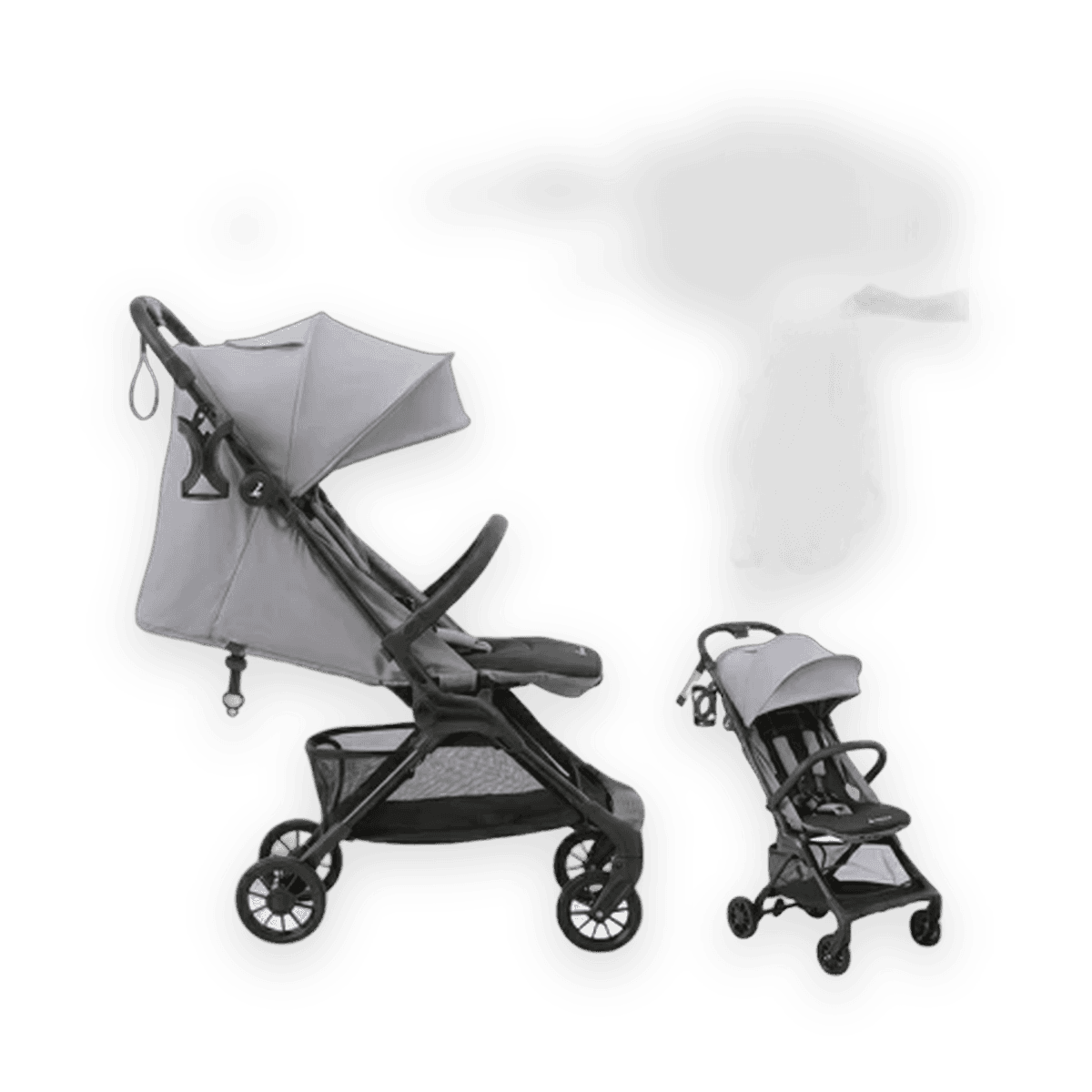
Product image via Target
Where to buy
Prices checked Sep 20, 2026- TargetCheck price at Target
We may earn a commission from links on this page, at no extra cost to you. How this works.
15 min read · Reviewed by Huggle Hive Editorial Team, Parent-led product research team · Updated August 4, 2026
The Hoplite Lightweight Stroller is built for the parent who lifts a stroller more than they push it: up apartment stairs, into a trunk in a parking garage, onto a curb with coffee in the other hand. It covers 0 to 36 months on one frame and carries an 8.4 rating, with portability and ride comfort as its strongest dimensions. The catch is reach. This is set up as a single-child stroller, and the extras that let one stroller cover a travel system, a bassinet, or a second kid are not confirmed here.
Our scorecard
How the Hive Score works- Portability
- 4.4
- Safety basics
- 3.8
- Comfort & ride
- 4.4
- Versatility
- 2.8
- Value
- 3.8
Scores blend each product's verified specs with its overall owner rating, weighted the same way for every stroller. Learn more about our evaluation framework.
The short version
- Rated 8.4 overall, with portability and comfort both at 4.2 out of 5
- Covers 0 to 36 months on one frame, so it can be a first stroller or a second, lighter one
- Versatility is the weak spot at 2.4: plan around it as a one-child stroller
- Weight, folded size, canopy rating and harness type are not confirmed, so check them on the listing before you commit
- Listings may carry the Babbleroo brand name, which makes price comparison fiddly
Pros
- Portability is its best dimension at 4.2, which matches the exact job most parents buy a lightweight stroller for
- Comfort and ride also land at 4.2, so it is not the bare-bones umbrella experience the category is known for
- One frame spans birth through 36 months, avoiding a second purchase at the toddler stage
- Strong 8.4 overall rating
- A simple single-child setup means fewer parts to wrestle at a car door
Cons
- Versatility is the clear weak spot at 2.4, so a sibling or a travel system is a real question mark
- Infant car seat compatibility, a reversible seat and a bassinet option are not confirmed, so a click-in setup needs checking
- Safety basics land at 3.8, and JPMA certification is not confirmed either way
- The specs that decide a travel stroller (weight, folded dimensions, canopy coverage) are not published here
- Two brand names attached to one product makes it harder to tell listings apart
Two things are confirmed for this stroller: the 0 to 36 month age stage, and that the product data also carries the Babbleroo brand name, so you may see it listed either way. Weight, folded dimensions, harness type, brake style, canopy rating, recline range, certifications and price are not confirmed. We do not state any of them anywhere below. Where one of them would change your decision, we tell you the threshold to look for instead.
Who it is for, and who should skip it
Buy this if your daily reality involves stairs, transit, a small trunk, or a walk-up. That is the whole case for a lightweight stroller, and it is a good case. Parents in apartments, city parents, grandparents who want something that lives in the car, and anyone who already owns a full-size stroller and is tired of hauling it out for a fifteen-minute errand all get real value from a frame that is easy to fold and carry.
It also fits parents who want one stroller for the whole first three years and do not need it to transform. The 0 to 36 month span means you are not shopping again at eighteen months, which is when a lot of compact strollers quietly run out of seat.
Skip it if you are building a system. If you want an infant car seat to click straight onto the frame, if a second child is on the calendar, or if you want a bassinet for the newborn months, the versatility score of 2.4 is telling you this is not the frame designed for that. Skip it too if your daily route is gravel, grass, or badly broken pavement. A light frame and the small wheels that usually come with it are a poor match for rough ground, and no rating changes that physics.
How it performs
Portability: what a light frame actually costs
Light frames buy their weight savings somewhere, and the usual places are wheel diameter, suspension, and frame material. Smaller hard wheels roll beautifully on mall floors and fight you on cracked sidewalks. Minimal suspension means your child feels more of every bump, which matters most in the twenty minutes after they fall asleep. A lighter frame also flexes more when you hang a bag on the handlebar, and a hung bag is how strollers tip backward.
So read the 4.2 portability score for what it is: this is a stroller that is easy to move and store, not a stroller that smooths out a rough path. Those are different products, and a lot of first-time parents find that out on a park path.
The three numbers that decide whether a light stroller is genuinely portable for you, none of which are published for this model, are weight, fold type and folded size. Under 15 pounds is honestly carryable in one arm while you hold a baby in the other. Under 20 pounds is liftable into a trunk without a grunt. A one-hand fold matters because your other hand is always occupied. And a fold that stands on its own is the difference between parking it inside your front door and watching it slide down the wall every time.
Comfort and ride: the parts you notice in week two
Comfort in this class comes down to three things that are easy to skim past at purchase: seat depth and back height, recline range, and canopy coverage.
Seat geometry is what usually ends a stroller's useful life, and it is height, not weight, that does it. A shallow seat with a low back is fine for a nine-month-old and cramped for a tall two-year-old whose shoulders sit above the seat back. If you have a long-torsoed kid, the top end of any 0 to 36 month claim will arrive early.
Recline decides whether naps happen. A seat that goes to a lazy lounge angle gets you a drowsy toddler; a seat that only sits upright gets you a stroller you push home with a screaming passenger. Canopy is the first thing trimmed on light strollers, and a small flap shades a forehead at noon and nothing else. The version worth having reaches at least your child's chest when fully extended and carries a UPF rating. A ride score of 4.2 is a good sign here, and it still pays to look at photos of the canopy fully extended before you buy.
A lightweight stroller earns its keep in the twenty seconds between the car door and the curb. Everything after that is a bonus.
Safety basics: two minutes of checking, every time
Safety basics sit at 3.8, which reflects that the certifications and hardware details a stroller is normally judged on are not published for this model. That is not a strike against it. It does mean the checking falls to you, and the checks are quick.
Look for a five-point harness rather than a three-point. Five points hold the hips and the shoulders, which is what stops a determined toddler from standing up mid-push. Look for a brake you can set with one foot and that locks both rear wheels together, because a single-wheel brake on a sloped driveway is not a brake. Check that the harness slots sit at or just below your child's shoulders.
It is worth two minutes to confirm the model against the CPSC recall database before you order, and to check whether the listing shows the JPMA certification seal, which indicates the model was tested against the ASTM stroller standard by an independent lab. Neither is confirmed for this stroller either way, so the seal on the listing is your answer.
Versatility: plan for one child
Versatility is 2.4, the lowest score on the card, and it is the number that should change your shopping list rather than your opinion. Travel-system compatibility with an infant car seat, a reversible seat that faces you, a bassinet attachment and a second seat are all unconfirmed for this model.
If any of those are on your must-have list, ask before you buy: does this frame take a car seat adapter, and for which car seat brands? A stroller that cannot take your car seat is a stroller you cannot use for the drive-to-the-store trip during the newborn months, which is most trips.
Fit and sizing: what 0 to 36 months really covers
The confirmed age stage is 0 to 36 months, and the two ends of that range behave very differently.
At the newborn end, the number is not what matters. The recline is. A newborn cannot hold up their own head, and a seat that reclines only partway lets the chin drop toward the chest, which narrows a very small airway. The AAP's stroller safety guidance is to use a stroller that reclines flat or near flat, or to use a bassinet or an infant car seat attachment, until your baby can sit up unsupported, usually somewhere around six months. Flat recline and car seat attachment are not confirmed for this stroller, so treat the newborn end of that range as the one question to settle before you buy. If the listing shows a flat or near-flat recline, you are set from day one. If it does not, plan on a car seat or a bassinet for the first few months and bring this stroller in when your baby can sit.
At the top end, 36 months is generous for a compact seat. Most kids outgrow this class by height first: shoulders above the seat back, feet dragging past the footrest, knees jammed against the front bar. If your child is tracking tall, budget for the seat to feel small closer to two and a half.
Practical sizing checks before you order: measure the depth of your trunk, then find the folded dimensions on the listing and compare. Do the same for the width of your front door and the space beside your entryway. If you plan to fly, look up your airline's gate-check policy for strollers, because the size limits vary by carrier and change.
What it costs to use
Price is not confirmed for this model, and we are not going to guess it. What we can do is show you how to judge whatever number you see on the listing, because a stroller's real cost is per use, not per receipt.
A stroller that goes out four times a week for two years is roughly 400 uses. Push that to three years and a slightly more active routine and you are near 700.
| If you pay | Cost per use at ~400 uses | Cost per use at ~700 uses |
|---|---|---|
| $60 | about 15 cents | about 9 cents |
| $120 | about 30 cents | about 17 cents |
| $200 | about 50 cents | about 29 cents |
The useful read here: at the budget end, a lightweight stroller pays for itself almost immediately as a second stroller, even if it only handles errands. At the higher end, you need it to be your main stroller for most of three years to make the math work, and that is exactly where the unconfirmed versatility features start to matter. A $200 stroller that cannot take your infant car seat sits in a closet for six months, which quietly doubles its cost per use.
How to compare it before you buy
With limited published specs, the honest comparison tool is a checklist of thresholds rather than a spec sheet. Take these to any listing, this one included, and you can rank two strollers in about three minutes.
| What to check | The threshold that matters | Why it matters |
|---|---|---|
| Weight | Under 15 lb for one-arm carrying, under 20 lb for trunk lifting | This is the whole reason to buy a lightweight stroller |
| Fold | One-handed, and self-standing when folded | Your other hand is holding a baby, every time |
| Folded size | Smaller than your trunk depth and your entryway gap | Measure first; returns are a hassle you do not need |
| Harness | Five-point, with shoulder slots that adjust | Three-point harnesses let a toddler stand up |
| Brake | One-foot action that locks both rear wheels | Half a brake on a slope is no brake |
| Recline | Flat or near flat if you want newborn use | Head control is the reason, not comfort |
| Canopy | Reaches the chest when extended, with a UPF rating | Small canopies shade a forehead and nothing else |
| Wheels | Larger diameter if your route has broken pavement or grass | Small hard wheels stall on anything uneven |
| Basket | Fits a diaper bag without unloading it | A stroller you have to hang bags on is a tipping risk |
| Certification | JPMA seal shown on the listing | Independent testing against the ASTM standard |
If you want to see how a compact frame stacks up against the full-size and travel-system options, our stroller reviews and the best lightweight strollers guide cover the alternatives by use case.
Where each dimension lands
Portability, 4.2. This is the reason to buy it and the strongest thing on the card. If your decision is driven by stairs, transit or a small car, this dimension is doing the work.
Comfort and ride, 4.2. Equally strong, and more notable than it sounds, because comfort is usually the first casualty of a light frame. Read it as a stroller your child can sit in for a long errand rather than a five-minute dash.
Safety basics, 3.8. Solid, and the gap between this and the top two is about published detail rather than a known flaw. The harness, brake and certification checks above close that gap for you in a couple of minutes.
Value, 3.8. Reasonable, and it swings on the price you actually pay. At the budget end this is an easy recommendation. Above the middle of the market, the unconfirmed features start to work against it.
Versatility, 2.4. The number to take seriously. It is not saying the stroller is poor at what it does; it is saying it does one thing. Buy it for one child, for the errand-and-transit role, and it fits. Ask it to be your car seat carrier, your sibling stroller and your newborn bassinet, and it will not stretch that far.
Price and value
Because the price is not confirmed here, judge value against the thresholds above. Our rule of thumb: a lightweight stroller earns a budget-tier price on portability alone. To justify a mid-tier price, it needs at least two of the following confirmed on the listing: a near-flat recline, a car seat adapter option, a UPF-rated canopy, or a JPMA seal.
That is a fair test to apply to this stroller. If the listing you are looking at confirms two of those and the price is in the lower half of the market, the 8.4 rating makes this a straightforward yes.
What age is the Hoplite Lightweight Stroller for?
The confirmed age stage is 0 to 36 months. The newborn end depends entirely on the seat recline, which we cover in the fit and sizing section above. At the top end, expect a tall toddler to outgrow a compact seat by height before the 36-month mark.
Is it a good travel stroller?
Portability is its strongest dimension at 4.2, which is the trait that matters most for travel. Before you fly with it, check the folded dimensions on the listing against your airline's gate-check policy, since those limits vary by carrier.
Does it work with an infant car seat?
Travel-system compatibility is not confirmed for this model, and the versatility score of 2.4 reflects that. If a car seat click-in is a must-have, ask the seller which car seat adapters, if any, fit this frame before you order.
How should I read the 8.4 rating?
An 8.4 signals a stroller that belongs on your shortlist rather than one to avoid. It is a strong score without being a perfect one, and the gap is about how far the stroller stretches beyond its core job, not about how well it does that job.
Will it handle gravel paths and cracked sidewalks?
Probably not well, and that is true of the class rather than this model specifically. Light frames save weight through smaller wheels and simpler suspension, which is a bad trade on rough ground. If most of your walking is off smooth pavement, look at a larger-wheeled stroller instead.
Is it JPMA certified?
That is not confirmed either way. The JPMA seal means a model was tested by an independent lab against the ASTM stroller standard, and it appears on the product listing or packaging when it applies. Check the listing photos, and run the model through the CPSC recall database while you are at it.
Why does it show up under two brand names?
The product data carries both the Hoplite and Babbleroo names, so you may see the same stroller listed either way. Compare specs and prices across both names before you buy so you are not paying more for an identical stroller under a different label.
Where to buy
Check current pricing and stock below. Because listings may appear under either brand name, it is worth searching both before you order.
Bottom line
The Hoplite Lightweight Stroller does the job most parents actually buy a lightweight stroller for: it is easy to move, easy to store, and it covers birth through 36 months on one frame. Portability and ride comfort both at 4.2, behind an 8.4 overall rating, make it a sound pick for apartments, transit, small trunks, and second-stroller duty.
The trade-off is reach. At 2.4, versatility is telling you to plan for one child and one role. Confirm the recline if you want it from day one, confirm the harness and the brake, and confirm the weight and folded size against your car. If those check out and the price sits in the lower half of the market, it is an easy yes. If you need one stroller to do everything, look at a fuller-featured frame instead. You can read more about how we score products and what goes into each dimension.
Hoplite Lightweight Stroller
See prices