
Graco Ready2Jet Compact Auto Fold
Price verified Sep 14, 2026
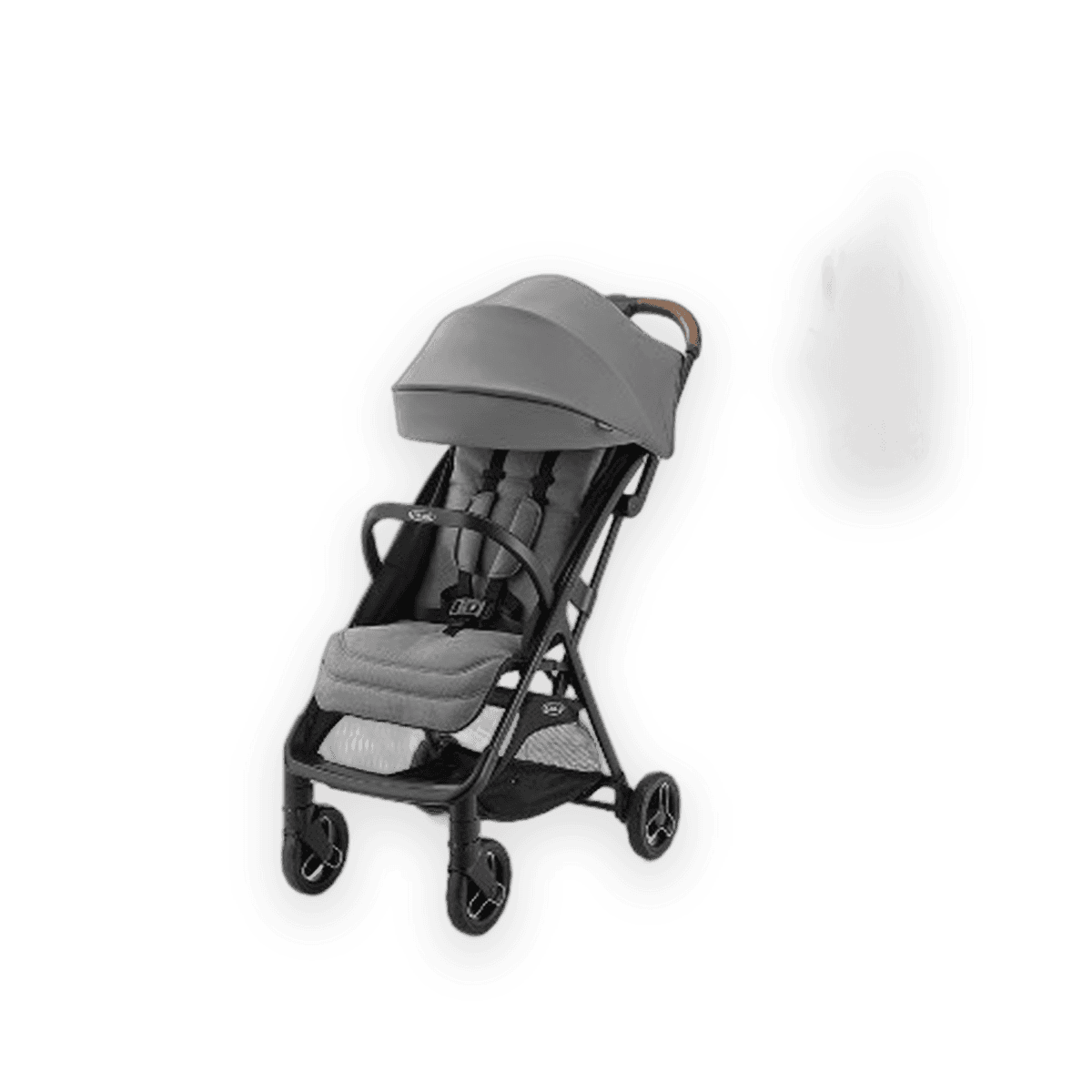
Product image via Target
Where to buy
Prices checked Sep 14, 2026- TargetCheck price at Target
We may earn a commission from links on this page, at no extra cost to you. How this works.
18 min read · Reviewed by Huggle Hive Editorial Team, Parent-led product research team · Updated August 2, 2026
Graco's Ready2Jet Compact Auto Fold is built for the parent whose stroller has to disappear. Into a trunk that already has groceries in it. Into the coat closet by the door. Into the back of a rideshare while the driver waits. It weighs 13.2 pounds, it is JPMA certified and meets ASTM standards, and it is rated for children from 6 months up to 50 pounds.
What you give up is breadth. One seat, plastic wheels, and a versatility score of 2.9 out of 5 tell you this is a focused travel stroller, not the single stroller that covers every situation for four years.
Our scorecard
How the Hive Score works- Portability
- 4.5
- Safety basics
- 4.2
- Comfort & ride
- 4.2
- Versatility
- 2.9
- Value
- 3.8
Scores blend each product's verified specs with its overall owner rating, weighted the same way for every stroller. Learn more about our evaluation framework.
The short version
- 13.2 pounds, folding to 30.98 x 19.52 x 11.06 inches: light enough to carry up a flight of stairs with a baby on your hip.
- JPMA certified and meets ASTM standards, which is the safety floor you should insist on from any stroller.
- Rated 6 months and up, to a 50-pound child, so it covers most of toddlerhood but not the newborn stage in the stroller seat itself.
- Travel-system compatible, single seat, plastic wheels, one-year warranty.
- Portability is the strength at 4.5 out of 5. Versatility is the weak spot at 2.9.
What does "Auto Fold" actually mean on this stroller?
The fold is in the product name, so let's deal with it first and deal with it honestly.
The verified spec set for this model confirms the folded size (30.98 inches tall, 19.52 wide, 11.06 deep) and the weight (13.2 pounds). It does not confirm the two things most parents picture when they read "auto fold": that the fold is genuinely one-handed, and that the stroller stands upright on its own once folded. Neither is in the confirmed attributes. That is not us saying the stroller can't do those things. It is us saying nobody has verified them for you, so we won't put them in your head as fact.
Those two details are worth a phone call to the retailer, because they change your daily life more than almost any other spec. A fold you can trigger with one hand is a fold you can do while holding your baby. A two-handed fold means putting your baby down first, on a curb, in a parking garage, in the rain. And a stroller that stands on its own folded can be parked against a wall or rolled through an airport concourse. One that doesn't has to lean on something, lie flat, or be carried.
Pros
- 13.2 pounds, comfortably under the 15-pound line where a stroller stops being a two-person lift
- Folds to 30.98 x 19.52 x 11.06 inches, a footprint you can plan a trunk or a closet around
- JPMA certified and meets ASTM standards
- Holds a child up to 50 pounds, a high ceiling for a compact frame
- Travel-system compatible, so it can pair with a compatible infant car seat
Cons
- Rated for 6 months and up, so the stroller seat itself does not cover the newborn stage
- One seat only, and no second-child or ride-along configuration is confirmed
- Plastic wheels, the firmest of the common wheel materials
- One-year warranty, which is on the short side for a frame you may push for three years
- Versatility scores 2.9 out of 5, the clear low mark on the card
Who is this stroller for?
Buy it if your problem is storage and lifting. You live in a walk-up, or you drive a small car, or you fly a few times a year, or you are the parent who does daycare drop-off solo and needs the stroller in the trunk in under fifteen seconds. At 13.2 pounds this sits well under the 15-pound threshold we treat as the line where a stroller becomes genuinely liftable one-handed, and that single number is doing most of the work behind its 4.5 portability score.
It also suits a second-stroller household. Plenty of families keep a big all-terrain frame for weekend walks and want something cheap to store for restaurants, airports, and the car. This is squarely that stroller.
Who should skip it
Skip it if you want one stroller for the whole run from hospital discharge to preschool. The seat is rated 6 months and up, there is one seat, and no bassinet, reversible seat, or second-seat option is confirmed. A parent planning two kids close together should be shopping frames that accept a glider board or convert to a double.
Skip it too if most of your walking happens on gravel, grass, cobblestone, or broken sidewalk. Plastic wheels are the norm on lightweight compacts and they have real virtues (they never go flat and they need no maintenance), but as a class they are firmer than foam-filled or rubber wheels, and no suspension or all-terrain capability is confirmed on this model.
Buy this stroller for what it weighs and where it fits. Those two facts are verified, they are genuinely good, and they are the whole argument.
How it performs
Portability: the spec that carries the whole stroller
The 4.5 out of 5 comes from weight and size, and both check out on paper. 13.2 pounds is light enough that hoisting it into a trunk or up a flight of subway stairs is a one-armed job, which matters because the other arm is holding a child. Folded, it is 30.98 inches tall, 19.52 wide, and 11.06 deep.
That depth is the number to pay attention to. Just over 11 inches deep is what lets a folded stroller slide alongside a suitcase or stand in a narrow closet instead of eating the floor. Measure your trunk, your entryway, and your car's back seat footwell against those three figures before you buy, and if you fly, check the folded size against your airline's published stroller and carry-on limits rather than against anyone's promise about which strollers fit where. Airlines set those rules, and they differ.
The one gap in the portability story is the fold behavior covered above: what the specs confirm is how small it gets, not how easy it is to get there.
Safety basics: what JPMA certification actually buys you
This model is JPMA certified and meets ASTM standards, and that pairing is the reason safety basics lands at 4.2.
Here is what that means in plain terms. JPMA certification is a voluntary program in which a manufacturer submits a product to an independent laboratory for testing against the relevant ASTM standard, in this case the consumer safety standard for carriages and strollers. The lab checks the things that hurt children in real incidents: brake performance, stability on an incline, restraint strength, leg openings, folding and latching mechanisms, and the absence of pinch and entrapment points. Certification also involves ongoing plant inspections rather than a single pass at launch.
A stroller sold in the United States has to meet the mandatory federal stroller rule regardless, which the CPSC enforces. JPMA certification is the extra step: independent verification instead of self-attestation. It does not make a stroller safe to use badly, and it says nothing about whether a given child is old enough to ride, but it is a real, checkable third-party signal and we weight it accordingly.
The safety score sits at 4.2 rather than higher because our stroller scoring also looks for a harness with five or more attachment points and GREENGUARD Gold certification, and neither of those is in this model's confirmed attributes. Same principle as before: unconfirmed, not absent.
Comfort and ride: honest about what's carried and what's confirmed
Comfort and ride scores 4.2, and we want to be precise about where that number comes from. It is anchored by the product's overall rating, not by confirmed ride hardware. Our comfort scoring looks for suspension, a UPF-rated canopy, all-terrain capability, and an adjustable handlebar, and none of those four appear in the verified attribute set for this model. Nothing pushed the score up. Nothing pushed it down either.
What we can say from the published specs is material and structure. The frame is plastic, metal, and polyester, the standard construction for this class, and the wheels are plastic. Plastic wheels are the low-maintenance choice: no punctures, no pumping, no bearings to fuss with. They are also the least forgiving of the common wheel types on rough ground, which is why we steered rough-terrain walkers elsewhere above.
One more comfort factor you should verify yourself: recline. A seat's recline range decides whether a six-month-old can nap in it, and no recline type is confirmed here. If your baby sleeps in the stroller (most do), ask about it.
Versatility: one seat, one job
Versatility is the lowest score on the card at 2.9 out of 5, and the reason is structural rather than a knock on quality.
Our versatility scoring rewards travel-system compatibility, a reversible seat, newborn readiness, bassinet compatibility, two or more seats, and a defined recline type. This stroller confirms exactly one of those: it is travel-system compatible, meaning the frame is designed to accept a compatible Graco infant car seat. Everything else on that list is unconfirmed, and the age stage of 6 months and up rules out newborn readiness in the stroller seat.
That is a fair description of a compact travel stroller. It was never trying to be a modular system. But if you are cross-shopping this against a convertible frame and wondering why the scores diverge, this is the dimension where the gap lives.
The spec sheet
| Spec | Verified figure |
|---|---|
| Model | Ready2Jet Compact Stroller |
| Stroller weight | 13.2 lb |
| Max child weight | 50 lb |
| Age stage | 6 months and up |
| Folded dimensions | 30.98 in H x 19.52 in W x 11.06 in D |
| Open dimensions (as published) | 23.9 in H x 18 in W x 11.9 in D |
| Seats | 1 |
| Travel-system compatible | Yes |
| Wheels | Plastic |
| Materials | Plastic, metal, polyester |
| Certifications | JPMA certified, meets ASTM standards |
| Warranty | 1 year |
Two caveats on this table, and then we will stop repeating ourselves. First, the open dimensions as published read smaller than the folded ones, and a 23.9-inch open height does not describe a push handle any adult would reach. Treat that row as a listing inconsistency and confirm the real open footprint with Graco if you are planning around it.
Second, several specs parents ask about are simply not in the verified set for this model: canopy coverage or UPF rating, recline type and range, harness points, storage basket capacity, one-handed fold, and self-standing fold. We are not going to guess at any of them, and their absence here is not evidence the stroller lacks them. It means you should confirm the ones that matter to you at the point of purchase. Everywhere else in this review, when we say something is unconfirmed, this is the list we are pointing back to.
How long will my child fit in it?
The usable window runs from 6 months to a 50-pound child, and those two ends behave differently.
The front end is a real gate. Graco rates the stroller seat for 6 months and up, and six months is not a birthday event. It is a readiness event. The milestone underneath it is steady head control and the ability to sit upright with support in a seat that may not fully recline, which the AAP's guidance on developmental milestones frames in terms of the baby's own progress rather than the calendar. Some babies are there at five months. Some are not there at seven.
That does not make the stroller useless until the half birthday. It is travel-system compatible, which means the frame is built to accept a compatible infant car seat, and that is how families bridge the first six months with a compact frame like this one. Confirm the exact car seat and any adapter with Graco before you count on it, because compatibility is model-specific and we won't guess which seats pair.
The back end is generous. A 50-pound ceiling is high for a compact frame, and in practice most children outgrow a stroller by interest or by height long before they hit that weight. Read the 50 pounds as a signal that the frame is not the limiting factor. A three-year-old who still wants a ride at the airport will not overrun it.
What does it cost, and what tier does it compete in?
We are not going to print a price for this stroller, because we do not have a verified current figure and an invented number is worse than no number.
What we can tell you is where it sits. The value score of 3.8 out of 5 is anchored to its price tier and nudged by its rating, and 3.8 puts it above the midpoint. That is mainstream compact-stroller territory rather than premium: the tier where you are buying a legitimate safety certification and a light frame, not carbon fiber, magnesium hardware, or a lifetime warranty. Live pricing from each retailer is in the availability section below, and it moves, so check it there rather than trusting any figure written into an article.
The more useful cost question for this particular stroller is not the sticker. It is whether it is your only stroller.
- If it is your second stroller, the math is simple. You are adding a light frame for travel and errands and the total cost of ownership is the purchase price, since strollers have no consumables.
- If it is your first and only stroller, budget for the first six months separately. The seat starts at 6 months, so covering the newborn stage means an infant car seat used with this frame as a travel system. Price the seat, and any adapter, into the same decision.
- Weigh the one-year warranty. Twelve months of coverage on a frame you may push for three years is short by category standards. If the stroller will be your daily driver rather than an occasional travel piece, that shorter coverage window belongs in the value calculation.
How to compare it against the other strollers on your list
We do not have a verified comparison set for this model, so instead of naming peers we cannot substantiate, here is the spec-by-spec sheet to run any two candidates through. These are the columns that actually change your life, in rough order of how much.
| What to line up | Ready2Jet Compact Auto Fold | Why it decides the purchase |
|---|---|---|
| Weight | 13.2 lb | Under 15 lb is the practical one-armed lift line |
| Folded depth | 11.06 in | Decides whether it shares a trunk with anything else |
| Age floor | 6 months | Decides whether you need a separate newborn solution |
| Max child weight | 50 lb | Decides how many years you get |
| Independent certification | JPMA certified, meets ASTM | The floor, not a bonus |
| Wheels | Plastic | Decides how it handles anything that isn't pavement |
| Warranty | 1 year | Decides who pays when a latch fails in year two |
If a rival frame is two pounds heavier but reclines flat and takes a newborn, it is not the same product and the price gap is buying you a different set of years. If a rival matches the weight and the certification but has a shorter age range or no travel-system compatibility, this one is the better buy. Our stroller reviews and the best travel strollers guide are the places to run those matchups.
How we scored it
Portability, 4.5. The highest mark on the card, driven by the 13.2-pound frame and the 30.98 x 19.52 x 11.06 inch fold. Weight at or under 15 pounds is the trigger for an upward adjustment in our stroller scoring, and this clears it with room to spare. It is not a perfect 5 because our portability scoring also looks for a confirmed one-handed fold and a self-standing fold, and neither is in the verified spec set.
Safety basics, 4.2. JPMA certification plus ASTM compliance is exactly the independent verification we want to see, and it is the reason this dimension sits comfortably above average. It stops short of the top because harness points and GREENGUARD Gold certification are not confirmed for this model.
Comfort and ride, 4.2. This one is anchored by the overall rating rather than by hardware. None of the four features our comfort scoring rewards (suspension, a UPF-rated canopy, all-terrain capability, an adjustable handlebar) appear in the confirmed attributes, so nothing moved the number in either direction. Read 4.2 as a starting position, not as a verified ride quality claim, and note that the confirmed wheel material is plastic.
Versatility, 2.9. The one weak score, and the honest one. Travel-system compatibility is the single versatility feature confirmed here. A single seat, a 6-month age floor, and no confirmed reversible seat, bassinet compatibility, or recline type leave the rest of the dimension empty. That is the shape of a compact travel stroller.
Value, 3.8. Anchored to its price tier and nudged by the overall rating, landing above the midpoint in the mainstream tier described above.
On the headline number. A flat average of the five sub-scores would produce 7.8 out of 10. The Hive Score on this page is 8.4, which is weighted rather than averaged: for a compact travel stroller it leans on portability and safety basics, the two dimensions people actually buy this category for, instead of letting a versatility score built from features the product never claimed drag down the whole result. If you want the granular picture, use the five sub-scores. If you want the one-glance answer for this use case, use the 8.4. Our full scoring methodology explains how the dimensions are derived.
Can I use it with a newborn?
Not in the stroller seat itself. Graco rates the seat for 6 months and up. The frame is travel-system compatible, which is how families cover the newborn months with a compact stroller: a compatible Graco infant car seat rides on the frame until the baby is ready for the seat. Compatibility is model-specific, so confirm the exact car seat and any adapter with Graco rather than assuming your seat fits.
What should I confirm with the retailer before buying?
Four things that are not in the published specs for this model: whether the fold works one-handed, whether it stands up on its own once folded, the recline range (which decides whether your baby can nap in it), and the canopy coverage. Also ask about the open dimensions, since the published figures read smaller than the folded ones and appear to be a listing error.
How does the one-year warranty compare, and what does JPMA certification cover?
One year is on the short side for a stroller you may push for three years, so factor it in if this will be your daily frame rather than an occasional travel piece. Separately, JPMA certification means an independent lab tested the stroller against the ASTM consumer safety standard, covering brakes, stability, restraints, and the folding mechanism, with ongoing factory inspections. It is a verification of the safety floor, not a warranty or a durability promise.
Where to buy
Prices on compact strollers move with the season, so compare the live figures above rather than any number written into an article. Check the return window too. Since the fold behavior is the one thing you cannot judge from the spec sheet, buying somewhere with an easy return is worth a few dollars.
The bottom line
The Ready2Jet Compact Auto Fold is a good answer to one specific question: what stroller can I lift with one arm and store in a small space, without dropping below a real safety certification? At 13.2 pounds, folding to a footprint just over 11 inches deep, JPMA certified and rated to a 50-pound child, it answers that question cleanly.
It is not the stroller for a newborn, for a second child, or for gravel paths, and its versatility score of 2.9 says so plainly. Buy it as your travel and errand frame, confirm the fold behavior and the recline before you commit, and it will do the job it was designed for.
Graco Ready2Jet Compact Auto Fold
See prices