
Delta Children babyGap Classic
Price verified Sep 24, 2026
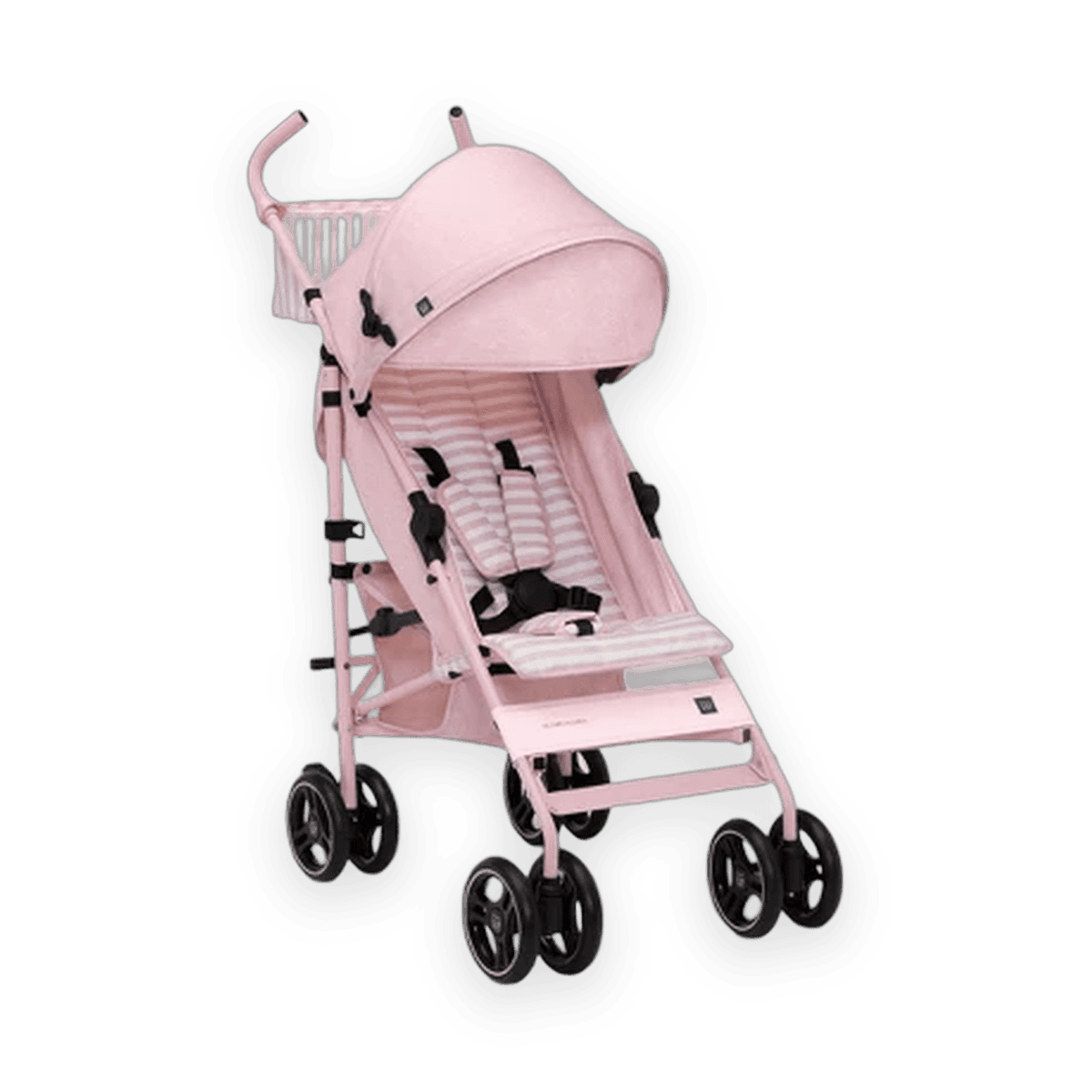
Product image via Target
Where to buy
Prices checked Sep 24, 2026- AmazonBest pickCheck price at Amazon
- TargetCheck price at Target
We may earn a commission from links on this page, at no extra cost to you. How this works.
15 min read · Reviewed by Huggle Hive Editorial Team, Parent-led product research team · Updated August 18, 2026
The short answer
The babyGap Classic Stroller by Delta Children is the right buy if your baby already sits up on their own and you want one light stroller you will actually carry. It weighs 14.5 pounds on a steel frame, carries a child up to 50 pounds, and arrives with two certifications that matter to nervous parents: JPMA and GREENGUARD Gold. The limit is the starting age. Delta Children rates this stroller for infants 9 months and up, and the infant-stage extras (car seat compatibility, a bassinet, a seat that flips to face you) are not confirmed in its specs.
Our scorecard
How the Hive Score works- Portability
- 4.5
- Safety basics
- 4.3
- Comfort & ride
- 4.2
- Versatility
- 2.6
- Value
- 3.8
Scores blend each product's verified specs with its overall owner rating, weighted the same way for every stroller. Learn more about our evaluation framework.
The 30-second version
- 14.5 pounds with a steel frame, light enough to lift one-handed into a trunk or up a flight of stairs
- JPMA certified and GREENGUARD Gold certified, an unusual pairing at the lightweight end of the market
- Rated for 9 months up to 50 pounds, so it is a second stroller for the first year and a primary one after that
- Five-point harness and a multi-position recline for naps on the move
- Seat fabrics are made from recycled plastic bottles, per Delta Children
- Not confirmed: travel system compatibility, reversible seat, suspension, one-hand fold
Pros and cons
Pros
- 14.5-pound steel frame keeps weight low without going to a flimsy build
- JPMA certified, the voluntary safety program tied to the ASTM stroller standard
- GREENGUARD Gold certified for low chemical emissions, rare on a stroller at this weight
- Five-point harness, the restraint style pediatric safety groups favor
- Multi-position recline, so a nap does not mean a slumped-forward head
- 50-pound child limit gives you years of runway past toddlerhood
- Extra-large extendable canopy with a sun visor, per Delta Children
- Extra-large storage basket plus a removable parent organizer
- Auto-lock fold with a carry handle for stairs, transit and trunk loading
- Seat fabric made from recycled water bottles, per Delta Children
Cons
- Starts at 9 months, so it cannot be your newborn stroller
- Travel system and car seat compatibility are not confirmed
- A reversible, parent-facing seat is not confirmed
- Suspension, an adjustable handlebar and a canopy UPF rating are not confirmed
- One-hand fold and free-standing fold are not confirmed
- Folded depth of 44 inches means it stows long and flat rather than as a small cube
Who should buy it, and who should skip it
Buy it if you are past the infant seat. A baby who sits unassisted, holds their head steady and wants to look at the world is exactly the rider this stroller is built around. You get a real seat with a multi-position recline, a big canopy, and a frame light enough that the stroller stops being a project every time you leave the house. For city parents doing stairs, buses and small trunks, 14.5 pounds is the number that decides whether a stroller gets used or lives in a closet.
Buy it as a second stroller if you are still in the newborn stage but tired of wrestling a full-size travel system into the car for a ten-minute errand. Plenty of families run a heavy do-everything stroller at home and a light one in the trunk. This one slots into that job cleanly, and the 50-pound ceiling means it outlasts the big stroller by a wide margin.
Skip it if you are shopping for birth. Delta Children rates the babyGap Classic for infants 9 months and up, and nothing in the verified specs confirms car seat compatibility, a bassinet, or a flat newborn recline. Skip it too if you specifically want a parent-facing seat for the eye-contact stage, or if your daily route is gravel, grass and curbs, since suspension and all-terrain wheels are not confirmed here.
Two certifications, a five-point harness and 14.5 pounds is a strong combination. It is also a single-stage stroller, and that is the honest trade you are making.
How does it perform day to day?
Is 14.5 pounds actually light?
Yes, and the number is doing more work than it looks. Stroller weight is the spec that quietly determines how often you use the thing: a stroller you can lift with one arm while the other holds a baby gets taken on the subway, up the walk-up, into the restaurant. Delta Children builds this frame from steel rather than aluminum, which usually means a sturdier feel at a modest weight penalty, so landing at 14.5 pounds is a genuinely good result for the category. Open, it measures 20.7 inches wide, 31.5 inches deep and 42.9 inches tall, and that sub-21-inch width is the number to check against your front door and standard shop aisles.
The fold is where the picture gets more specific. Folded, the stroller measures 12 inches wide, 44 inches deep and 11 inches tall, so it packs down thin and flat rather than into a compact block. That shape loads easily along the side or floor of a trunk and slides behind a car seat, but it is not a stroller that disappears into an overhead bin. Delta Children lists an auto lock, which keeps the folded frame from springing open while you carry it, and a carry handle, which is the detail that separates a stroller you can haul up stairs from one you drag. A one-hand fold and a free-standing fold are not confirmed in the specs, so assume two hands and a wall to lean it against until you can check in person.
What do the safety certifications actually mean?
This stroller carries both JPMA certification and GREENGUARD Gold certification, and those two do different jobs. JPMA certification means the product was tested by an independent lab against the applicable ASTM safety standard for carriages and strollers, which covers things like stability, brake performance, restraint strength and folding-mechanism locks. The federal stroller rule that standard feeds into is administered by the CPSC. Certification is not a promise that nothing can go wrong, but it does tell you an outside lab checked the frame against a written standard rather than the brand grading its own homework.
GREENGUARD Gold is about air, not impact. It certifies that a product meets strict limits on chemical emissions, with thresholds set for sensitive people, including children. On a stroller, that speaks to the fabrics, foams and plastics your baby sits against and breathes near for hours a week. It is a certification you see often on cribs and mattresses and much less often on a 14.5-pound stroller, so it is a real point in this one's favor.
The restraint is a five-point harness: two shoulder straps, two hip straps and a crotch strap. That is the configuration child safety guidance consistently prefers over a three-point belt, because it holds the shoulders and stops a determined toddler from wriggling upright at a curb. The AAP's stroller safety guidance is worth two minutes of reading whichever stroller you land on, especially the parts about never hanging bags from the handlebar and always setting the brake.
Comfort, canopy and recline
The seat reclines to multiple positions, which is the feature that decides whether an afternoon nap happens in the stroller or ends with a transfer and a wide-awake baby. Multi-position means you can find a middle setting for a drowsy toddler instead of choosing between fully upright and fully back. Delta Children pairs that with an extra-large extendable canopy plus a sun visor, and describes the seat as incredibly cozy. A UPF rating for the canopy fabric is not published in the verified specs, so treat the canopy as coverage rather than a stated sun-protection number.
On the push, Delta Children says the front wheels use precision technology for control and an effortless push, and that it glides, turns and maneuvers on any surface. That is the brand's claim, not a measured finding, and it lines up with what lightweight strollers with smaller front wheels usually do well: tight turns on smooth ground. Suspension and an adjustable handlebar are not confirmed, so if you are tall or your route includes broken sidewalks, those are the two things to check before you commit.
There is also a calf rest, which matters more than it sounds like for a leggy two-year-old whose feet have nowhere to go. Small ergonomic detail, real difference on a long walk.
Recycled fabric and what "responsibly made" covers
Delta Children calls this the most responsibly made lightweight stroller and backs that phrase with one concrete process: all the soft fabrics are made from recycled plastic drinking bottles, which are sorted, cleaned and shredded into flakes that become yarn. The listed materials are metal, plastic and fabric. That is a specific, checkable sustainability story, and it is a better one than most strollers offer, which is usually nothing at all.
Be clear-eyed about the scope. Recycled seat fabric plus GREENGUARD Gold covers the textiles and the emissions side. Broader claims about the frame, the packaging or end-of-life recycling are not part of the verified data, so we are not going to stretch it further than the fabric.
Storage that fits a real diaper bag
The basket is described as extra-large, and there is a removable parent organizer for a phone, keys and a coffee. Removable is the useful word: an organizer you can take off is one you can clean, and one you can leave at home when you want a slimmer fold. Add the babyGap logo and the Brannan Bear on the wheels, canopy, calf rest, organizer and harness, and you get a stroller with an identity rather than another anonymous black rectangle.
When can your baby ride, and for how long?
| Stage | Does this stroller fit? |
|---|---|
| Newborn to 8 months | No. Rated for 9 months and up, with no confirmed car seat or bassinet compatibility. |
| 9 to 18 months | Yes. Sitting-up riders get the recline, the five-point harness and the big canopy. |
| Toddler, 18 months to 3 years | Yes, and this is the sweet spot for a light everyday frame. |
| Preschooler, up to 50 pounds | Yes, up to the 50-pound limit, which most kids reach around age five to seven. |
Here are the numbers to measure against your car and your hallway before you order.
| Spec | Measurement |
|---|---|
| Stroller weight | 14.5 lb |
| Max child weight | 50 lb |
| Open (W x D x H) | 20.7 in. x 31.5 in. x 42.9 in. |
| Folded (W x D x H) | 12 in. x 44 in. x 11 in. |
| Frame | Steel |
| Harness | Five-point |
| Recline | Multi-position |
The folded footprint is long and flat, not cubic. Before you buy, check that you have 44 inches of clear length somewhere in the car, along the side of the trunk, across the floor, or behind a rear seat.
What you are paying for
Stroller pricing moves with retailer, colorway and season, so check the current number in the buying section below rather than trusting any figure you read in an article. What is stable is the feature set you are buying into:
- Weight, and the use it unlocks. 14.5 pounds is the difference between a stroller in the trunk and a stroller in the garage.
- Two independent certifications. JPMA on safety, GREENGUARD Gold on emissions. Many lightweight strollers carry neither.
- A five-point harness and multi-position recline, features that are common on full-size strollers and inconsistent on light ones.
- A 50-pound ceiling. Buy at 9 months and this can plausibly be the last stroller you buy.
- Recycled seat fabric, if that is a factor in how you shop.
- Storage that is actually sized for a day out, including a removable parent organizer.
What you are not paying for is stage flexibility. There is no confirmed infant car seat click-in, no confirmed bassinet, no confirmed parent-facing seat. Read the price against that.
How it compares to the other strollers on your list
Against a full travel system. A travel system solves birth to toddler in one purchase, with an infant car seat that clicks onto the frame. It also weighs substantially more and eats a trunk. The babyGap Classic does not compete for that job at all, since it starts at 9 months. The realistic comparison is sequencing, not substitution: many families run a travel system for the first year, then move to something like this and never look back. If you own a travel system already, this is the upgrade that makes short trips easy.
Against a full-size convertible stroller. Full-size frames bring suspension, larger wheels, reversible seats and sometimes a second seat, and they ride better over rough ground. They also weigh far more than 14.5 pounds and rarely fold to 12 inches wide. Choose the full-size stroller if your daily route is uneven or you are planning for two kids. Choose this one if your route is sidewalks, shops and stairs, and the deciding factor is what you can carry.
Against a bare-bones umbrella stroller. Cheap umbrella strollers hit a similar weight and often a lower price, and that is where the resemblance stops. They frequently use a three-point harness, a token canopy, a token basket and a single seat position. This stroller answers each of those with a five-point harness, a multi-position recline, an extra-large canopy and real storage, plus JPMA and GREENGUARD Gold certification. If the umbrella stroller is genuinely for six trips a year, save the money. If it is your daily stroller, the babyGap Classic is the more complete piece of gear.
For more options in this weight class, our best lightweight strollers guide sorts the category by what each frame is actually good at.
How we scored it
The babyGap Classic earns an overall Hive Score of 8.1 out of 10, and the shape of that number tells the story better than the number does.
Portability, 4.5. The highest sub-score, and it is earned by 14.5 pounds, the 12-inch folded width, the auto lock and the carry handle. It is not a perfect 5 because a one-hand fold and a free-standing fold are not confirmed, and the 44-inch folded length is long.
Safety basics, 4.3. JPMA certification, GREENGUARD Gold certification and a five-point harness are the three things this dimension looks for, and this stroller has all three. That combination on a light frame is the single strongest argument for it.
Comfort and ride, 4.2. The multi-position recline, the extra-large extendable canopy with sun visor and the calf rest all count here. It sits below the safety score because suspension, an adjustable handlebar and a canopy UPF rating are not confirmed, and those are the specs that lift a ride score to the top of the range.
Versatility, 2.6. The clear weak point, and it is not a build-quality problem. This dimension rewards travel system compatibility, a reversible seat, newborn readiness, bassinet compatibility and a second seat, and none of those are confirmed on a stroller rated from 9 months. It does one stage well and does not pretend otherwise.
Value, 3.8. A solid mid-to-upper result, anchored to the price tier and nudged by the rest of the card. You are paying for certifications, a long weight ceiling and a genuinely light frame, and paying for a stroller that cannot cover your baby's first nine months.
More on how these dimensions are built lives on our review methodology page.
Frequently asked questions
Can I use the babyGap Classic Stroller with a newborn?
No. Delta Children recommends this stroller for infants 9 months and up. It has a multi-position recline, but car seat compatibility, a bassinet and newborn readiness are not confirmed in its specs, so plan on a different stroller or a travel system for the first nine months.
How much does the babyGap Classic Stroller weigh?
14.5 pounds, on a steel frame. That is light for a stroller with a five-point harness, a multi-position recline and a full-size basket, and it is the main reason to choose this one.
What is the weight limit?
50 pounds. Most children reach that somewhere between five and seven years old, so a stroller bought at 9 months has a long runway.
Is it certified safe?
It is JPMA certified, meaning independent lab testing against the applicable ASTM stroller standard, and GREENGUARD Gold certified for low chemical emissions. It also uses a five-point harness rather than a three-point belt.
Does it fold small enough for a car trunk or a plane?
Folded, it measures 12 inches wide, 44 inches deep and 11 inches tall, with an auto lock and a carry handle. That is thin and flat, which suits a trunk floor or the side of a cargo area. It is long, so measure before assuming it will fit a small hatchback or a cabin bin.
Is it good for naps on the go?
The multi-position recline and the extra-large extendable canopy with sun visor are the two features that matter for stroller naps, and this stroller has both. You can set an intermediate recline instead of choosing between bolt upright and all the way back.
Is it an eco-friendly stroller?
Delta Children says all the soft fabrics are made from recycled plastic drinking bottles, sorted, cleaned and shredded into flakes that become yarn. Combined with GREENGUARD Gold certification for low chemical emissions, that is a more specific environmental story than most strollers offer. Claims beyond the fabrics are not part of the published specs.
Where to buy the babyGap Classic Stroller
Availability and price move by colorway, so check the current listings before you commit. The 44-inch folded length and the 20.7-inch open width are the two measurements worth confirming against your car and your front door first.
Bottom line
The babyGap Classic Stroller by Delta Children is a well-certified, genuinely light everyday stroller for a baby who can already sit up: 14.5 pounds, JPMA and GREENGUARD Gold certified, a five-point harness, a multi-position recline, real storage, and a 50-pound limit that keeps it useful for years. The trade-off is stage coverage. It starts at 9 months, and the infant-stage conversions that would make it a birth-to-preschool stroller are not confirmed, which is exactly why versatility scores 2.6 while portability scores 4.5. If you already have the first year covered, this is an easy stroller to say yes to. If you are shopping for a newborn, start somewhere else and come back at nine months.
Delta Children babyGap Classic
See prices