
Colugo Compact Plus
Price verified Sep 16, 2026
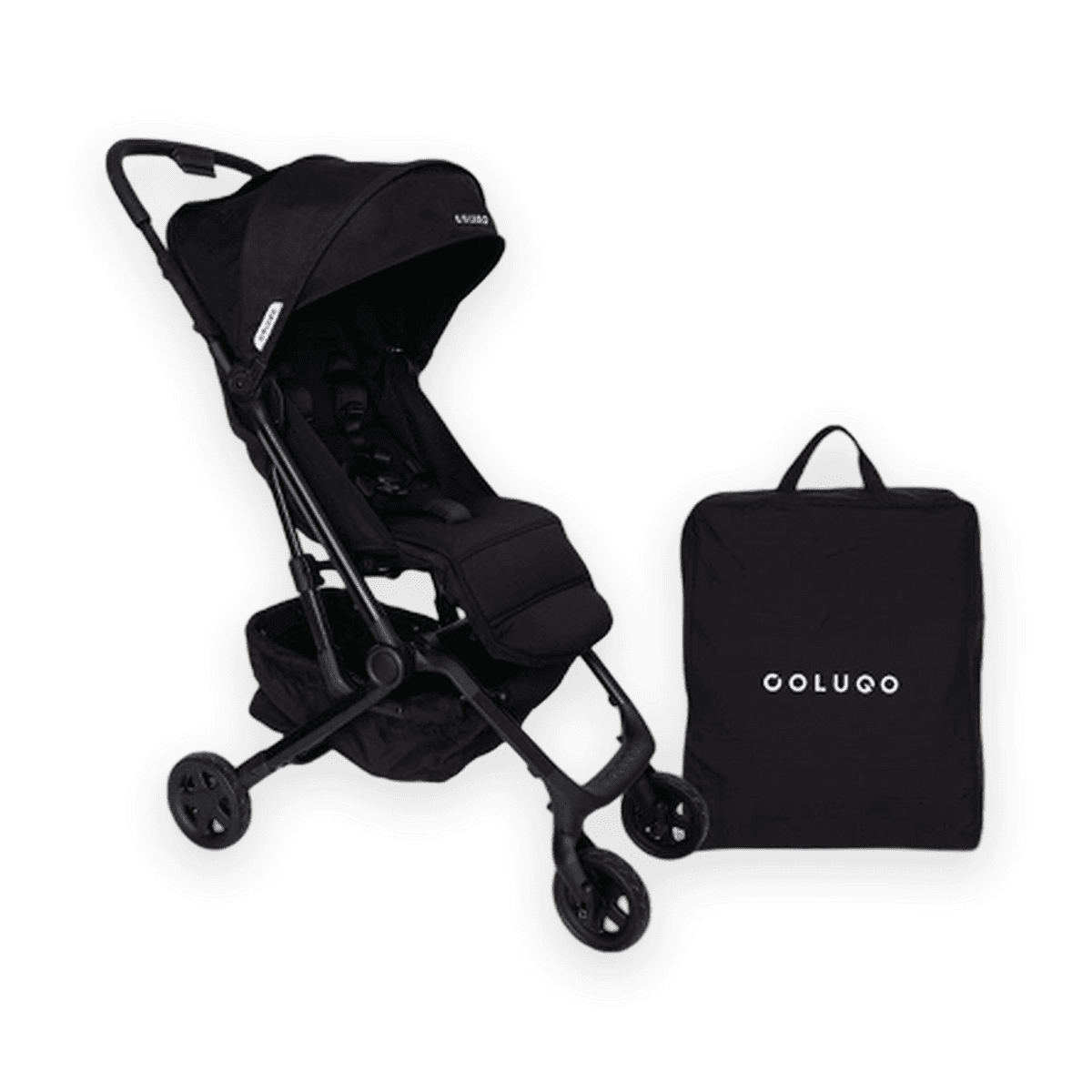
Product image via Target
Where to buy
Prices checked Sep 16, 2026- TargetCheck price at Target
We may earn a commission from links on this page, at no extra cost to you. How this works.
15 min read · Reviewed by Huggle Hive Editorial Team, Parent-led product research team · Updated August 2, 2026
The Colugo Compact Plus is a travel stroller first and a daily stroller second. At 17 pounds, with a one-hand auto-fold that locks itself shut, it is built for parents who are forever lifting the stroller rather than just pushing it: into a trunk, up a flight of apartment stairs, down an airplane aisle. The catch is where it starts. Colugo rates it for 6 months and up, and bassinet and infant car seat compatibility are not part of its published feature list, so this is not the stroller that brings your baby home from the hospital.
Our scorecard
How the Hive Score works- Portability
- 4.2
- Safety basics
- 4.0
- Comfort & ride
- 4.2
- Versatility
- 2.4
- Value
- 3.7
Scores blend each product's verified specs with its overall owner rating, weighted the same way for every stroller. Learn more about our evaluation framework.
The short version
- Weighs 17 pounds and folds to 10 x 17 x 24 inches; Colugo says it fits most airplane overhead bins.
- Rated for 6 months and up with a 55-pound child limit, so it can carry a preschooler.
- JPMA certified, with a 5-point harness, a foot brake and a UPF 50+ canopy.
- Ships with a carry bag, rain cover and removable cup holder, so the usual add-ons are already covered.
- One seat, and no listed car seat or bassinet compatibility. This is a from-six-months stroller, not a birth-to-toddler system.
Pros
- One-hand auto-fold that locks on its own, so you can hold your baby and fold at the same time
- 17 pounds of aluminum and plastic, light enough to carry up stairs one-handed
- Folds to 10 inches thick; Colugo says it fits most airplane overhead bins
- JPMA certified, with a 5-point harness and a foot brake
- Infinite recline plus an adjustable footrest, so nap position is a dial rather than two fixed stops
- UPF 50+ canopy, rated to let through no more than a fiftieth of UV
- Machine-washable fabrics, which matters more than parents expect by month three
- 55-pound weight limit, enough to cover most kids well into the preschool years
- Carry bag, rain cover and removable cup holder included
Cons
- Rated for 6 months and up, so it cannot be your only stroller from birth
- Car seat and bassinet compatibility are not part of the published spec, which is what pulls Versatility down to 2.4 of 5
- Single seat, with no second-child configuration
- Suspension is not listed among its features, so wheel-level cushioning is not something you can count on
- One-year warranty, short next to the years of use a 55-pound limit implies
Who should buy the Colugo Compact Plus?
Buy it if the stroller spends real time off the ground. Airport parents, city parents hauling up to a third-floor walkup, grandparents keeping a spare in the trunk: 17 pounds and a self-locking one-hand fold are the two specs that decide whether you actually bring a stroller or give up and wear the baby. The folded stack is 10 inches thick and 24 inches deep, which is the difference between a trunk you can still load groceries into and one that is now the stroller's trunk.
Buy it if your baby is already sitting. The 6-months-and-up age rating is the cleanest signal on this spec sheet. The American Academy of Pediatrics guidance at HealthyChildren.org is consistent on this point: a baby who cannot hold their head up unsupported needs a flat, fully supported surface or a properly installed infant car seat, not an upright seat. The Compact Plus has an infinite recline, but the age rating is the manufacturer's own line, and we would not cross it.
Skip it if you are shopping for your first and only stroller. A newborn needs something the Compact Plus does not claim: a bassinet, a car seat adapter, or a birth rating. Skip it too if you are expecting a second child soon, because there is one seat and no listed double configuration. And if your daily route is gravel, cobblestone or grass, look for a stroller that lists suspension and larger wheels, because neither is part of this one's published spec.
If you are buying a second stroller, the one that lives in the car and goes on planes, this is exactly the shape of product to buy. If you are buying your first, the six-month floor is a real gap you will have to fill some other way.
How does the Compact Plus perform?
Is 17 pounds actually light for a stroller?
Yes, meaningfully so. Seventeen pounds is roughly what a one-year-old weighs, and it is the weight you lift one-handed while the other arm holds a squirming toddler. That number comes from the aluminum and plastic frame, which is the standard recipe for travel strollers: aluminum for stiffness without steel's mass, plastic for the joints and hardware.
The fold is the other half of the story, and it is the more interesting half. A one-hand auto-fold that locks automatically means the stroller stays folded when you pick it up, instead of yawning open across your shin halfway to the car. That self-locking behavior is what separates a stroller you fold at the curb from one you have to set down, wrestle and strap. Colugo pairs it with a folded size of 10 inches high by 17 inches wide by 24 inches deep and says it fits most airplane overhead bins. Treat that as the manufacturer's claim rather than a guarantee, since bin dimensions vary by aircraft, but the 10-inch thickness is the number that makes it plausible.
Open, it measures 41 inches high, 17 inches wide and 26 inches deep. The width is the figure to notice: 17 inches open is the same as 17 inches folded, and it is narrow enough to clear standard interior doorways and most store aisles without the sideways shuffle.
Auto-folds are muscle memory. Do it five times in your living room while holding something the weight of your baby, so the first time you fold at a gate with a boarding line behind you is not the first time you fold at all.
Comfort and ride: what the recline and footrest actually do
The infinite recline is the standout comfort spec. Most strollers give you two or three fixed stops, which means the nap angle your child likes is often between two of them. Infinite recline lets you set the seat anywhere across its range, so you can drop it a few degrees when a head starts nodding without committing to a full lie-back. Paired with the adjustable footrest, it also lets you keep a longer-legged toddler from dangling, which is the small thing that decides whether a nap lasts twenty minutes or five.
Storage is listed as a spacious basket, and a removable cup holder comes with the stroller. Removable matters: cup holders are the first thing to get sticky, and one that comes off goes in the sink instead of getting scrubbed in place. Machine-washable fabrics extend that logic to the whole seat. Blowouts, yogurt, sunscreen and sand all end up in a stroller seat eventually, and a seat you can put through a wash cycle stays usable years longer than one you can only spot-clean.
What is not listed is suspension. That does not make the ride bad, but it does mean smooth surfaces are where this stroller is designed to work: sidewalks, terminals, mall floors, packed paths.
Safety basics: JPMA, the harness and the brake
Three specs carry this section. The Compact Plus is JPMA certified, which means the stroller has been tested by an independent lab against the applicable ASTM safety standard for carriages and strollers and is subject to ongoing verification. For a category regulated by the Consumer Product Safety Commission, certification is the clearest third-party signal a parent can read off a spec sheet without owning testing equipment.
The harness is a 5-point: two shoulder straps, two hip straps, one crotch strap. Five points is what you want, because the crotch strap is what stops a child from sliding down and under the waist belt, and the shoulder straps are what stop a determined toddler from standing up mid-stride. Three-point harnesses still exist on cheaper strollers, and they are the spec to check before anything else.
The parking brake is foot-operated, which is the common and practical arrangement. Get in the habit of setting it every single time you stop, including on ground that looks flat, and never park a stroller on a slope with a child in it.
What does a UPF 50+ canopy actually mean?
UPF is a fabric rating, not a sunscreen rating. A UPF 50 fabric is rated to let through no more than one fiftieth of the ultraviolet radiation hitting it, which is the top of the standard scale and the reason you see "50+" rather than a higher number. For a baby whose skin burns faster than yours and who is sitting at the height of reflected pavement heat, the canopy is doing meaningful daily work on a summer walk. A rain cover comes with the stroller as well, so the two weather extremes are covered without a separate purchase.
Versatility is where it gives ground
This is the honest weak spot, and the scorecard says so plainly at 2.4 out of 5. The Compact Plus is a single-seat stroller rated from 6 months. Car seat compatibility, bassinet compatibility and a reversible seat are not part of its published feature set, so a newborn phase and a second child both sit outside what this stroller is built to do. That is a design choice rather than a flaw: every gram spent on adapters and reversible hardware is a gram working against the 17-pound number that makes the stroller worth owning.
What ages and sizes does it fit?
The usable window runs from 6 months to 55 pounds. That upper limit is generous. Plenty of kids are still under 55 pounds at five or six years old, so the practical end of this stroller is usually the day your child refuses to sit in it, not the day they outgrow the spec.
| Spec | Colugo Compact Plus |
|---|---|
| Age stage | 6 months and up |
| Max child weight | 55 lb |
| Seats | 1 |
| Stroller weight | 17 lb |
| Open (H x W x D) | 41 x 17 x 26 in |
| Folded (H x W x D) | 10 x 17 x 24 in |
| Harness | 5-point |
| Brake | Foot |
| Canopy | UPF 50+ |
| Frame materials | Aluminum and plastic |
| Certification | JPMA |
| Warranty | 1 year |
| Included | Carry bag, rain cover, removable cup holder |
One practical note on the 41-inch open height: that is the frame, not the handlebar reach for a specific parent. Handlebar height adjustment is not part of the published spec, so if there is a tall parent and a short parent sharing the stroller, check the handle position in person before committing.
What does it cost to own?
Prices move, so check the current number through the retailer links below rather than trusting any figure written into a review. What we can say is what you will not be buying separately. A travel bag, a rain cover and a cup holder are the three accessories most travel-stroller owners end up purchasing within the first month, and all three come with the Compact Plus. Add machine-washable fabrics, which turn a ruined seat into a wash cycle, and the running cost of ownership is lower than the sticker alone suggests.
The 55-pound limit is the other half of the value math. A stroller you use from 6 months to age four or five costs a fraction per month of one your child outgrows at 35 pounds. Set against that, the warranty is one year, which is short relative to that usable life, so register the stroller and keep your receipt.
- What you are paying for: the 17-pound weight, the self-locking one-hand fold, and the 10-inch folded thickness.
- What you are not paying for: newborn coverage, a second seat, or listed suspension.
- What is already included: carry bag, rain cover, removable cup holder.
How does it compare to other stroller types?
The useful comparison here is by category, because the Compact Plus is competing against a shape of stroller rather than any single model.
| Stroller type | What you gain | What you give up next to the Compact Plus |
|---|---|---|
| Full-size stroller | Larger wheels, bigger basket, often a birth-ready bassinet or car seat adapter | Weight and folded bulk; overhead-bin travel is off the table |
| Umbrella stroller | Usually lighter and cheaper | Two-hand folds are common, canopies are thinner, and weight limits often stop well below 55 lb |
| Travel system | Newborn coverage from day one via a matched infant car seat | Bulk, plus most families buy a lighter second stroller within a year anyway |
| Double stroller | A seat for a second child | The Compact Plus has one seat and no listed double configuration |
A five-question checklist before you buy
- How old is your baby right now? Under 6 months, this stroller cannot be your only one.
- How often do you lift it? If the answer is daily, 17 pounds and a self-locking fold are worth paying for.
- Do you fly? Ask your airline about bin dimensions on your specific aircraft, then compare against 10 x 17 x 24 inches.
- What surfaces do you walk? Smooth ground plays to this stroller's strengths.
- Is a second child likely soon? One seat is one seat.
If you want the wider field, our stroller reviews and best travel strollers guide put these numbers side by side across the category.
How we scored it
The five sub-scores average 3.7 out of 5, which is 7.4 on our 10-point scale. Here is what moved each one.
Portability, 4.2. The highest score on the card, and it is earned by three specs pulling together: 17 pounds, a one-hand fold, and an auto-lock that keeps the fold shut. The 10-inch folded thickness is what makes the travel case credible.
Comfort and ride, 4.2. The infinite recline and adjustable footrest do the lifting, and the UPF 50+ canopy adds real daily value in summer. It sits at 4.2 rather than higher because suspension is not among the listed features and there is no published handlebar adjustment.
Safety basics, 4.0. This dimension is scored conservatively by design, on the principle that safety claims should have to climb. The Compact Plus climbs on independent JPMA certification and a 5-point harness, backed by a foot brake.
Versatility, 2.4. The clear laggard. One seat, a 6-month floor, and no listed car seat or bassinet compatibility mean this stroller covers one stage of childhood well rather than all of them adequately.
Value, 3.7. Solidly above the middle. The included carry bag, rain cover and cup holder, plus machine-washable fabrics and a 55-pound ceiling, spread the cost across years of use. The one-year warranty is what keeps it from scoring higher.
Our review methodology explains how these dimensions are defined and why they are computed rather than written.
Can the Colugo Compact Plus be used for a newborn?
No. Colugo rates it for 6 months and up, and infant car seat and bassinet compatibility are not part of its published feature list. Until your baby can sit up and hold their head steady unsupported, you will need an infant car seat or a stroller with a bassinet.
Does it fit in an airplane overhead bin?
Colugo says it fits most airplane overhead bins. Folded, it measures 10 inches high by 17 inches wide by 24 inches deep. Bin sizes vary by aircraft, so check those dimensions against your airline's stated carry-on limits before you count on it.
How much does the Compact Plus weigh, and how much can it carry?
The stroller weighs 17 pounds, and the maximum child weight is 55 pounds. That upper limit typically carries a child into the preschool years.
Is it certified safe?
It is JPMA certified, which means independent lab testing against the applicable ASTM standard for strollers plus ongoing verification. It uses a 5-point harness and a foot-operated parking brake.
Does the seat recline for naps?
Yes. It has an infinite recline, so you set the angle anywhere in its range instead of picking between fixed stops, and an adjustable footrest to support longer legs. The 6-month age rating still applies.
What comes with it?
A carry bag, a rain cover and a removable cup holder. The canopy is rated UPF 50+ and the fabrics are machine washable.
What is the warranty?
One year. Given the 55-pound weight limit implies several years of use, register the stroller and hold on to your proof of purchase.
Where to buy the Colugo Compact Plus
Bottom line
The Compact Plus is the stroller you buy because you are tired of fighting the one you have into a trunk. Seventeen pounds, a self-locking one-hand fold, a 10-inch folded stack, JPMA certification and a 55-pound ceiling add up to a stroller that stays useful from the sitting-up stage through preschool. The trade-off is fixed and worth stating twice: it starts at 6 months, it seats one, and it does not claim car seat or bassinet compatibility. If you already have the newborn stage covered, this is a strong second stroller. If you do not, buy that stroller first and come back to this one.
Colugo Compact Plus
See prices