
Chicco Liteway
Price verified Sep 24, 2026 · lowest in 90 days $109.99
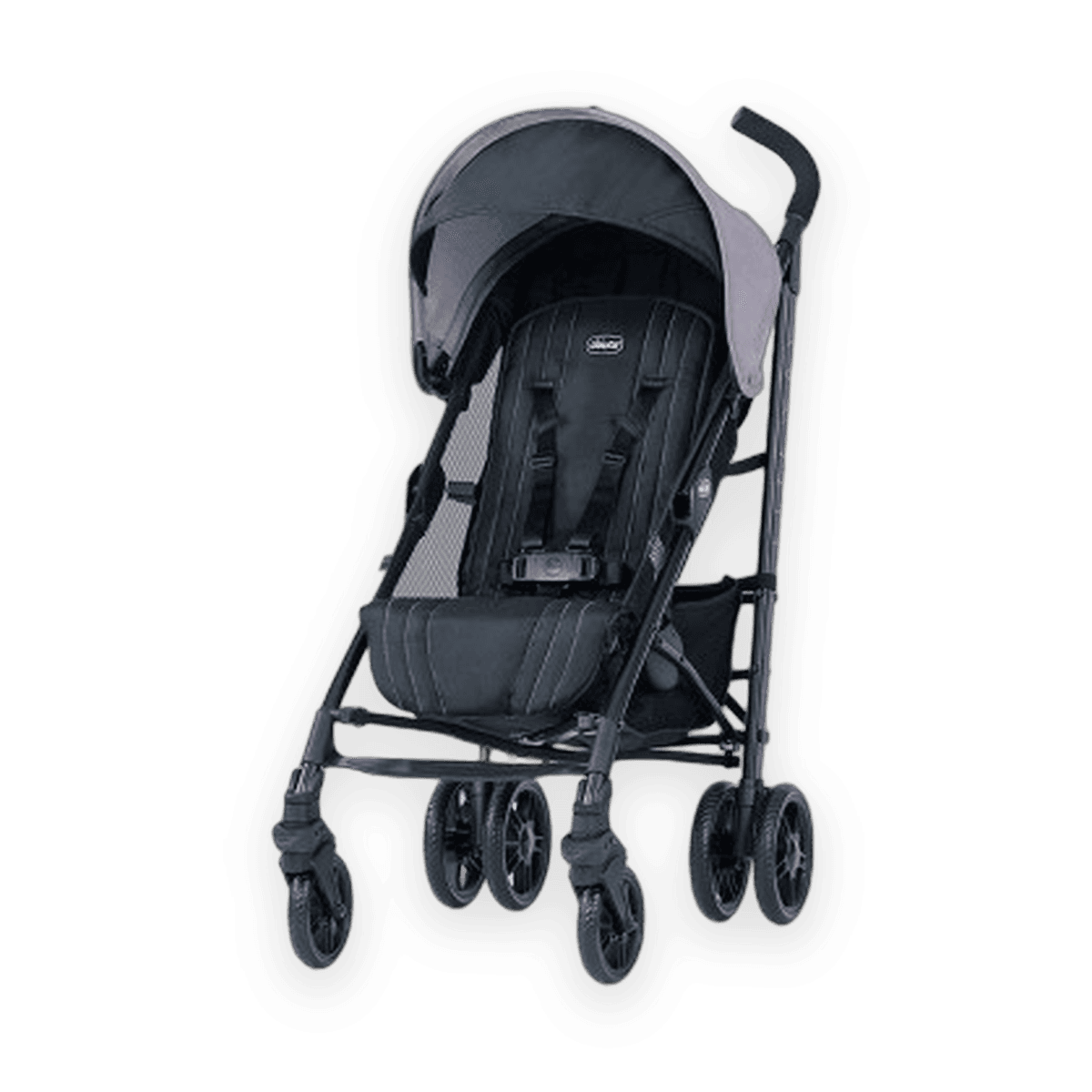
Product image via Target
Where to buy
Prices checked Sep 24, 2026- AmazonBest pickCheck price at Amazon
- TargetCheck price at Target
- WalmartCheck price at Walmart
We may earn a commission from links on this page, at no extra cost to you. How this works.
15 min read · Reviewed by Huggle Hive Editorial Team, Parent-led product research team · Updated August 15, 2026
The short version
The Chicco Liteway is built for one job: moving a sitting-up baby or a toddler through errands, airports, and sidewalks without wrestling a full-size frame in and out of your trunk. It weighs 17.2 pounds on an aluminum frame, carries a JPMA certification, and rides on rear-wheel suspension, which is more chassis than most strollers this light bother with. What you give up is range at both ends of babyhood: Chicco lists it for 6 months and up, and it stops at 40 pounds.
Our scorecard
How the Hive Score works- Portability
- 4.4
- Safety basics
- 4.4
- Comfort & ride
- 4.6
- Versatility
- 2.6
- Value
- 3.1
Scores blend each product's verified specs with its overall owner rating, weighted the same way for every stroller. Learn more about our evaluation framework.
Chicco Liteway at a glance
- 17.2 pounds on an aluminum frame, with a carry handle and an automatic storage latch that holds the fold closed
- JPMA certified, with toe-tap foot brakes and rear-wheel suspension
- Chicco lists it for 6 months and up, with a 40-pound maximum child weight
- Four recline positions and a removable, adjustable canopy with a peek-a-boo window
- Folds long rather than square: 46 inches deep, 11.8 inches tall, 10 inches wide
- Versatility is the soft spot: travel-system, bassinet, and reversible-seat compatibility are not confirmed in the verified specs
Pros and cons
Pros
- 17.2-pound aluminum frame with a dedicated carry handle, light enough to hoist up a flight of stairs on one arm
- JPMA certified, an independent safety certification most shoppers never think to check for
- Rear-wheel suspension, which is uncommon at this weight and matters on cracked sidewalks
- Four-position backrest that Chicco says adjusts with one hand
- Toe-tap foot brakes, the fastest kind to set while you are holding a baby
- Cup holder and storage basket are included rather than sold as add-ons
- Only 18.5 inches wide open, so it clears narrow store aisles and interior doorways
- Automatic storage latch keeps the folded frame from flopping open mid-carry
Cons
- Rated for 6 months and up, so it cannot be your newborn stroller
- 40-pound child weight limit, lower than many full-size frames
- Travel-system, bassinet, reversible-seat, and newborn-ready compatibility are not confirmed
- Folded length of 46 inches needs a long trunk, a hatch, or a back seat
- One-hand fold and self-standing fold are not listed in the verified specs, so we do not assume them
- Canopy UPF rating is not specified
- One-year warranty
Who the Chicco Liteway is for
Start with the age line, because it decides everything else. Chicco lists the Liteway for 6 months and up. That rules it out as your ride home from the hospital and as your only stroller for the first half-year. If you are shopping while pregnant and you want one purchase to carry you from day one, this is not that stroller.
Where it fits is the phase right after. Once your baby sits up unsupported, the calculus flips: you stop needing a car seat to click into a frame and you start needing something you can throw in a trunk between daycare drop-off and the grocery store. A 17.2-pound aluminum frame with a carry handle is exactly the tool for that stretch, and the 40-pound cap means it keeps working through the toddler years for most families before size, not the stroller, ends the relationship.
It is also a strong candidate for the second-stroller slot. Plenty of families keep a heavy travel system for the car and want something light for the front hall, the grandparents' house, or the airport. The Liteway's narrow 18.5-inch open width and long, slim fold suit that role better than a big frame ever will.
Skip it if any of these describe you:
- You want one stroller from newborn through preschool, with a bassinet or an infant car seat clicking on top.
- Your child is already close to 40 pounds, or you want headroom past that.
- You need confirmed travel-system compatibility with a specific infant seat. It is not listed in the verified specs, so we will not tell you it works.
- You are shopping for trails, gravel, or running. Rear suspension helps on sidewalks, but this is not an all-terrain frame.
Performance
A 17.2-pound frame with real rear suspension and a four-position recline is the trade most lightweight strollers refuse to make. Usually you pick one: light, or comfortable to ride in. The Liteway is trying to give you both.
How easy is it to fold and carry?
The fold is the reason to buy a stroller like this, so look closely at the numbers. Folded, the Liteway measures 11.8 inches tall, 10 inches wide, and 46 inches deep. That is the classic umbrella-style shape: it collapses into a long, skinny stick rather than a compact cube. The practical difference matters more than the spec sheet suggests. A 46-inch package slides beautifully along the side of a trunk, behind a back seat, or into a closet corner, and it is awkward in a small sedan trunk loaded front to back.
Chicco pairs the fold with an automatic storage latch and a carry handle. The latch is the unglamorous part that makes the rest work, since a folded stroller that springs open while you are carrying it and a diaper bag is a two-hand problem you do not have two hands for. At 17.2 pounds the frame is genuinely liftable, though it is not in the sub-15-pound travel class, and you will feel the difference on a long airport walk.
One honest gap: the verified specs do not list a one-hand fold or a self-standing fold. Those are the two features that separate a good compact fold from a great one, and since they are not confirmed, we are not counting them in this stroller's favor.
Does it ride well on real sidewalks?
Rear-wheel suspension is the spec we would point to first. Suspension on a light stroller absorbs the small, constant jolts of expansion joints, curb cuts, and cobbled crosswalks, which is the difference between a nap that survives the walk home and one that does not. Chicco also says optional front swivels help keep the ride smooth from surface to surface, which is the standard arrangement: unlock the swivels for tight maneuvering in stores, lock them straight for long, straight pushes.
The handles are padded, per Chicco. Open, the frame stands 41 inches tall, which gives you a rough sense of push height, though Chicco does not specify a separate handlebar measurement and does not list height adjustment. If you or your partner are notably tall, that is worth checking in person before you commit.
Recline, canopy, and naps on the go
Four positions, adjustable with one hand according to Chicco. That is more than the two-stop backrests common on budget umbrella strollers, and the middle positions are the ones you actually live in: upright enough for a toddler who wants to watch the world, angled enough for a drooping head. Chicco does not specify a fully flat position, so if lie-flat napping is your priority, treat that as unconfirmed.
The canopy is adjustable and removable, with a peek-a-boo window. Removable is more useful than it sounds when you want a hot stroller to dry out or you need to squeeze the frame into a tight space. No UPF rating is listed for the fabric, so pair it with the sun habits you would use anyway: shade at midday, a hat, and a check on the seat temperature before your child gets in.
Safety, brakes, and what JPMA certification actually means
The Liteway is JPMA certified. That certification comes from the Juvenile Products Manufacturers Association's certification program, which requires independent lab testing against the applicable ASTM safety standard and follow-up factory inspections. It is not a marketing badge a brand can grant itself, and on a category as commoditized as lightweight strollers it is one of the few third-party signals worth weighing.
Braking is a foot-operated toe-tap system. That is the design you want when your hands are full, since you can set it with the side of your shoe without bending down. Materials are listed as metal, plastic, and polyester, the standard recipe for an aluminum-framed stroller with a fabric seat.
Harness specifics are not included in the verified data, so we are not going to tell you how many points it has. Check the harness in the store or against Chicco's own listing, and follow the basics the AAP lays out in its stroller safety guidance: always buckle the harness, set the brakes every time you stop, and never hang a bag from the handlebar, which is the single most common way a light stroller tips backward.
The small stuff you use every day
A cup holder and a storage basket come with it, and both are the kind of thing you resent paying extra for. The basket's capacity is not specified, and on a fold this narrow you should plan for a diaper bag rather than a grocery run.
| Spec | Chicco Liteway |
|---|---|
| Stroller weight | 17.2 lb |
| Max child weight | 40 lb |
| Age stage | 6 months and up |
| Folded (H x W x D) | 11.8 x 10 x 46 in |
| Open (H x W x D) | 41 x 18.5 x 34.5 in |
| Recline | Multi-position (four positions, per Chicco) |
| Brakes | Foot, toe-tap |
| Suspension | Rear-wheel |
| Materials | Metal, plastic, polyester |
| Certification | JPMA certified |
| Extras | Cup holder, storage basket, carry handle, automatic storage latch |
| Warranty | 1 year |
Will it fit your child, your car, and your front door?
Stroller shopping goes wrong in the driveway, not the store. Here is what each number on this frame actually decides for you.
| Measurement | Number | What it decides |
|---|---|---|
| Max child weight | 40 lb | How many years you get. Most families outgrow a 40-pound cap sometime in the preschool stretch. |
| Age stage | 6 months and up | Whether it can be your first stroller. Here, it cannot. |
| Open width | 18.5 in | Store aisles, restaurant gaps, and interior doorways. This is on the narrow side, which is good news. |
| Open depth | 34.5 in | Turning radius in a crowded shop and how much hallway it eats parked. |
| Folded depth | 46 in | The one to measure against your trunk. It is long. |
| Stroller weight | 17.2 lb | Stairs, curbs, and overhead bins. Manageable, not featherweight. |
The 40-pound ceiling deserves a plain reading. It is a normal limit for a lightweight stroller and a low one compared with full-size frames that go to 50 pounds or more. If you have a big toddler or you are planning for a second child to inherit the stroller, that number is your constraint, not the fabric or the wheels.
What you are paying for
Strip away the marketing and this is what your money buys:
- An aluminum frame at 17.2 pounds, not steel and not a 25-pound travel-system chassis.
- Rear-wheel suspension, which most strollers in the lightweight class leave out entirely.
- A four-position recline rather than the two-stop backrest typical of cheap umbrella strollers.
- JPMA certification, an independent testing program rather than a self-issued claim.
- Included extras: cup holder, storage basket, padded handles, carry handle, automatic storage latch.
- A one-year warranty, which is standard for the category and worth registering on day one.
What you are not paying for is a modular system. There is no confirmed bassinet, no confirmed reversible seat, no confirmed infant-car-seat adapter. That is a deliberate design choice, and it is why the frame is light and the price sits where it does. Street prices move by retailer and color, so check the current number in the availability section below rather than trusting any figure written into an article.
How it compares with other lightweight strollers
We do not have a matched head-to-head set for this model, so here is the honest version: how it sits against the three categories you are probably cross-shopping.
Against sub-15-pound travel strollers. The ultralight class wins on airplanes and stairs, and many of them fold small enough to go in an overhead bin. The Liteway is heavier by a couple of pounds and folds long rather than square, so it loses that fight. What it gives back is ride quality, since rear suspension and a four-position recline are the first things ultralight designs cut to save weight.
Against full-size travel systems. A travel system takes your infant seat from day one, usually goes to a higher weight limit, and rides on bigger wheels. It also weighs far more, eats your whole trunk, and is miserable to carry up a walk-up. If you already own one, the Liteway is a complement, not a replacement. If you own nothing and your baby is newborn, buy the system first and come back to this in six months.
Against all-terrain and jogging strollers. Air-filled tires and a locking front wheel handle gravel, grass, and running in a way no umbrella-style frame can. The Liteway's rear suspension is tuned for sidewalk chatter, not trails. Pick the all-terrain frame if your daily walk leaves pavement; pick this one if your daily walk is pavement, parking lots, and store aisles.
If you want to see the whole field side by side, our lightweight stroller buying guide ranks the current picks, and the full stroller review index covers the travel systems worth pairing with a frame like this.
How we scored it
The Liteway's overall Hive Score is 8.3/10, and the five sub-scores explain the shape of it clearly.
Comfort and ride leads at 4.5. Rear-wheel suspension is the single biggest driver here, joined by the multi-position recline and Chicco's padded handles. Very few strollers under 20 pounds carry suspension at all, and it is the feature you notice most on a rough sidewalk.
Portability sits at 4.3. The 17.2-pound aluminum frame, the carry handle, and the automatic storage latch all pull this up. It stops short of the top because the frame is not in the sub-15-pound tier, and because a one-hand fold and a self-standing fold are not confirmed in the specs.
Safety basics also lands at 4.3. JPMA certification does the heavy lifting, backed by the toe-tap foot brake. Harness point count and any GREENGUARD Gold certification are not specified in the verified data, so neither adds to the score, and neither is counted against it.
Versatility is the low mark at 2.6. The four-position recline earns some credit, but travel-system compatibility, a reversible seat, bassinet support, newborn readiness, and a second seat are all unconfirmed, and the stroller starts at 6 months. This is a single-job frame, and the score reflects that honestly rather than harshly.
Value comes in at 3.0, mid-pack. You are getting suspension, a real recline, JPMA certification, and included accessories on a light frame, which is a fair package. You are not getting the years of use a modular system delivers, and that keeps the value score from climbing. Our full scoring methodology explains how each dimension is derived.
Is the Chicco Liteway safe for a newborn?
Chicco lists the Liteway for 6 months and up, so it is not a newborn stroller. Wait until your baby sits up unsupported and meets that age guidance, or use a travel system or bassinet-compatible frame for the first six months.
How much does the Chicco Liteway weigh?
17.2 pounds, on an aluminum frame. It includes a carry handle, which makes stairs and curbs easier than the raw number suggests.
Does the Liteway work with an infant car seat?
Travel-system compatibility is not confirmed in the verified specs for this model, so we would not plan on it. If clicking an infant seat onto the frame is a requirement, choose a stroller that lists that compatibility explicitly.
How long will my child fit in it?
The maximum child weight is 40 pounds. That is the ceiling that ends most families' use of the stroller, and it typically lands somewhere in the preschool years depending on your child's growth.
Does the seat recline flat for naps?
The backrest has four positions and Chicco says it adjusts with one hand. A fully flat position is not specified, so if lie-flat napping is your priority, confirm the deepest angle before you buy.
Will it fit in my car trunk?
Folded, it measures 11.8 inches high, 10 inches wide, and 46 inches deep. It is a long, slim package rather than a compact cube, so it usually rides lengthwise or diagonally along one side of a trunk. Measure your trunk first.
Is the Chicco Liteway JPMA certified, and what is the warranty?
Yes, it is JPMA certified, which means it was tested by an independent lab against the applicable ASTM stroller standard. Chicco backs it with a one-year warranty, so register it when it arrives.
Where to buy the Chicco Liteway
Availability and price shift by retailer and color, so check the current options here before you order.
For full specs, color options, and warranty registration, you can also go straight to Chicco's own product listing.
Bottom line
Buy the Chicco Liteway if your baby already sits up and you want a light, narrow, JPMA-certified frame that rides better than its weight class usually allows. Rear-wheel suspension, a four-position recline, toe-tap brakes, and a 17.2-pound aluminum body make it a genuinely good errand and travel stroller, and the included cup holder and basket save you two small purchases. Skip it if you need one stroller from newborn to preschool, if you want confirmed infant-car-seat compatibility, or if 40 pounds is a ceiling you will hit soon. It does a narrow job well, and the 8.3/10 reflects both halves of that sentence.
Chicco Liteway
See prices