Loading guides…
The best diapers made from plant-derived materials like bamboo and plant-based films, ranked from our review data.
Somewhere around the third or fourth diaper of the day, a lot of new parents start reading the package. What is this thing actually made of, and how much of it is plastic that I am taping onto my baby a dozen times a day? It is a fair question, and it is the one that brings most people to plant-based diapers.
Here is the honest version up front. "Plant-based" almost never means a diaper grown entirely from plants. It usually means that some parts, a soft topsheet, a backsheet film, a bit of the absorbent core, are made from plant-derived materials like bamboo or sugarcane instead of petroleum. That is a real, meaningful swap, and it is worth understanding before you pay for it. We will keep it plain.
Of the diapers we track that use plant-based materials, our best overall pick is Pampers Pure Protection. It carries the highest rating in this group, it is widely available, and Pampers says it is built with plant-based and premium cotton materials, with the fragrance-free, chlorine-free, hypoallergenic profile that draws parents to this category in the first place.
There is no single perfect diaper here, and that is genuinely fine. The bamboo pick fits a different parent than the budget pick, and the sensitive-skin pick fits a different baby than the dedicated eco line. Below are five we would stand behind, each for a clear reason, plus a plain-language guide to what "plant-based" really buys you.
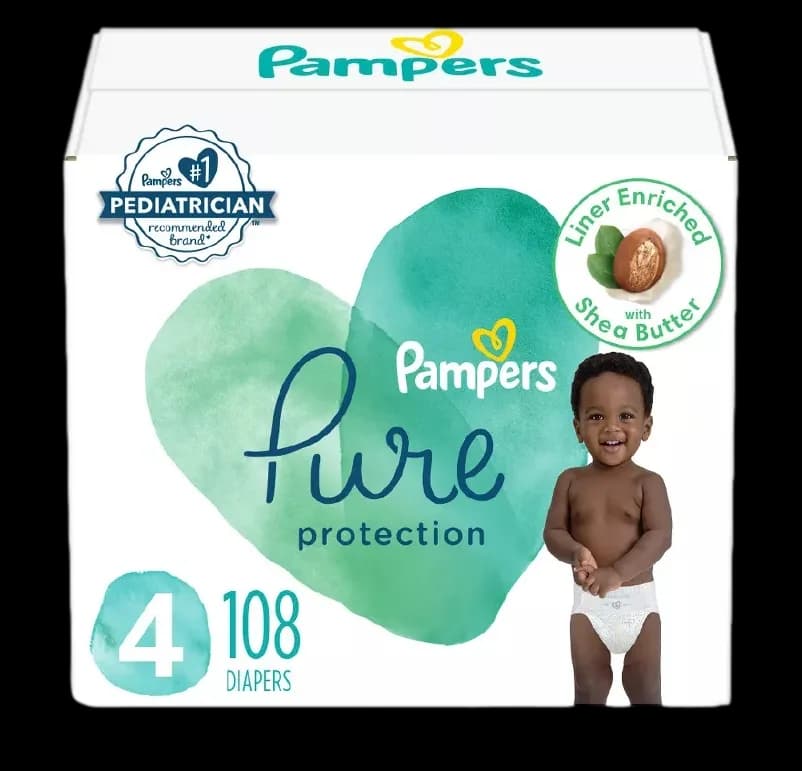
Premium cotton-based diapers offering dryness with absorbent shea butter, hypoallergenic and chlorine-free.
Not sure where to start? Tap what matters most to you and we'll point you to the pick that fits.
If you want a plant-based diaper but you are not in the mood to gamble, this is the safe, sensible answer. It holds the top rating in this whole group, and it comes from a brand stocked nearly everywhere, which matters more than it sounds at 3 a.m. when you are out of size 2.
Pampers says Pure Protection is made with plant-based and premium cotton materials, and the spec list is exactly what most parents are hunting for: fragrance-free, chlorine-free, paraben-free, hypoallergenic, and breathable. There is a wetness indicator so you can check without a full unwrap, and blowout guards at the legs and back. It runs from newborn through size 7, so it can grow with your baby through the messiest stretch.
The trade-off is mostly the price. At about $0.47 per diaper it sits in the middle to upper end of this list, well above the value pick. You are paying for the rating, the availability, and a recognizable name, which for a lot of first-time parents is a perfectly good thing to pay for.
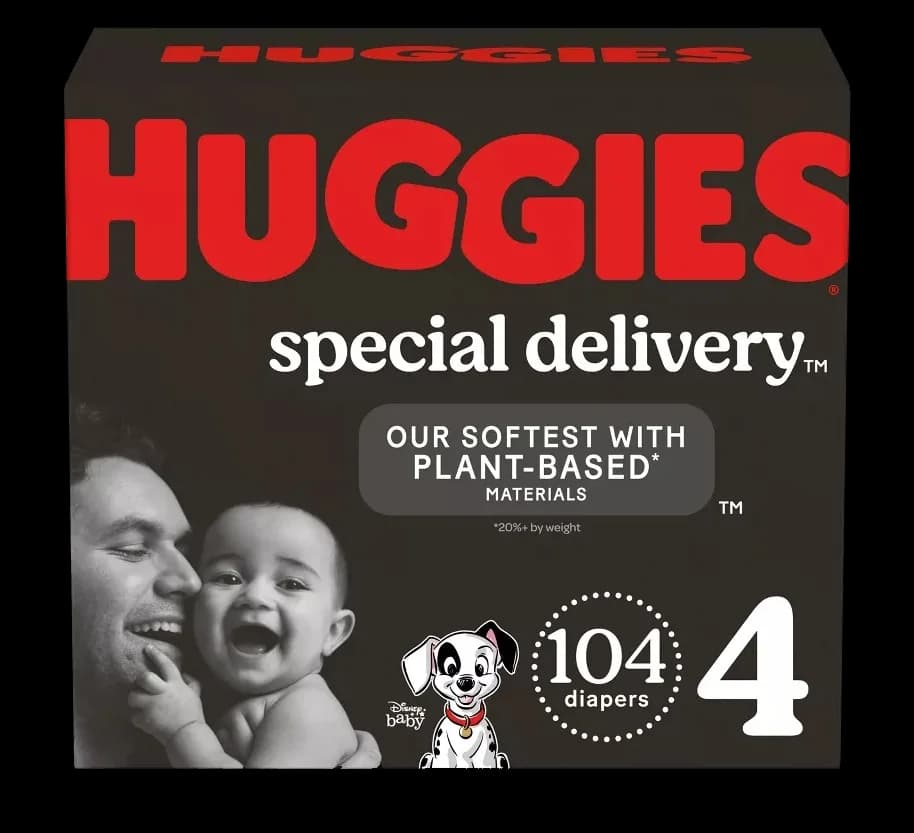
This is Huggies leaning fully into the category rather than treating plant-based as an afterthought. Special Delivery is built around plant-based materials and carries the clean checklist parents come here for: fragrance-free, chlorine-free, paraben-free, hypoallergenic, and breathable.
It earns a strong rating, just a step below our top pick, and it brings the practical bits that make daily life easier: a wetness indicator and blowout guards. Sizing covers newborn through size 6. The appeal here is simple. If you already trust Huggies and you want their dedicated plant-based effort, this is it, no detective work required. At around $0.54 per diaper it is one of the pricier options, so it suits a parent who values the established name and the focused formulation over saving every cent.
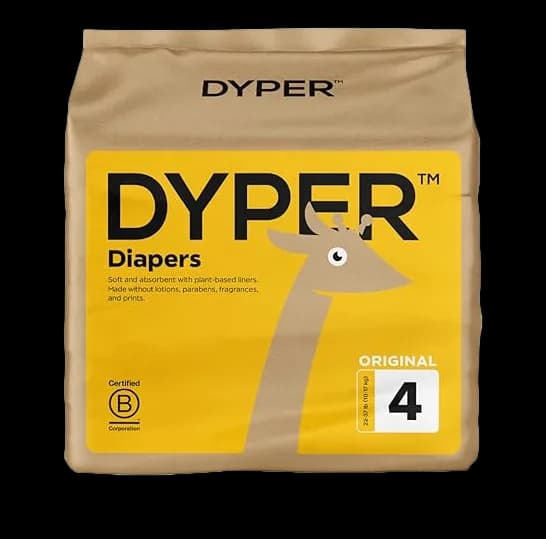
When people picture a plant-based diaper, they are usually picturing something like this. DYPER's Simply Kind is built around bamboo viscose, which makes it the most thoroughly plant-derived option on our list, and DYPER describes it as biodegradable. It checks the clean boxes too: fragrance-free, chlorine-free, paraben-free, hypoallergenic, breathable, with a wetness indicator and blowout guards, in sizes newborn through 6.
A couple of honest notes. It is sold by subscription, so it is a standing commitment rather than a grab-it-on-the-shelf purchase, and you will want to plan around delivery timing rather than running to the store. At roughly $0.54 per diaper it lands at the higher end of this group. But if the bamboo angle is the whole reason you are here, this is the pick that most fully delivers on it.
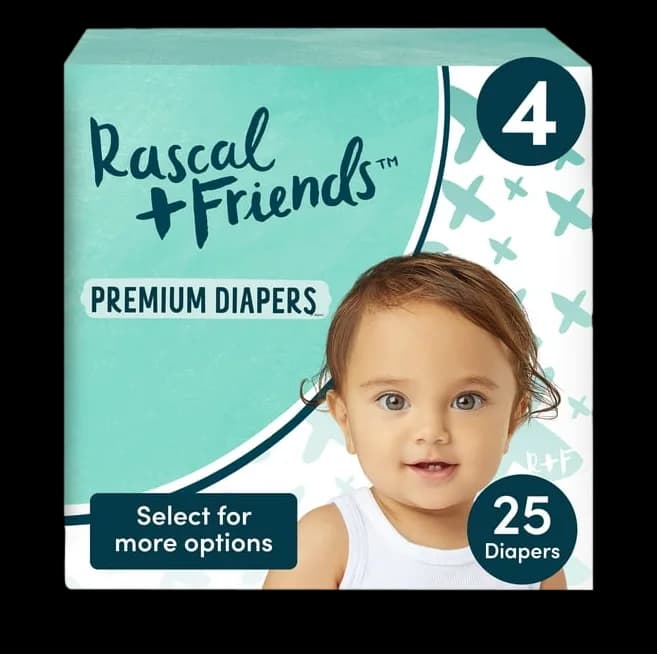
Plant-based usually comes with a plant-based price, which is what makes this one a genuine relief. At about $0.32 per diaper, Rascal + Friends is far and away the cheapest plant-based option we track, roughly a third less than most of this list, and it still posts a high rating.
It keeps the attributes that matter: plant-based materials, fragrance-free, chlorine-free, paraben-free, hypoallergenic, breathable, with blowout guards and good absorbency. The one thing to plan around is sizing. It starts at size 1 and goes up to 7, with no newborn size, so it is not the diaper for those very first weeks. Once your baby has grown into a size 1, though, this is the option that lets you stay in the plant-based category without watching your diaper budget climb every week.
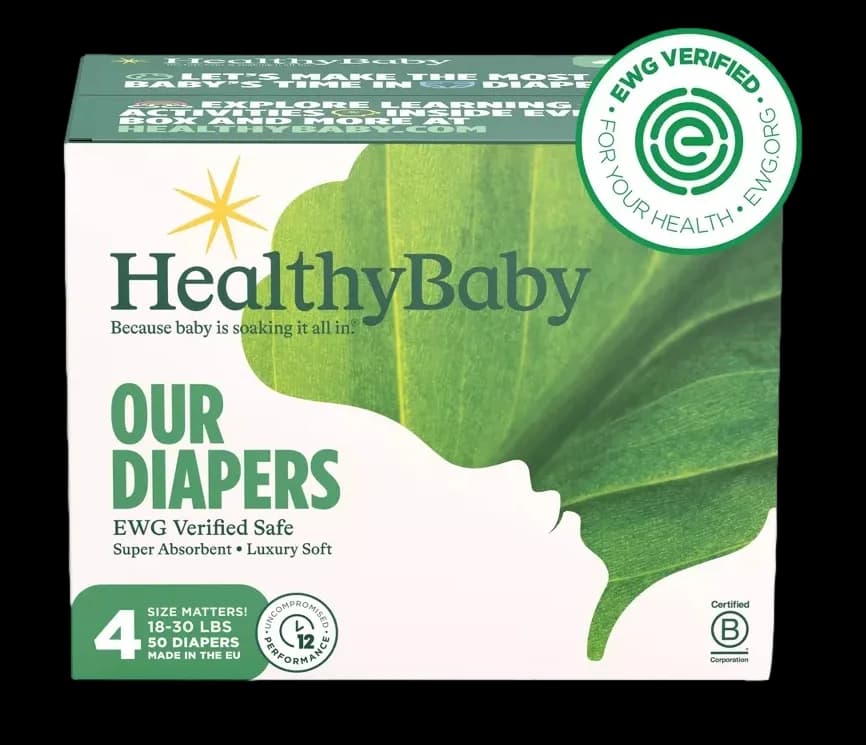
Some babies just react to everything, and for those parents the ingredient list is the whole story. HealthyBaby's Our Diaper is built for that worry, with a plant-based, hypoallergenic, fragrance-free profile and the chlorine-free, paraben-free credentials you would want against reactive skin. It is breathable, has blowout guards, and is rated highly.
It covers sizes 1 through 6, so like the value pick it is not aimed at the newborn stage. And at about $0.58 per diaper it is the most expensive option on this list, which is the honest cost of its especially clean approach. If your baby's skin has been the deciding factor and price is secondary, this is the one we would reach for. Worth saying gently: diaper rash has many causes, and a clean diaper is one helpful piece, not a cure. If something looks irritated or persistent, it is always worth a word with your pediatrician.
Start with the stage your baby is in. Two of these picks, Rascal + Friends and HealthyBaby, do not offer a newborn size, so for the first few weeks you will want Pampers Pure Protection, Huggies Special Delivery, or DYPER, all of which start at newborn. It is a small detail that saves a frustrating return.
Then weigh what "plant-based" needs to mean to you. If you want the material to be the centerpiece, the bamboo build of DYPER goes furthest, with the catch that it is a subscription you commit to. If you mainly want plant-derived materials plus a clean, fragrance-free profile from a name you trust, Pampers and Huggies both fit comfortably. If your baby's skin is the deciding factor, HealthyBaby's especially clean approach is built for that.
Finally, be honest about budget, because this category is not cheap. Prices here run from about $0.32 to $0.58 per diaper, and a newborn goes through a lot of them. Rascal + Friends is the standout for keeping the plant-based choice affordable once your baby is past the newborn size. There is no wrong answer in this group, only the one that fits your baby, your routine, and your week.
It helps to know what you are actually buying, because the label can suggest more than it delivers. A disposable diaper is several layers doing different jobs: a topsheet against your baby's skin, an absorbent core in the middle, and a backsheet film on the outside. "Plant-based" usually means that one or some of those layers use plant-derived materials instead of petroleum-based plastic. It rarely means the whole diaper is grown from plants.
So where do the plants actually show up? Often it is the topsheet or the backsheet film, sometimes made from sugarcane-based or other bio-based plastics. Sometimes it is additives in the core. The wood pulp that fluffs out the absorbent core is plant-derived by nature, though that has been true of diapers for a long time and is not really the new part. The genuinely newer move is swapping petroleum plastics for plant-based ones in the sheets and films.
Bamboo is the closest thing to a fully plant-based build in everyday options, which is why DYPER's bamboo viscose stands apart in our list. Even then, a usable disposable diaper needs some structure and fasteners, so "100 percent plant" is more of a direction than a finish line.
What you are really paying for, in most cases, is reducing the petroleum-based plastic that touches your baby and ends up in the trash. That is a reasonable thing to value. Just keep the expectation grounded: plant-based is about using more renewable materials and less fossil plastic, not about a fully natural product. A higher percent plant-based claim is better than a lower one, and reading which parts are plant-derived tells you far more than the headline word on the front of the bag.
Bamboo is a fast-growing plant; viscose is the soft fiber made from it. Bamboo viscose, used in DYPER, is the closest thing here to a fully plant-derived diaper material.
The layer that touches your baby's skin, made partly or wholly from plant-derived materials instead of petroleum-based plastic, with the goal of a softer, more renewable surface.
The outer film of the diaper, made using plant-derived plastics such as sugarcane-based materials rather than fossil-fuel plastic. It is a common place for the plant content to live.
Wood pulp is the plant-derived fluff in the absorbent core. FSC refers to wood sourced from responsibly managed forests, a sustainability marker rather than a measure of how plant-based the diaper is overall.
A figure stating roughly how much of the diaper, by content, is plant-derived. Higher is generally better, but it is worth checking which parts are counted, since the number rarely reaches anywhere near 100 percent.
| Spec | PampersPure Protection | HuggiesSpecial Delivery | Millie MoonLuxury Diapers | Bambo NatureDream Diapers |
|---|---|---|---|---|
| Price / diaper | $0.44 | $0.54 | $0.33 | $0.55 |
| Hive Score | 9.5/10 | 9.3/10 | 8.8/10 | 8.6/10 |
| Type | Everyday | Everyday | Everyday | Everyday |
| Material | — | plant based | wood pulp | — |
| Blowout guards | Yes | Yes | Yes | Yes |
| Wetness indicator | Yes | Yes | Yes | Yes |
| Hypoallergenic | Yes | Yes | Yes | Yes |
| Fragrance-free | Yes | Yes | Yes | Yes |
| Eco-friendly | Yes | Yes | Yes | Yes |
Almost never. "Plant-based" usually means some parts, like the topsheet, the backsheet film, or additives in the core, use plant-derived materials instead of petroleum-based plastic, rather than the whole diaper being grown from plants. Bamboo options like DYPER come closest to a fully plant-based build.
DYPER Simply Kind. It is built around bamboo viscose, which makes it the most thoroughly plant-derived diaper on our list, and DYPER describes it as biodegradable. The trade-off is that it is sold by subscription rather than off the shelf.
Two of our picks, Rascal + Friends and HealthyBaby, start at size 1 with no newborn size. For those first weeks, choose Pampers Pure Protection, Huggies Special Delivery, or DYPER, all of which begin at newborn.
Many of them carry features people associate with gentler diapers, like fragrance-free, chlorine-free, paraben-free, and hypoallergenic. Our sensitive-skin pick is HealthyBaby Our Diaper for its especially clean profile. That said, a missing attribute just means it is not confirmed, not that a diaper is harsh, and rash has many causes, so check with your pediatrician about persistent irritation.
Generally yes. In this group prices run from about $0.32 to $0.58 per diaper. Rascal + Friends is the clear value option at roughly $0.32, while HealthyBaby is the priciest at about $0.58. The plant-based materials and clean profiles tend to carry a premium.
Not necessarily. Plant-based describes the materials; biodegradable describes how the diaper breaks down afterward. They can overlap. DYPER, for example, is plant-based and described as biodegradable, but the two claims are not automatically the same thing.
Many do. Pampers Pure Protection, Huggies Special Delivery, and DYPER all have a wetness indicator, and most picks here include blowout guards at the legs and back. They are designed to work like a regular diaper, just with more plant-derived materials.
Pampers Pure Protection. It is the highest-rated plant-based diaper we track, it is widely available, it covers newborn through size 7, and Pampers says it is made with plant-based and premium cotton materials. It is the low-risk place to start.
You do not need to overthink this. Every diaper here is well-rated and built around plant-derived materials and a clean ingredient profile, so you are choosing between good options, not avoiding bad ones. If you want the simplest confident pick, start with Pampers Pure Protection. If bamboo is the point, go DYPER. If the budget is tight, Rascal + Friends. Whatever you choose, a clean, well-fitting diaper changed often is doing its job, and so are you.
Still weighing it up? Browse all our diaper guides and diaper reviews whenever you're ready.